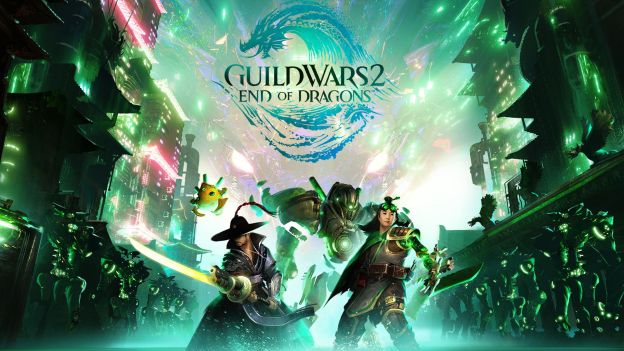
The original soundtrack for Guild Wars 2: End of Dragons is now available on all major streaming platforms. Guild Wars 2: End of Dragons is the third expansion for the award-winning and critically acclaimed MMORPG Guild Wars 2 and is the culmination of the Elder Dragon Saga. The music for this expansion was composed by Maclaine Diemer, Michael Choi, Sojin Ryu, Andi Roselund, Bryan Atkinson, and Lena Raine, with an additional track from Joyce Kwon.
The soundtrack includes 58 tracks, which perfectly captures the mood of the thrilling battles, intrigue, and exploration throughout the mysterious continent of Cantha.
“For Guild Wars 2: End of Dragons, we wanted the music to sound like nothing players have heard in the game so far,” stated Diemer. “There is the familiar grand and beautiful orchestra, some otherworldly acoustic and synthetic textures, and at the heart of it all is a strong influence from traditional Korean music. It’s been a profound journey for me to open myself to this beautiful music and culture, and I am ecstatic to share that joy with the world.”
The soundtrack for Guild Wars 2: End of Dragons can be accessed on any major streaming platform now.
Milan Records has released the Original Series Soundtrack to Season 2 of HBO®’s THE RIGHTEOUS GEMSTONES by multi-instrumentalist, composer and songwriter JOSEPH STEPHENS.
Joseph Stephens is a contemporary composer and songwriter for television and film. At an early age he began experimenting and creating music with 4 track tape machines, delay pedals, guitars, radios, and anything else he could get his hands on. Writing music and playing in bands throughout college, Joseph established lasting relationships with frequent collaborators Danny McBride, David Gordon Green, and Jody Hill. His current work includes The Righteous Gemstones, Amazon series Upload from Greg Daniels, Netflix’s Never Have I Ever from Mindy Kaling, and the feature film, Family Squares, directed by Stephanie Laing.
Available everywhere now, the album features both instrumental score music and original vocal songs written by Stephens for the second season of the comedy series about a world-famous televangelist family. Returning to the series after scoring the first season, Stephens has created what he calls a “massive soundscape with a wide palette of sonic vibrations and textures.” The resulting 50-track collection reflects this expansiveness, ranging from synth-heavy instrumentals punctuated by operatic choral voices, distant whispers and manipulated tape machines to original worship songs and Christian Rock parodies.
The original vocal songs featured on the album were written primarily by Stephens and performed throughout the new season by the series cast, with contributions from Joe Jonas (as himself), Jennifer Nettles (as Aimee-Leigh Gemstone), Edi Patterson (as Judy Gemstone), Danny McBride (as Jesse Gemstone), Adam DeVine (as Kelvin Gemstone), Walton Goggins (as Baby Billy Freeman) and more. Following Season 1’s viral hit “Misbehavin’,” Stephens once again collaborates with Jennifer Nettles for “Sassy on Sunday,” the duo co-writing the track together and Nettles performing the song as her character Aimee-Leigh Gemstone. Stephens also collaborated with Edi Patterson to co-write “Butterflies” (performed by Patterson’s character Judy Gemstone) and “Rock My Boy’s Body.” Elsewhere, the two tracks by the fictional Tears of David church house band and album opener “Hallelujah By and By” were written by Mike Mitschele and RickRandall, and “Howdy Neighbor” was written and performed by the Dynamite Brothers.
Of his original vocal tracks, composer JOSEPH STEPHENS had the following to say:
“At their core, the Gemstone family is a musical one. We wanted to surround them with songs that reflect their origins. Following in the footsteps of ‘Misbehavin’’ from Season 1, ‘Sassy on Sunday,’ co-written with Jennifer Nettles, finds Aimee-Leigh Gemstone embracing her evolution into the ‘80s Christian country/pop genre. ‘Home at Christmastime’ serves as a holiday family singalong. ‘Some Broken Hearts Will Never Mend’ takes the family sing-along concept to new levels. Much attention to detail has been paid to these various decade-spanning compositions, including instrumentation, recording techniques, and lyrical content. We want these songs to be believable. Some songs are performed ‘live’ on camera while others are recordings within the show’s narrative. We’ve also chosen to release all of these songs to the public under the characters’ names, in an effort to further enrich the world of The Righteous Gemstones. While ‘Rock My Boy’s Body’ is not performed by a Gemstone character, its place in the Gemstone family universe has yet to be fully revealed.”
THE RIGHTEOUS GEMSTONES: SEASON 2 (ORIGINAL HBO SERIES SOUNDTRACK)
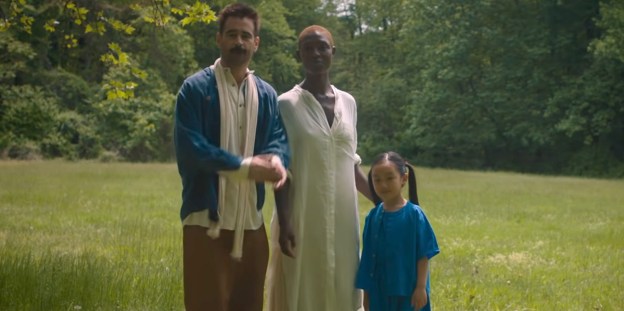
Milan Records has released After Yang (Original Motion Picture Soundtrack)with an original score by Aska Matsumiya and contribution from Ryuichi Sakamoto. Aska Matsumiya is a LA-based Japanese composer and producer who has excelled across film, television, advertising and music production. Aska provided the score for the Amazon feature film, I’m Your Woman for director Julia Hart.
In addition, she partnered with A24 and acclaimed director Kogonada on his film After Yang starring Colin Farrell, collaborating with composer Ryuichi Sakamoto. In television, Aska worked on the HBO limited series Betty with longtime collaborator Cyrstal Moselle. Aska has collaborated with countless brands in the advertising space, including Porsche, Chanel, Hermes, Miu Miu & Prada, and also scored the short film I’m Here for Spike Jonze.
Available everywhere now, the album features score music written by Matsumiya for the A24’s newest science fiction drama about a human family and their android child. Inspired by the film’s futuristic setting and subject matter, Matsumiya utilized A.I. technology throughout her scoring process, feeding both her own compositions and Sakamoto’s contribution into a special A.I.-driven software developed by Luke Fischbeck (of Lucky Dragons) that generated infinite musical variations. Several of the A.I.-generated variations were incorporated into the final score, with three specific tracks composed primarily by the technology.
Forward-thinking in composition, the score remains grounded in poignant and delicate instrumentation to create a body of music befitting the film’s onscreen narrative and themes. Directed by Kogonada and starring Colin Farrell and Jodie Turner-Smith, After Yang is available now in theaters and streaming on Showtime.
Of the soundtrack, composer Aska Matsumiyahad the following to say:
“In terms of instrumentation, the score consists of piano, cello, marimbas and lots of synths. After speaking with director Kogonada, I think the concept was that we wanted to make sure that the sound was both new and futuristic, but also very human at the same time. We wanted to create a sort of paradox, echoing the sentiment that in the future, often what we actually want is to be more human and return to the essence of humanity. Which is why we ended up mixing the very human-like, warm instrumentation with the more futuristic synth work and A.I. variations.”
When his young daughter’s beloved companion — an android named Yang — malfunctions, Jake (Colin Farrell) searches for a way to repair him. In the process, Jake discovers the life that has been passing in front of him, reconnecting with his wife (Jodie Turner-Smith) and daughter across a distance he didn’t know was there.
Varèse Sarabande Records will be releasing five amazing soundtrack LPs on Record Store Day 2022: Blue Velvet will be released as a 2-LP Deluxe Edition, The Fast and the Furious: Tokyo Drift as a double LP with collector’s edition etching, John Williams’ The Cowboys Deluxe Edition on 2-disc gold vinyl, Mimic on green vinyl in an original triptych jacket and Big Night on crystal clear vinyl.
These Varèse Sarabande Records titles will be available on April 23, 2022, at thousands of independent record stores. For a list of participating stores and more information about these special LPs, visit RecordStoreDay.com.
Blue Velvet – Original Motion Picture Soundtrack (Deluxe Edition) by Angelo Badalamenti
Blue Velvet is David Lynch’s unforgettable 1986 masterwork, starring Kyle MacLachlan as a curious college student, Isabella Rossellini as a tormented lounge singer and Dennis Hopper as an emotional gas-sniffing psychopath.
TRACK LISTING
Side A
Main Titles (From the Motion Picture “Blue Velvet”) 1:25
Night Streets / Sandy And Jeffrey 3:37
Frank 3:33
Jeffrey’s Dark Side 1:49
Mysteries Of Love 2:10
Frank Returns 4:38
Mysteries Of Love 4:18
Side B
Blue Velvet / Blue Star – Montage 1:49
Lumberton U.S.A. / Going Down To Lincoln – Sound Effects Suite 2:12
Akron Meets The Blues 2:41
Blue Velvet 2:50
Honky Tonk Part I 3:11
In Dreams 2:49
Love Letters 2:44
Mysteries Of Love 4:24
Side C
Alcron Meets The Blues 1:04
Lumberton U.S.A. Radio Ad 0:16
Timpo 0:23
Ribbon Scissor 0:20
Going Down To Lincoln 1:41
Organs And Sirens 1:11
Sandy And Jeffery 0:25
Dorothy Alone 0:19
Mount Frank’s Eruption aka Frank (Film Version Without Clarinet) 3:36
Sloe Club Boys 0:25
High Gentle Memories 1:02
Stalking Out 0:22
Yellow Man 1:03
Sandy And Jeffrey 0:47
Ominously Yours II 0:54
Ominously Yours IV 0:41
Organ (Version 3) / Mysteries Of Love 4:11
Side D
Organ Toots And Sirens 1:17
Cue 61A 1:13
Cue 05 0:54
Cue 09 0:55
Cue 09A 0:29
Cue 13 1:38
Cue 16 0:24
Cue 21 & 24 0:46
Cue 27 1:54
Cue 36 0:34
Cue 46 1:14
Cue 48 0:47
Cue 50 1:04
Cue 56 1:21
Cue 65 PT 0:51
Cue D 0:56
Cue 65 3:06
The Fast and the Furious: Tokyo Drift – Original Motion Picture Score by Brian Tyler
The Fast and the Furious is the most successful movie franchise of all time, with almost 6.5 billion dollars in box office receipts from ten films over the past 20 years. Tokyo Drift is often cited as one of the best of the lot, and the musical score is definitely one of the most lauded among score fans. Brian Tyler (Scream, Thor, Avengers) scored Tokyo Drift(with an assist from Slash on “Welcome to Tokyo”) and went on to the score four of the five subsequent films. Never before available on LP, the text-only cover on the CD and digital formats has been replaced with an original design which incorporates Japanese manga art styles. This double album features an orange LP for sides A and B, and a black vinyl record for sides C and D, with side D a stencil of the scarab beetle design from the car belonging to the Drift King.
TRACK LISTING
Side A:
Touge 0:46
The Fast And The Furious: Tokyo Drift 7:05
Saucin’ 4:28
Neela Drifts 3:27
Preparation 1:10
N2O 0:49
Mustang Nismo 2:21
Underground 1:33
Side B:
Hot Fuji 1:55
This Is My Mexico 1:23
Welcome To Tokyo (written by Slash and Brian Tyler) 1:54
DK VS Han 3:32
Downtown Tokyo Chase 2:33
Aftermath 1:22
Empty Garage 1:01
DK’s Revenge 1:09
Journey Backwards 0:58
Sumo 1:37
Sean’s Crazy Idea 2:24
Dejection 1:12
Side C:
Kamata 1:32
Two Guns 1:29
I Gotta Do This 1:14
Megaton 2:16
Neela Confronts DK 1:47
Winner … Gets … Me 1:21
War Theory 1:54
I Don’t Need You To Save Me 0:57
Neela 1:44
Symphonic Touge 6:50
The Cowboys – Original Motion Picture Soundtrack (Deluxe Edition) by John Williams
This 50th anniversary release celebrates John Wayne and one of his finest twilight westerns with a score composed by the living legend, John Williams. The Cowboys was the maestro’s biggest pre-Star Wars score, and a much-needed restoration job—featuring a complete rebuild, remix, remastering and expansion to 36 tracks (including unearthed alternate takes)—was done for a 3,000-unit, limited-edition CD re-issue that came out in 2018 and has since sold out. The first-ever official LP release, this double-record gatefold includes extensive notes and original photos and is pressed on gold vinyl exclusively for RSD 2022.
TRACK LISTING
Side A
1. Overture 2:32
2. The Cowboys – Main Title 3:25
3. The Hands Quit 1:44
4. The Boys 1:04
5. Wil And Ann 2:35
6. The Kids And Crazy Alice 2:02
7. Graveyard 0:48
8. Anybody That Tall 1:13
9. Training Montage 1:33
10. Long Hair And The Roundup 2:27
11. Nightlinger’s Tale 1:48
Side B
2. To Belle Fourche 1:45
3. The First Night 1:57
4. Burning Daylight 1:03
5. Learning The Ropes (Vivaldi Concerto in D) 1:17
6. Sour Mash 2:04
7. Mrs. Collingwood’s Girls 1:41
8. Long Hair’s Threat 1:20
9. Entr’acte 2:26
10. Afraid Of The Dark 1:42
11. Charlie’s Demise 1:59
12. Charlie’s Burial 1:37
Side C
1. Long Hair Trails 4:07
2. Long Hair And Dan 1:28
3. Summer’s Over 1:50
4. Drums Of Manhood And The Execution 5:55
5. Into The Trap 2:18
6. The Battle 1:27
7. End Title And End Cast 2:22
Side D
ADDITIONAL MUSIC
1. Entr’acte (Segment) 1:01
2. Nightlinger’s Tale (Alternate) 1:47
3. Long Hair’s Threat (Alternate) 1:26
4. The Execution (Alternate) 4:21
5. Into The Trap (Alternate) 2:17
6. End Title And End Cast (Alternate) 2:23
7. Exit Music 1:13
Mimic – Original Motion Picture Soundtrack by Marco Beltrami
Mimic was Guillermo del Toro’s first big budget English language film and the second film composed by Marco Beltrami who had just completed his work on the original Scream. This soundtrack has never been released on vinyl and features fantastic new original artwork that uses a bespoke triptych jacket design to mimic the transformation of the Judas Breed. Pressed on green vinyl just for RSD 2022.
TRACK LISTING
Side A:
Main Title 2:51
Race To The Subway 1:38
Time To Separate 0:58
Chuy Steps Out 3:20
Manny Searches For His Son 1:51
Slow Tango 2:15
Chased By A Bug 1:16
Side B:
Susan Meets Chuy 1:05
Faulty Scaffolding 1:22
Manny’s Tango 1:56
Evil Among Us 1:10
Confronting Terror 2:18
The Lucistic’s Alive 1:28
Reunited 2:51
End Credits 2:01
La Cucaracha 3:35
Big Night – Original Motion Picture Soundtrack by Various Artists
A breakout indie film success in 1996, Big Night has received new attention due to star and director Stanley Tucci’s best-selling book and Italian food-based program on CNN, Searching for Italy. The soundtrack was also a hit with viewers with its large serving of 1950s classics from Rosemary Clooney, Keely Smith and Louis Prima, whose persona plays a major character in the film. This record has never before been released on LP and is pressed on crystal clear vinyl exclusively for RSD 2022.
TRACK LISTING
Side A:
Claudio Villa – Stornelli Amorisi 8:00
Matteo Salvatore – Il Pescivendolo 1:14
Claudio Villa – La Strada Del Bosco 2:33
Gary DeMichele – Art Of Art 2:26
Louis Prima – Oh Marie 2:27
Rosemary Clooney – Mambo Italiano – 02:31
Side B:
Louis Prima And Keely Smith With Sam Butera – Love Of My Life (O Sole Mio) 3:45
Gary DeMichele – Dinner 0:58
Claudio Villa – Tic Ti, Tic Ta 2:42
Louis Prima And The Witnesses – Five Months, Two Weeks, Two Days 2:09
Keely Smith – Don’t Take Your Love From Me 3:05
Louis Prima – Buona Sera 2:58
Gary DeMichele – Angular Dissent 2:06
Matteo Salvatore – Mo Ve’la Bella Mia Da La Muntagna 2:50
Gary DeMichele – Pascal’s Waltz 1:21
Gary DeMichele – Big Night Theme 0:48
Are you excited for these releases for Record Store Day 2022?
Milan Records has announced the February 18threlease of TEXAS CHAINSAW MASSACRE (SOUNDTRACK FROM THE NETFLIX FILM) with music by GRAMMY Award®-winning saxophonist, multi-instrumentalist, songwriter and composer ColinStetson.
Available for preorder now, the album features music written by Stetson for this long-awaited sequel to the 1974 horror classic. The 23-track collection finds Stetson expertly layering a multitude of sounds and instruments to create a hauntingly brutal, industrial soundscape.
Of the album, composer Colin Stetson had the following to say:
“It has been an honor and just way too much fun getting to musically world-build in the Texas Chainsaw Massacre universe. As with the subject matter and our iconic villain – all sputtering engines, metal scraping metal, faces on faces – the music is the sound of an old and decrepit abattoir, stirring to life and rattling off the dust after a great many years idle; made with Contrabass Saxophones, Tibetan bowls, and a hearty dose of wild turkey hunting calls; all twisted, stretched, and wearing masks of their own.”
Directed by David Blue Garcia, the film centers on Melody (Sarah Yarkin), her teenage sister Lila (Elsie Fisher), and their friends Dante (Jacob Latimore) and Ruth (Nell Hudson), head to the remote town of Harlow, Texas to start an idealistic new business venture. But their dream soon turns into a waking nightmare when they accidentally disrupt the home of Leatherface, the deranged serial killer whose blood-soaked legacy continues to haunt the area’s residents — including Sally Hardesty (Olwen Fouéré), the sole survivor of his infamous 1973 massacre who’s hell-bent on seeking revenge.
TEXAS CHAINSAW MASSACRE (SOUNDTRACK FROM THE NETFLIX FILM)
TRACKLISTING –
Sunflowers
Welcome to Harlow
The House
Taken Away
Death on the Road
Scars
The Call
The Deed
For Your Life
Headless
The Hunter
Every Last One
Lament in Mirrors
Call to Arms
A Valiant Effort
Sledgehammer
Midnight Memorial
Reunited
Through the Floorboards
To the Depths With You
Sunrise
Vengeance
Homecoming
Will you be ordering a copy of the soundtrack for Texas Chainsaw Massacre?
Milan Records has announced the January 14th release of BELLE (ORIGINAL MOTION PICTURE SOUNDTRACK – ENGLISH EDITION), an English language version of the Original Soundtrack to Oscar®-nominated filmmaker Mamoru Hosoda’s latest feature. Featuring both score and vocal tracks written by a team of composers led by Taisei Iwasaki and including Ludvig Forssell and Yuta Bandoh, the album includes English versions of vocal tracks originally performed in Japanese, newly recorded in English by Kylie McNeill, who voices ‘Belle’ in the English dubbed version of the film. The album follows the massive success of the original Japanese Edition of the soundtrack, which has garnered over 20 million streams globally since its July 2021 debut.
Belle follows shy, everyday high school student Suzu as she escapes into a virtual world, becoming a globally-beloved popstar named Belle and setting out on an emotional and epic quest to find herself.
Ranging from anthemic pop ballads to emotionally-laden instrumentals, the soundtrack includes original vocal songs written and arranged by Taisei Iwasaki, Ludvig Forssell and Yuta Bandoh as performed in the film by both Suzu and her virtual persona Belle, as well as original score music also written by the trio and Grammy-nominated composer Miho Hazama. The film’s main theme and album opener “U” was written and performed by groundbreaking Japanese act millennium parade led by Daiki Tsuneta, and two of the vocal tracks and recurring themes throughout the film, “Lend Me Your Voice” and “A Million Miles Away” also feature lyrics co-written by Mamoru Hosoda. The English album was produced by Taisei Iwasaki and supervised by Taka Chiyo alongside the team of composers and in collaboration with GKIDS and NYAV Post.
BELLE (ORIGINAL MOTION PICTURE SOUNDTRACK – ENGLISH EDITION)
TRACKLISTING –
U – millennium parade, Belle*
Whispers – Kylie McNeill*
Slingshot – Miho Hazama, Taisei Iwasaki
Memories of a Sound – Taisei Iwasaki
Blunt Words – ermhoi
Gales of Song – Belle*
Fleeting Days – Ludvig Forssell
Swarms of Song – Belle*
Alle Psallite Cum Luya – Ryoko Moriyama, Sachiyo Nakao, Fuyumi Sakamoto, Yoshimi Iwasaki, Michiko Shimizu, Kaho Nakamura
Milan Records has released LAMB (ORIGINAL MOTION PICTURE SOUNDTRACK) an album of music composed by Icelandic composer and guitarist TÓTI GUÐNASON for A24’s newest folk thriller. Available everywhere now, the album features score music written by Guðnason for the terrifying debut feature from writer-director Valdimar Jóhannsson set in the Icelandic wilds.
Having worked alongside his sister Hildur Guðnadóttir on her Oscar®-winning original score for Joker and with Ólafur Arnalds on his BAFTA-winning soundtrack to Broadchurch, Tóti Guðnason makes his debut as lead composer with Lamb. A dark and unnatural folktale for the ages, Lamb is available in theaters now from A24.
“Lamb was initially intended to be completely without a score, and I feel that is a humbling starting point for a composer,” says Tóti Guðnason of his work on the film. “Growing up in the north of Iceland I’m very familiar with the feeling of rural silence. That feeling is extraordinarily well portrayed by Valdimar Jóhannsson in Lamb and I did my best to play into it while respecting it. My responsibility was to create something more fitting than silence, and silence can be the greatest of sounds.”
As I’ve been enviously watching the latest film festival lineups from afar, the one film I’ve wanted to see the most out of all of them is Titane, the latest film from director Julia Ducournau. Well, I may have to wait a little longer to see the film itself, but I have been given the opportunity to listen to the film’s soundtrack and I definitely have some thoughts about it.
The soundtrack for Titane was composed by Jim Williams and is available to preorder now and will be available starting today, October 1. The film is the second collaboration between Williams and Ducournau, the duo having worked together on Ducournau’s 2016 feature film debut Raw.
Regarding the music for Titane, Jim Williams had the following to say:
“The score for Titane grows from a short theme for a scene where the protagonist leaves home in startling circumstances…Initially in a contemporary popular music style with a tinge of John Barry, later this was set with metal percussion and male voice choir using the Neapolitan Minor for a scene set in a car. As the film develops the theme takes on an emotional, darker twist.”
And what music it is!! Ever since I heard the premise for Titane, I was eager for any peek, however small, at the film. So when I got the opportunity to preview the soundtrack for Titane, I jumped at the chance.
Let me start by saying that this might not be the type of soundtrack you were expecting for a story like Titane, especially with some of the preview visuals that I’ve seen for the film. In fact, the music starts out so different at the beginning of the soundtrack that I actually double-checked to make sure I was listening to the right audio files. However, as I dove into the music and moved farther in, I realized this unusual music (it’s almost all timpani drums in the beginning) was growing on me. There’s a harsh, almost mechanical feeling to the first half of the soundtrack and given film’s premise that makes total sense.
As near as I can tell, Williams and Ducournau made the decision to center the music around the mechanical aspects of the story, at least in the beginning. There are human elements in the mix to be sure, but they don’t come out until later, presumably as the story is progressing along (this is speculation on my part as I’ve yet to actually see the film). But I’m fascinated by Williams’ decision to focus so much on percussion and drums. You don’t hear a score centered on that kind of sound mix all that often, in fact for me personally I can’t recall hearing anything quite like this before. The mix of drums and some type of gong that dominates the early part of the soundtrack, it all reminds me of a twisted, metal temple; or some type of metallic sacred space. That may sound weird but it’s the best description I can come up with. You almost have to hear the music yourself to even begin to understand it.
Even when the music does shift away from being strictly percussion (one example is “Bathroom Pieta”), the percussive sounds never really go away, they’re always lingering in the background. And I like how the music that’s created during these later tracks (again, “Bathroom Pieta” and also “Belly Oil”) still feels twisted and warped. Everything about this music will feel slightly “off” to your ears and I firmly believe that is by design (again, given the film’s subject matter). You are not meant to feel comfortable listening to this music, I know it left me on edge for the most part.
One final detail that grabbed my attention: I like how the later tracks seem to be leading toward a church-like motif with what sounds like an organ (or at least a synthesized version of one). If the first half of Titane‘s soundtrack is set in a metallic temple, the second half ends up in a cathedral, albeit one equally as twisted as where the music starts in the beginning.
Titane Soundtrack Track Listing
1.Gym to Car 2.Fan in Car Kill 3.Car Fuck [Explicit] 4.Beach Puke 5.Justine Kill 6.House Burning 7.Airport 8.Simulator 9.Bathroom Pieta 10.Belly Oil 11.Forest Fire 12.Sarabande 13.Ending from Bedroom 14.Ending from Kiss 15.End Credits 16.Wayfaring Stranger 17.Apocalypse 18.God and Drug
I highly recommend checking out the soundtrack for Titane at the earliest opportunity. This is one of the most interesting soundtracks I’ve listened to this year and it’s made me more eager than ever to watch the actual film the first chance I get.
Just recently I had the chance to speak with composer Tom Salta about his work on the hit video game Deathloop. Salta is an award-winning composer, who writes music for film and television as well as video games. Aside from Deathloop, his past work in video games includes work on Wolfenstein: Youngblood, the HALO games, and Prince of Persia: The Forgotten Sands, just to name a few.
For Deathloop, Tom Salta had to create music for a world where the player controls Colt, an assassin tasked with killing a series of targets before a time loop activates at midnight, undoing any progress made. With that premise in mind, I was very excited to speak with Tom Salta about his work on this game.
I hope you enjoy our conversation about Deathloop!
How didyou get started as a composer?
Now that’s a loaded question! [laughs] Back in 1990 when I started on my professional path, I never imagined getting into composing, no less composing for video games. I started in the music industry fully intent on becoming a famous record producer. My first shot in the big leagues was going on tour with Bobby Brown as keyboard tech and sound designer. After touring for several years, I spent the ‘90s working in the studio on almost every kind of music you could imagine for a variety of both up and coming and major artists. In 2001, there was a paradigm shift in the music industry and in the world. High speed internet became widely available and music piracy took over. No one was buying music anymore. Mainstream artists were becoming “manufactured” by huge labels and I felt creatively restricted in the area of pop music. All my dreams and aspirations of becoming a record producer started to crumble.
At the same time, the original Xbox was released and a game called ‘Halo’ redefined the first-person shooter. I was also an avid gamer since the ‘70s but it wasn’t until 2001 that the music in games started to resonate with me. And then one day, a day that I still vividly remember, I had an epiphany… “That’s it! Video game music! It combines the two things I love the most… music and games! But where do I start?”
It was a difficult transition… Imagine throwing away fifteen years of experience in music and starting over in a new industry entirely with absolutely no connections. Scary to say the least. After a lot of dead ends, I got the crazy idea that my best chance of being noticed was to go through music licensing channels, rather than trying to start as a composer. So, I created a new moniker for my artist persona, “Atlas Plug” (Atlas is Salta backwards) and created an entire album on my own of big beat electronica that would be perfectly suited for licensing in games, television and film. I connected with a publisher who represented the album and before I even finished, Microsoft heard it and wanted to license four songs in a new game called Rallisport Challenge 2. And that is where it really all started. That year, my debut album “2 Days or Die” took the industry by storm with every track being licensed in games, television, and film.
At the same time, I signed with an agent and began getting opportunities to pitch myself as a composer in games. My first original score was a PC adventure game called “Still Life”. Shortly after that, I established myself as a composer when I was hired to score major titles like Ghost Recon Advanced Warfighter and Need For Speed Underground 2.
How did you get involved with Deathloop and what did you think about the game’s time loop premise?
I was approached to work on Deathloop by the audio director that I had just finished working with on Wolfenstein Cyberpilot. When I heard about the unusual time loop mechanism and even more unusual music style, I was definitely intrigued.
How involved were the game’s directors/producers in collaborating with you on the game’s soundtrack? Were you given a lot of direction or was a lot of it left up to you?
I would say it was a healthy combination of both. Initially I was provided with a very comprehensive 50-page brief that described everything about the game. The audio director was also very specific about the late ‘60s aesthetic he was going for, although he knew that we were entering into uncharted territory with some of it.
I’m a big fan of collaborations so we had many emails back and forth and I did lots of my own research and explorations into potential musical approaches. After several weeks of experimentation, the signature sound of the score began to emerge. I’ve read that this game was inspired by the Swinging Sixties, how did that inspiration play into the game’s soundtrack?
Deathloop has a wide array of inspirations, including, but not limited to, the swinging sixties. The music of one of the fictional targets (visionaries), Charlie Montague, was definitely inspired by the swinging sixties and in particular, the superhero cartoon music back then, especially the original Batman series that I used to watch after school as a kid. That was a lot of fun to create.
On a related note, with the 60’s pop art style engulfing the game world, how much of the music was Inspired by films like James Bond.
The late ‘60s James Bond music was definitely an ingredient in the overall recipe of the score’s style, especially in key areas where I had to bring out the ‘secret military base’ vibe. The sixties were a very colorful time and so I had a lot of fun channeling that period in a myriad of ways.
What type of instruments are used in this score, I wasn’t expecting a game called Deathloop to sound like this but I absolutely love it. Also, do I hear a theremin in the mix?
[laughs] Yes, you certainly do. You can’t do ‘60s sci-fi and not use a theremin, right? [laughs] The approach I took for creating the palette for this score was imagining that I found a room of musical instruments that was locked up for fifty years. Then I would take those instruments and create a ‘60s inspired score through my own modern lens.
You’ll hear instruments such as Rhodes, Wurlitzer, Hammond B3, Farfisa, Clavinet, Mellotron, Electric Harpsichord, Marimba, Vibes, Orchestra, Guitars, Bass, Drums and lots of other sixties inspired ear candy.
Inoticed that there is a separate track/theme for each of Colt’s targets and those themes sounded strikingly similar to me. What went into creating the music for each of the targets and did their themes have anything to do with how each needs to be approached in a specific order to ultimately beat the game?
Yes, they should sound similar as they are all based on the same composition. In fact, they were supposed to be even more similar than they are now.
The original idea was to have a single suite of music (Exploration, Fight and Escape) for all targets and then just introduce one or two different elements to identify the character. Eventually, some of the target tracks evolved to be more unique arrangements of the same music. But they are all structurally identical.
The differences between the arrangements for each visionary are based around the instruments used that would come to represent each of them. So, for example, Aleksis (the arrogant eccentric) featured some sophisticated jazz styles, Harriet (the ruthless, yet pious mystic) features a dark church bell and eerie gothic choirs, and your theremin makes an appearance for Wenjie Evans, the program founder who studied supernatural phenomena.
How much of a role does the time loop play in the music? For instance, Andrew Prahlow, the composer of Outer Wilds, another video game that features a time loop, mentioned that he crafted music that begins to speed up and become more insistent the closer the player got to the loop restarting. Does anything of that nature occur in the music of Deathloop?
Yes, but instead of the tempo changing, the music gets livelier. This parallels the activity of the island’s inhabitants since all the partying really gets going in the evening. Each of the four main areas of the island of Blackreef have their own musical suite. The Exploration phase of each of those suites has four different arrangements based on the four different time periods… midnight, morning, afternoon and evening.
How much time did you have to work on Deathloop? Were you brought in early in the process of game development or late?
I worked on the score for six months, starting in January 2020 and ending in June. I suppose it was somewhere in between but there was still over a year of development after I finished.
Do you have a favorite piece in the score?
I’d probably have to pick the main theme, “Welcome to Blackreef.” It was an interesting journey getting there though. The original theme idea proposed to me was to create a very mysterious theme, more in the spirit of the 1961 classic “Mysterious Island” and the “Lost” series. The audio director really liked the theme but about a month into the score, I began to feel that it didn’t quite match the vivacious personality of the game. So I secretly began working on a new theme. I wanted something catchier and, well… loopable. [laughs] Eventually I found the four chords and three notes I was looking for and spent a week putting the final touches on it. Once I had a finished version, I sent it over. Naturally, the audio director wasn’t quick to just replace what we had, but several weeks later he agreed that it worked better for the game and so, that became the new theme that most of the score is based on.
I hope you enjoyed reading this interview and I’d like to say thank you to Tom Salta for taking the time to speak with me about Deathloop.
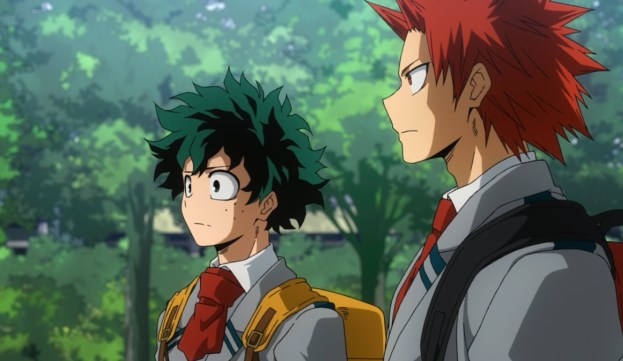
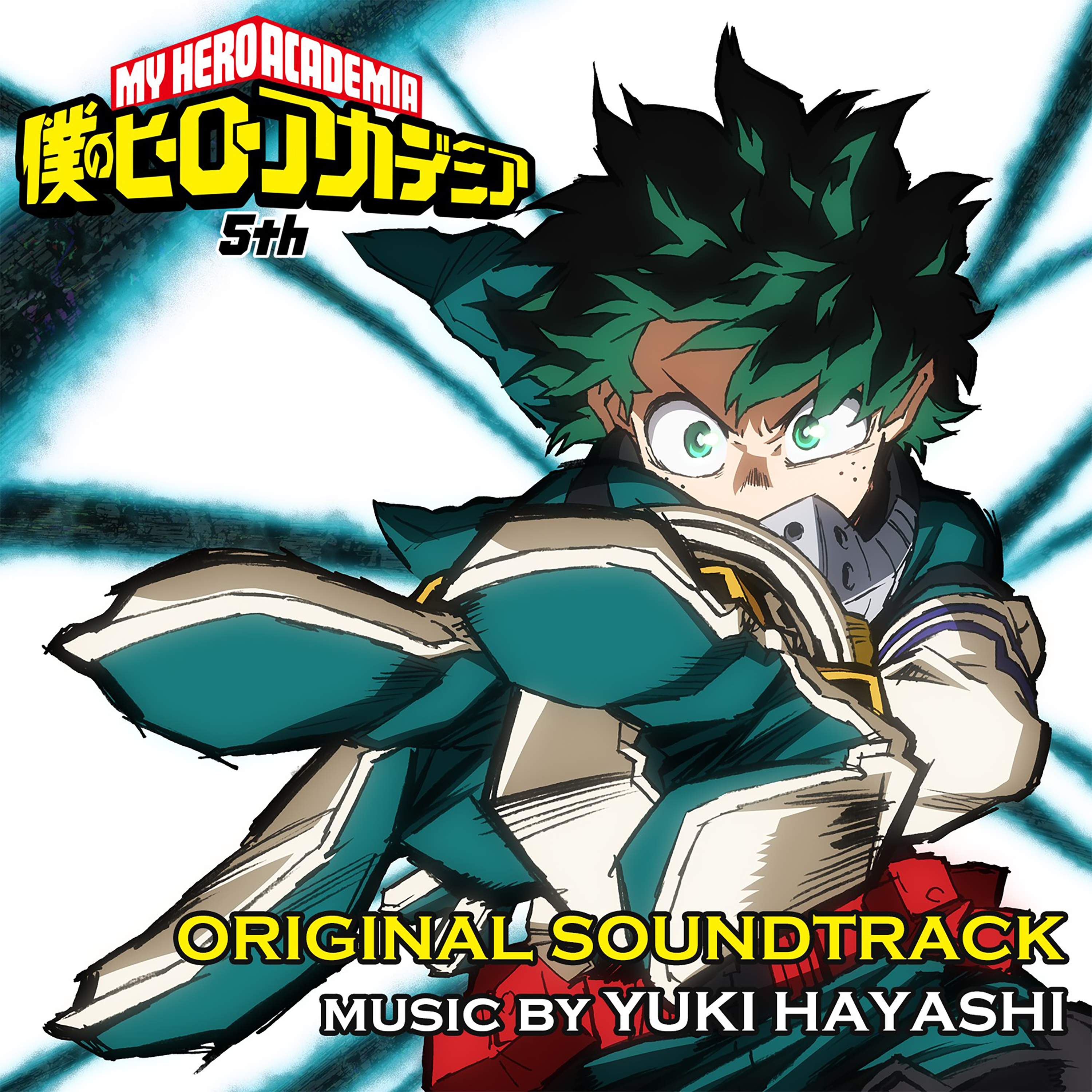
Milan Records has announced the release of MY HERO ACADEMIA: SEASON 5 (ORIGINAL SERIES SOUNDTRACK) with music by composer and arranger YUKI HAYASHI (My Hero Academia: Heroes Rising, Pretty Cure, Strawberry Night).
Available everywhere now, the album features music written by Hayashi for the fifth season of the critically acclaimed, hugely popular anime series. In addition to the season five soundtrack, Hayashi has scored all four previous seasons of the hit anime television series as well as three corresponding film installments, My Hero Academia: Two Heroes, My Hero Academia: Heroes Rising and My Hero Academia: World Heroes’ Mission.
Yuki Hayashi was born in Kyoto in 1980. Being an active member in a men’s rhythmic gymnastics team in his early years spawned his interest in BGM while selecting songs to complement performances. This led him to begin teaching himself music composition while at university, despite not having a background in music itself. After graduating, Yuki acquired the basics of track making under house techno DJ and sound-maker Hideo Kobayashi and started producing his first range of music accompaniments for dance sports. His experience as a rhythmic gymnast has enabled Yuki to intuitively incorporate an eclectic range of music and produce a unique sound, empowering scenes from TV drama, animation and film.
MY HERO ACADEMIA: SEASON 5 (ORIGINAL SERIES SOUNDTRACK)








 Film Music Central