Yearly Archives: 2016

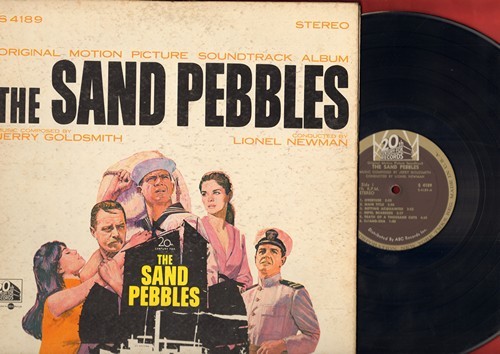
Jerry Goldsmith talks The Sand Pebbles (1966)

Jerry Goldsmith talks The Sand Pebbles (1966) Part 1

Jerry Goldsmith talks The Sand Pebbles (1966) Part 2

Jerry Goldsmith talks The Sand Pebbles (1966) Part 3

Jerry Goldsmith talks The Sand Pebbles (1966) Part 4

Video interviews of Jerry Goldsmith (who died in 2004) are few and far between, so when I saw that he gave an interview in 1989 for The Sand Pebbles (released in 1966), I knew I had to share it with you.=

220px-The_Sand_Pebbles_film_poster

The Sand Pebbles was directed by Robert Wise and stars Steve McQueen, Richard Attenborough and Richard Crenna, and tells the story of the (fictional) gunboat USS San Pablo as it patrols the rivers in 1920s China. The people refer to the boat as “The Sand Pebble” and its crew as “Sand Pebbles” (hence the name of the film).

Sand20

The plot follows Holman (McQueen), a machinist’s mate who joins the San Pablo. After an offscreen incident, tensions between the boat, the crew, and the Chinese grow tenser than ever. The boat is ordered to leave the river and return to the coast, but the commander disobeys in order to rescue two American missionaries, who will surely be killed by the Communists if they are not taken away.

sand-pebbles-mako-mcqueen

It’s been a long time since I saw this movie, but I remember the ending (I won’t tell you how it ends, you’ll have to see for yourself), had me very upset (but in a good way). Enjoy this interview from one of the masters of film music.

See also:

Jerry Goldsmith talks Chinatown (1974)

Jerry Goldsmith talks about Alien (1979)

Jerry Goldsmith talks Lionheart (1987)

Film Composer Interviews A-H

Film Composer Interviews K-Z

Become a Patron of the blog at patreon.com/musicgamer460

Check out the YouTube channel (and consider hitting the subscribe button)

Don’t forget to like Film Music Central on Facebook 🙂

Brian Tyler talks Rambo (2008)

The Rambo franchise is a series of films consisting of: First Blood (1982), Rambo: First Blood Part II (1985), Rambo III (1988) and Rambo (2008). Of these films, the first three were all scored by Jerry Goldsmith. For the fourth (and ultimately final) entry in the series, the score was composed by Brian Tyler (Iron Man 3, Thor: The Dark World, Avengers: Age of Ultron). It’s been a while, but I’ve seen most of the franchise, including this film, and I remember enjoying it very much (though I found some of the violence hard to take, but that’s just me.)

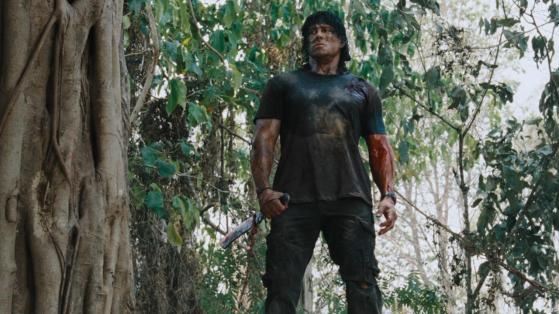
Rambo is set twenty years after the events of Rambo III and finds John Rambo living in Thailand barely making a living from catching snakes and providing boat rides. He ferries a group of missionaries up the Salween River into Burma and drops them off at a village of Karen tribespeople. The group is later captured when the ruthless Major Pa Tee Tint attacks and massacres the village.

image-w1280

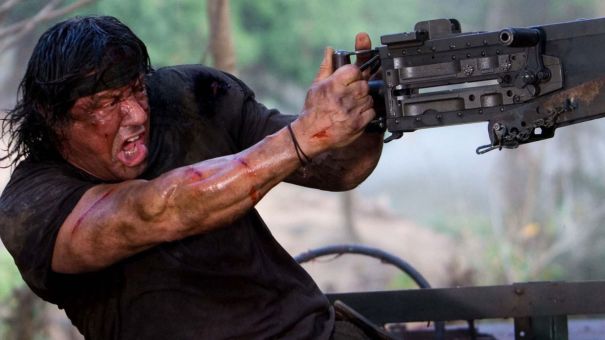
Rambo later transports a group of mercenaries on a rescue mission and secretly follows along after his offers of help are refused by the group’s leader. It is up to Rambo and his allies, a Karen rebel named Myint and the mercenary sniper nicknamed “School Boy” to save the mercenaries and the hostages when the former are also captured by Tint’s men. It’s a bloody fight that ends with Tint and all of his men dead (with Rambo personally dealing with the major). After all of this, Rambo decides it’s finally time to return to the United States and visit his family, which is where we see him as the story ends.

rambo-1200-1200-675-675-crop-000000

To help maintain continuity between this film and the rest of the franchise, Tyler was asked to incorporate Goldsmith’s original themes into his score. Tyler, in the interview, describes the score as an overall homage to Goldsmith’s work. At the same time, Tyler is incorporating new themes of his own, a sort of blending of the old and the new as far as the music goes.


I’ve been a fan of both Goldsmith’s and Tyler’s work for quite some time (if you’ve never heard of Brian Tyler before, I urge you to go look up his work, you can find just about anything he’s written on YouTube, he’s a phenomenal talent), and this interview provides great insight into his thought process. The interview also contains comments by Sylvester Stallone (who not only starred in this film, he also directed it and wrote the story.)

I hope you enjoy this interview and please, do check out Brian Tyler’s work, it really is amazing.

You can become a patron of the blog at patreon.com/musicgamer460

See also:

Film Composer Interviews A-H

Film Composer Interviews K-Z

See also:

Brian Tyler conducts The Mummy (2017)

Brian Tyler scoring Partition (2007)

Brian Tyler conducting and scoring Now You See Me 2 (2016)

Brian Tyler talks War (2007)

Brian Tyler “Alien vs. Predator: Requiem” scoring session (2007)

Brian Tyler “Law Abiding Citizen” scoring sessions (2009)

Brian Tyler “Dragonball Evolution” scoring session (2009)

Brian Tyler talks Fast Five (2011)

Brian Tyler “Battle: Los Angeles” (2011) scoring session

Brian Tyler scoring session for Iron Man 3 (2013)

Brian Tyler “Teenage Mutant Ninja Turtles” (2014) scoring session

Brian Tyler “Power Rangers” scoring session (2017)

 Don’t forget to like Film Music Central on Facebook 🙂

Film Music 101: Foley

In the world of film music, Foley refers to the reproduction of everyday sound effects that are added in post-production to enhance the audio quality of a film. And by everyday sound effects, I mean things as simple as the “swishing” sound that clothing makes, the sound of shoes “tapping” on the floor, the sound of glass “breaking” and so on.

Foley artists may be required to record sound effects if the props and set of a film do not react in the same way as their real-life counterparts might (for example, a prop sword made of rubber is not going to sound like the real thing, so a Foley artist would have to dub in the sound of a metal sword).

Foley_Room_at_the_Sound_Design_Campus_(cropped)

A Foley Artist at work

A Foley artist might also be brought in to cover up unwanted sounds captured on a movie set, like the sound of an airplane or passing traffic. If the Foley artist has done their job correctly, the addition of these sound effects should be completely unnoticeable.

The history of what is known as “Foley” dates back to radio programs of the 1920s, when sound effects had to be created live and often on the spot.

Broadcasting_a_radio_play_at_NBC_studio

The man second from the right is a “sound effects man” That black board he’s holding helped make the sound of a ringing telephone or simulate the sound of a door closing.

As recording technology became more advanced, the Foley effects evolved as well. How interesting! Now you know what they mean when the credits refer to “Foley.”

You can become a patron of the blog at patreon.com/musicgamer460

For more Film Music 101: see here

Don’t forget to like Film Music Central on Facebook 🙂

Marco Beltrami talks Live Free or Die Hard (2007)

51YtBMa-prL._SX200_QL80_

Marco Beltrami talks Live Free or Die Hard (2007)

I have a slight confession to make: I’ve never actually seen any of the Die Hard movies. I’ve heard of them yes, but actually sat down and watched? No. I do know they all star Bruce Willis, and as far as I know they’ve all done pretty well at the box office. I happened across this interview by Marco Beltrami, who composed the music for Live Free or Die Hard and I found myself entranced by his work.

0bcc97be74e725358380384f6c9f82d0bfe82380098076072d4a05d450118024

Beltrami mentions (and I did not know this) that the late Michael Kamen composed the music for the first three Die Hard films, and that he did his best to live up to Kamen’s musical legacy. What I love about this interview is the depth that Beltrami goes into. He actually describes (in brief) the recording process, so even if you don’t like Die Hard, you should still watch this interview because of the detail he goes into.

After all, it’s not every day you see an interview like this one. Enjoy! (I know you will)

See also:

Marco Beltrami talks Blade II (2002)

Marco Beltrami and Marilyn Manson talk Resident Evil (2002)

Marco Beltrami talks 3:10 to Yuma (2007)

Marco Beltrami talks The Wolverine (2013)

Marco Beltrami talks World War Z (2013)

My thoughts on: Live Free or Die Hard (2007)

Film Composer Interviews A-H

Film Composer Interviews K-Z

Become a patron of the blog at: patreon.com/musicgamer460

Check out the YouTube channel (and consider hitting the subscribe button)

Don’t forget to like Film Music Central on Facebook 🙂

Michael Kamen talks The Iron Giant (1999)

images

Credit to Warner Bros.

Part One

Part Two

Part Three

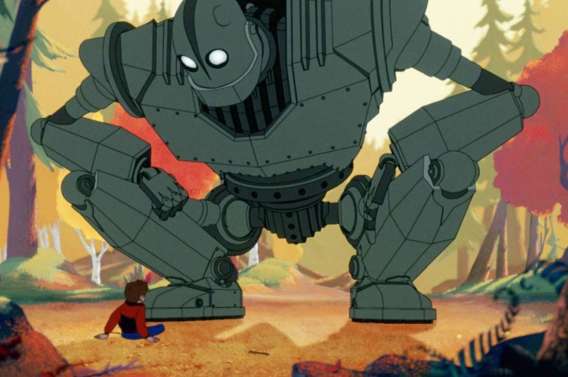
At the close of the old century, Warner Bros. Studio released The Iron Giant. The feature starred Eli Marienthal as Hogarth Hughes, Christopher McDonald as Agent Kent Mansley, Harry Connick Jr. as Dean, Jennifer Aniston as Hogarth’s mother and Vin Diesel (yes, THAT Vin Diesel) as the voice of the Giant. This film marked the directorial debut of Brad Bird (The Incredibles, Mission Impossible: Ghost Protocol).

The composer, Michael Kamen, was initially given a temp score of science-fiction music composed by Bernard Herrmann, but the music “scared him completely.” As a result, Kamen traveled to Prague for inspiration and eventually found it listening to the Czech Philharmonic.

the_iron_giant_hed

Rather unusually, Kamen not only recorded the score over a single week (as opposed to a month), it was also recorded without synchronizing the music to the picture. By that I mean, Kamen did not have a visual of the film present during the recording process (very unusual). Kamen visualized the score as something that could be recorded and listened to as a single piece of concert music.

The score went on to win an Annie Award for Music in an Animated Feature Production on November 6th, 1999.

The interview is broken into three parts (hence the three links) and I hope you enjoy Kamen’s talk about creating the score for this adorable film.

You can become a patron of the blog at patreon.com/musicgamer460

See also:

Film Composer Interviews A-H

Film Composer Interviews K-Z

Don’t forget to like Film Music Central on Facebook 🙂

Film Music 101: Montage

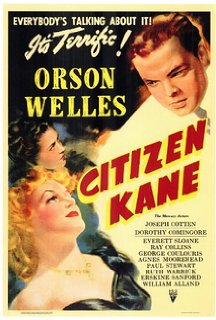
In film music, a montage is when several small audio clips are strung together to imply an abbreviated passage of time or history. One of the first prominent uses of montage in American cinema came in 1941 with Orson Welles’ Citizen Kane.

51msLit3GqL._AC_UL320_SR216,320_

© 1941 RKO/Turner Entertainment

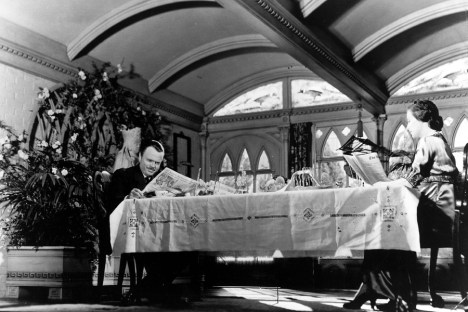
Early on, a flashback describes the early years of Kane’s marriage to his first wife. The progression of time (and the deterioration of their marriage) is shown through a montage of different conversations taking place at the breakfast table. The loving couple evolves into a pair who live separate lives and never speak to one another.

Citizen Kane- Breakfast Montage

The score was created by Bernard Herrmann, and in this montage, the music beautifully encapsulates the changing feelings between the couple. The music begins warm and idyllic, then changes into a faster paced, almost irritating melody.

breakfast3

With each segment, the music becomes faster and more frenetic, reflecting how the relationship between man and wife is slowly breaking down. Until the final segment comes, and then, the music eases back as you see that the couple is (apparently) no longer on speaking terms.

You can become a patron of the blog at patreon.com/musicgamer460

Don’t forget to like Film Music Central on Facebook 🙂

See also:

Film Music 101: Borrowing

Film Music 101: Arranger

Film Music 101: Anempathetic sound

Film Music 101: Empathetic Sound

Film Music 101: Foley

Film Music 101: Mickey Mousing

Film Music 101: “Stinger” Chords

Film Music 101: Dubbing

Film Music 101: Diegetic vs. Non-Diegetic Music

Film Music 101: Underscore

Film Music 101: Sidelining

Film Music 101: “Test” Lyrics

Film Music 101: The First Film Score

Film Music 101: “Stinger” Chords

In film music, particularly in classic animated cartoons, a stinger chord (also known as a shock chord) is “a sharply attacked, but not necessarily loud, chord used to reinforce moments of surprise or revelation.” (Neumeyer, Film Music Analysis and Pedagogy, pg. 4)

Stinger chords often come up when a composer is practicing “Mickey Mousing” and the music is intended to reflect some sudden surprise or shock felt by a character.

Practically every episode of the MGM series Tom and Jerry (1940-1957) contains a stinger chord. The music for every episode (save one) was composed by Scott Bradley (1891-1977), MGM’s house composer for cartoon music.

Scott_Bradley

Bradley LOVED to use those stinger chords

The best way to explain how stinger chords work is to show a few examples. This first example comes from the closing 90 seconds of Polka-Dot Puss (1949). For most of the cartoon, Jerry (the mouse) has convinced Tom (the cat) that he is suffering from the measles (which was a big deal at that time). However, Tom discovers he’s been tricked and is determined to make Jerry pay. But something is wrong with Jerry now….listen to the music around 0:48 to hear a big stinger chord when Tom realizes he’s in BIG trouble.

a8d9d483627ce7689318744ff1e134a1--tom-and-jerry-jerry-oconnell

Polka-Dot Puss (fragment) (1949)

Stinger chords were also used to describe moments of attraction (romance that is), usually when Tom (and occasionally Jerry) have spotted a pretty girl. Listen around 1:12 in Casanova Cat (1951), when Tom arrives to woo a girl cat who has just inherited a fortune!

image-w448

Casanova Cat (fragment) (1951)

And for a final example, I present the 1947 short Dr. Jekyll and Mr. Mouse. The cartoon is full of stinger chords.  I won’t spoil the plot by telling you where they are in this one, I hope you enjoy watching and listening for them (this is one of my favorite Tom and Jerry cartoons).

drjekyllandmrmousepotion

Dr. Jekyll and Mr. Mouse (fragment) (1947)

That’s all for right now, enjoy!

Become a Patron of the blog at patreon.com/musicgamer460

Check out the YouTube channel (and consider hitting the subscribe button)

Don’t forget to like Film Music Central on Facebook 🙂

See also:

Film Music 101: Dubbing

Film Music 101: Mickey Mousing

Film Music 101: Diegetic vs. Non-Diegetic Music

Film Music 101: Underscore

Film Music 101: Music Editor

Film Music 101: Sidelining

Film Music 101: “Test” Lyrics

Film Music 101: The First Film Score

Film Music 101: Borrowing

Film Music 101: Arranger

Film Music 101: Anempathetic sound

Film Music 101: Empathetic Sound

Film Music 101: Foley

Film Music 101: Montage

Film Music 101: Compilation Score

Film Music 101: Leitmotif

Film Music 101: Orchestration and cues

Interstellar “No Time for Caution”

Like many, I watched enthralled when Interstellar (2014) came out into theaters. Even before I first saw the film, I’d heard that there were some fairly intense musical sequences. But nothing, absolutely NOTHING could prepare me for the sequence known as “No time for caution.” To briefly sum up how the story gets to this point: Cooper (Matthew McConaughey) is put in charge of a mission to scout three planets to see if one of them is capable of supporting the human race in place of the dying Earth. One planet has already been proven unviable, the third is too far away, and the second planet was claimed (falsely) by Dr. Mann (Matt Damon) to be a viable place to live (frigid conditions notwithstanding).


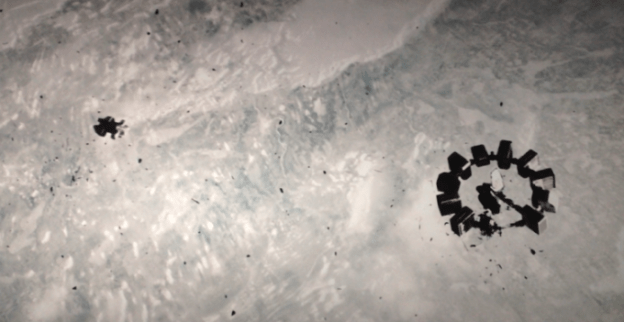
Dr. Mann claimed that there was water located deep under the surface. Cooper discovered this was a lie and after surviving a murder attempt, Cooper and Brand (Anne Hathaway) chase after Dr. Mann who is making his way to the spaceship Endurance without them. Insane after years of isolation, Dr. Mann has convinced himself that he can somehow control the Endurance and take it back to Earth. In his rush to board, Mann ignores the fact that his ship is docked improperly, meaning the hatch seal is not stable. When the door seal is forced to open anyway, Mann is blown out of the ship into space and Endurance is sent spinning out of control. If Cooper and Brand can’t dock and stabilize the ship, humanity is doomed.

This is where the cue begins. There is a long high pitched drone immediately after the explosion (as Cooper and Brand watch in shock as Endurance begins to spin wildly). Then a strong drumbeat sets in as Cooper makes his decision. He orders TARS (a robot) to analyze the Endurance’s rate of spin (to help with docking). And when Brand asks the fateful question “Cooper what are you doing?” The only answer is “Docking.” This one word sets off the next stage of the cue in a revolving spiral of theme and variation.

In fact, I listened to this cue over and over and it finally hit me, that composer Hans Zimmer used a Baroque form called passacaglia when he put this cue together. A passacaglia is a musical form based on a repeating melody in the bass line. As you listen to the cue, listen closely to the primary melody (which launches around 0:44, 0:45 in the soundtrack version) and hear how it continues, leaping from instrument to instrument for most of the piece.

I hope you enjoy “No Time for Caution” as much as I do. Please comment if you liked it (or even if you didn’t).

Become a Patron of the blog at patreon.com/musicgamer460

Check out the YouTube channel (and consider hitting the subscribe button)

See also: Film Soundtracks A-W

Don’t forget to like Film Music Central on Facebook 🙂

Film Music 101: Compilation Score

Unlike an original film score, which is composed specifically for the film, the compilation score consists of background music that is assembled entirely from pre-existing material.

Graduateposter67

Copyright © 1967 by Embassy Pictures

Using Simon & Garfunkel songs for the score had a big impact on later film music

Compilation scores really took off in the mid-1960s after the 1967 film The Graduate featured a score consisting entirely of Simon & Garfunkel music (including “The Sound of Silence” and “Mrs. Robinson.”).  Compilation scores can also be known as pop scores if the pre-existing music consists of pop songs.

MV5BNDYyMDgxNDQ5Nl5BMl5BanBnXkFtZTcwMjc1ODg3OA@@._V1_SX640_SY720_

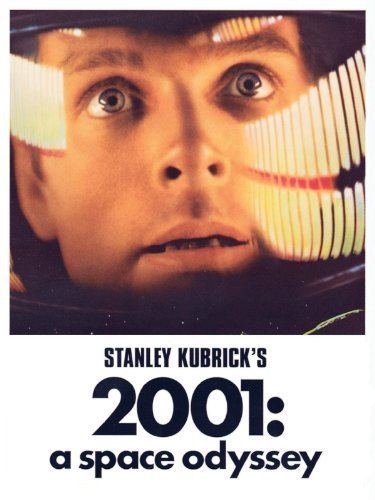
Another example of the compilation score is 2001: A Space Odyssey (1968). Most infamously, Stanley Kubrick rejected composer Alex North’s original score at the last minute and retained the film’s temp track (consisting of classical pieces) as the film’s final score.


The advent of compilation scores led older film composers to bemoan the growing belief that the classic film score (as created in the 1930s) was “dead and buried.” While this appeared to be true for a time (as compilation scores became exceptionally popular), original film scores never fully stopped being created, they were merely placed on the back burner for a decade or so until John Williams stepped up with his earth-shattering score for Star Wars (1977).

Become a Patron of the blog at patreon.com/musicgamer460

Check out the YouTube channel (and consider hitting the subscribe button)

See also:

Film Music 101: Borrowing

Film Music 101: Arranger

Film Music 101: Anempathetic sound

Film Music 101: Empathetic Sound

Film Music 101: Foley

Film Music 101: Mickey Mousing

Film Music 101: “Stinger” Chords

Film Music 101: Dubbing

Film Music 101: Diegetic vs. Non-Diegetic Music

Film Music 101: Underscore

Film Music 101: Sidelining

Film Music 101: “Test” Lyrics

Film Music 101: The First Film Score

Don’t forget to like Film Music Central on Facebook 🙂

James Horner talks The Perfect Storm (2000)

220px-Perfect_storm_poster

James Horner talks The Perfect Storm (2000)

In 2000, Wolfgang Petersen directed The Perfect Storm, a biographical disaster film that recounts the true story of the Andrea Gail, a fishing vessel lost with all hands during the “Perfect Storm” of 1991.

In the film, George Clooney plays Billy Tyne, captain of the Andrea Gail, a commercial fishing boat. Needing money, Tyne convinces his crew to join him on one last fishing trip, even though it’s already very late in the season. They proceed past their usual fishing grounds on the Grand Banks of Newfoundland and gain a large catch in the Flemish Cap. But just as the ship is fully loaded with fish, the ship’s ice machine breaks, making it imperative for the Andrea Gail to race back to port with their catch before it spoils.

However, in their absence, the “Perfect Storm” has been developing in the waters between the ship and the port. The “Perfect Storm” evolved from a nor-easter that absorbed the remnants of Hurricane Grace (briefly a category 2 hurricane) and ultimately became a small hurricane in its own right. The storm generated huge waves, with one buoy off Nova Scotia measuring one wave at 100.7 feet.

1513781404_xl

Learning of this storm, Tyne and the crew have a choice: wait out the storm (but lose their catch and all potential profits), or risk the storm and make for home as quickly as possible. Not wanting all their work to be for nothing, the decision is made to head for home and they sail into the storm. Even though this film is based on a true story, everything that happens after the Andrea Gail’s final radio contact is pure speculation since the ship (and the crew) has never been found.

Nevertheless, the film makes an effort to portray how the ship’s last hours might have gone: the ship is mercilessly battered by gigantic waves before finally capsizing and sinking, taking all hands down with it (except for rookie fisherman Bobby Shatford who briefly escapes to the surface before being carried away by the swells).

la-tormenta-perfecta-foto-critica

I have a love-hate relationship with movies based on true events, especially the ones where you know going in that the outcome won’t be good (like watching Titanic, that story has to end badly). I say love-hate because, while I love watching the movie and seeing the drama play out, deep down I hate knowing that, despite everything, the characters are doomed to failure and (in some cases) certain death. For me, it’s hard to cheer on characters that I know will die by the end of the story. That being said, The Perfect Storm, while heart-wrenching, is still told extremely well.

The score was composed by James Horner, and in this interview he discusses how he “created emotion” with this score, because so much of this story is driven by emotion and raw passion.

See also:

James Horner Star Trek II: Wrath of Khan

James Horner talks Aliens (1986)

James Horner talks Field of Dreams (1989)

James Horner talks The Rocketeer (1991)

James Horner scoring Braveheart (1995)

James Horner talks A Beautiful Mind (2001)

James Horner talks Windtalkers (2002)

James Horner talks Avatar (2009)

James Horner talks The Amazing Spider-Man (2012)

Film Composer Interviews A-H

Film Composer Interviews K-Z

Become a patron of the blog at: patreon.com/musicgamer460

Check out the YouTube channel (and consider hitting the subscribe button)

Don’t forget to like Film Music Central on Facebook 🙂