Category Archives: Film Composer

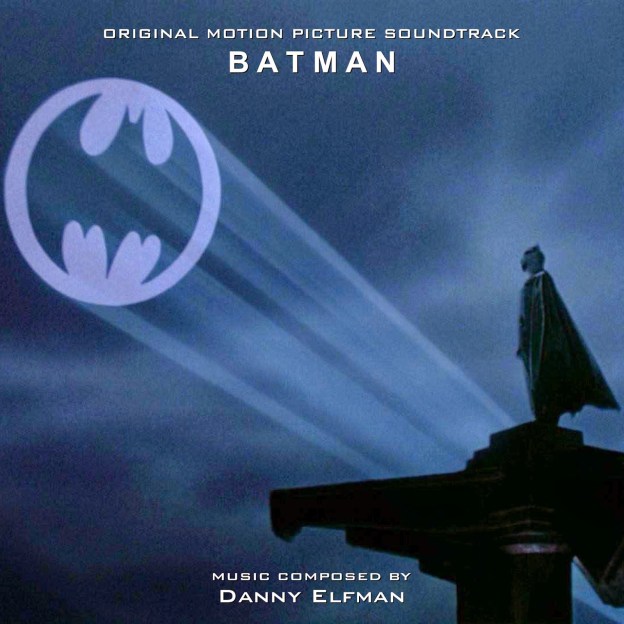
Danny Elfman talks Batman (1989)

With the exception of Superman: The Movie, I’m hard pressed to think of a superhero film more iconic than Tim Burton’s Batman (no offense to fans of the Christopher Nolan trilogy). Based in part on The Killing Joke and The Dark Knight Returns comics, Batman helped to establish the modern superhero film genre and also helped ignite the DC Animated Universe (launched with the premiere of Batman: The Animated Series). The Caped Crusader was portrayed by Michael Keaton, and his eternal nemesis the Joker was brought to memorable life by Jack Nicholson.

Batman-1989-Batman-Bruce-Wayne-Michael-Keaton-and-girlfriend-Vicki-Vale-Kim-Basinger-800x450

Several factors contributed to make this film so iconic: one is the amazing sets and backgrounds that make up Gotham City. The second is Danny Elfman’s awe-inspiring score for this film. Elfman was brought in by Burton after the two had previously collaborated for Beetlejuice (1988), this despite the fact that Elfman knew very little about the current state of Batman in comics (he was given a copy of The Dark Knight Returns for reference).

Having grown up watching re-runs of “campy Batman” starring Adam West and Burt Ward on television, I initially didn’t like this “dark” Batman at all, but as I grew older and learned about the comics history of the character, I grew to appreciate what Tim Burton had done (and there’s no denying that Jack Nicholson’s performance as The Joker is one for the ages).

Jack_Nicholson_joker_040917

I was pleased to find this interview and “making of” for the Batman score and I hope you enjoy listening to it too (Elfman shares a funny story about how he came up with the iconic main theme for the film). Let me know your thoughts on Batman in the comments below!

See also:

Danny Elfman talks Batman Returns (1992)

Danny Elfman “Planet of the Apes” scoring session (2001)

Danny Elfman talks Spider-Man (2002)

Danny Elfman talks Meet the Robinsons (2007)

Danny Elfman talks Alice in Wonderland (2010)

Danny Elfman talks Fifty Shades of Grey (2015)

Danny Elfman talks Alice Through the Looking Glass (2016)

Film Composer Interviews A-H

Film Composer Interviews K-Z

Become a Patron of the blog at patreon.com/musicgamer460

Check out the YouTube channel (and consider hitting the subscribe button)


Don’t forget to like Film Music Central on Facebook

*poster image is the property of Warner Bros. Pictures

Hans Zimmer talks Man of Steel (2013)

Hans Zimmer talks Man of Steel (2013)

After Superman Returns (2006) fell flat at the box office, Warner Bros. made the decision to reboot the Superman film franchise and cast Henry Cavill in the title role. Like Superman: The Movie decades before, Man of Steel begins on the doomed planet Krypton, where Jor-El has learned of the planet’s imminent destruction and has his infant son Kal-El sent away in a small rocket ship shortly before the planet explodes.

57c01647b8312a5be660f9576dbd8ae7e4250b1f

Before he is sent away, however, Jor-El takes steps to infuse the genetic codes of Krypton into Kal-El’s DNA (codes that are also sought by General Zod, a former friend of Jor-El). Growing up on Earth, Kal-El, now living under the name Clark Kent, wanders the country seeking a purpose in life after his foster father is killed in a tornado (he’d forbidden Clark to use his powers to save him).

Man of Steel “Sculptural Percussion” (2013)

Man of Steel “Percussion” (2013)

Clark is forced into action when General Zod and his compatriots escape the Phantom Zone and land on Earth, around the same time that Clark enters a Kryptonian scout ship discovered in the Arctic. Inside, Clark finds an AI of his real father, Jor-El, who gives him a Kryptonian uniform bearing the family symbol. Meanwhile, Zod intends to terraform Earth into a new Krypton (which would kill most if not all of Earth’s human inhabitants) and Clark must stop him before it’s too late.

Man-of-Steel-General-Zod-s

Man of Steel “Strings of Steel” (2013)

Man of Steel “Solo Violinist” (2013)

As I remember it, this film got mixed reviews, and was heavily criticized for the scene where Superman kills General Zod.

The music for Man of Steel was created by veteran composer Hans Zimmer, who had initially denied rumors that he would be scoring the film. To make sure that Man of Steel stood out from previous Superman films, Zimmer did not use John Williams’ iconic “Superman March” in any way, instead creating his own original themes for the character. The five links I’ve located concern the score in general (top link) and how the various instrumental parts were devised for the score (two for the percussion and two for the strings).

Man-of-Steel-screenshot1

 I still prefer Christopher Reeve’s interpretation of Superman (and the “Superman March” will always be a favorite piece of mine), but I’ve also heard that Henry Cavill has done a good job in the role. I hope, therefore, that you enjoy listening to Hans Zimmer talking about the score for Man of Steel.

See also:

Hans Zimmer talks The Road to El Dorado (2000)

Hans Zimmer talks Hannibal (2001)

Hans Zimmer talks The Dark Knight (2008)

Hans Zimmer talks Sherlock Holmes (2009) and Sherlock Holmes: A Game of Shadows (2011)

Hans Zimmer talks Inception (2010)

Hans Zimmer (and Richard King) talk The Dark Knight Rises (2012)

Hans Zimmer talks Interstellar (2014)

Become a Patron of the blog at patreon.com/musicgamer460

Check out the YouTube channel (and consider hitting the subscribe button)

Don’t forget to like Film Music Central on Facebook 🙂

*poster image is the property of Warner Bros. Pictures

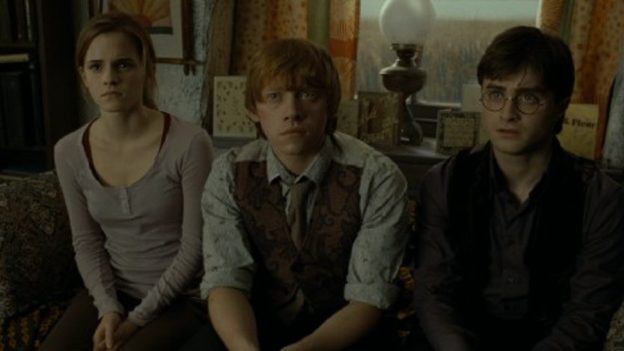
Alexandre Desplat talks Harry Potter and the Deathly Hallows Part 1 (2010)

I know the Harry Potter films are very popular, so what I’m about to say will probably shock you: I’ve only seen Harry Potter and the Sorcerer’s Stone (and a few scenes from The Chamber of Secrets). I was simply never able to get into the Harry Potter films the way my friends were (knowing that they seriously diverged from the books didn’t help). I do mean to watch them all someday though.

Though I haven’t seen most of them, I do remember when the news broke that Harry Potter and the Deathly Hallows would be split into two films. I wasn’t that surprised by the news, the last book was so huge that it would’ve been nearly impossible to jam everything into a single film. Therefore, Harry Potter and the Deathly Hallows Part 1 was released in 2010, while Part 2 was released the following year.

The film follows Harry and his friends as they attempt to seek and destroy the Horcruxes that contain pieces of Voldemort’s soul (and thereby make him immortal). At the same time, Voldemort is plotting to kill Harry and he also seeks the Elder Wand (one of the “Deathly Hallows”, the others being the Cloak of Invisibility and the Resurrection Stone).

The music for this film and its sequel was composed by Alexandre Desplat, making him the fourth composer to provide music for this film series (John Williams composed for the first three films, Patrick Doyle for the fourth and Nicholas Hooper for films five and six).Desplat is an accomplished composer, having written the scores for The Golden Compass, The Grand Budapest Hotel, Argo and the upcoming Rogue One (among many other films).

In this interview clip found above, we are given a look at the recording of the score during post-production, with Desplat and several producers giving insight into how the score was put together, and what it was like working with a new composer.

I hope you enjoyed learning a little bit about the score of this film. Enjoy the weekend!

See also:

Film Composer Interviews A-H

Film Composer Interviews K-Z

Nicholas Hooper “Harry Potter and the Half-Blood Prince” scoring session (2009)

Become a Patron of the blog at patreon.com/musicgamer460

Check out the YouTube channel (and consider hitting the subscribe button)

Don’t forget to like Film Music Central on Facebook 🙂

*poster image is the property of Warner Bros. Pictures

Danny Elfman talks Spider-Man (2002)

Spider-Man2002Poster

Danny Elfman talks “Spider-Man” (2002)

When I first saw Spider-Man (sometime in 2003 0r 2004), I would never have guessed that the character would be rebooted twice less than twenty years later. No offense to Andrew Garfield or Tom Holland, but for me Spider-Man will always be Tobey Maguire.

The first Spider-Man film served as an origin story for everyone’s favorite web-slinger. Peter Parker (Maguire) starts out as a nerdy high school senior who lives with his Aunt May and Uncle Ben (he also has a hopeless crush on Mary Jane Watson) and is friends with Harry Osborn (the son of Norman Osborn, the CEO of Oscorp). After being bitten by a radioactive spider, Peter discovers that he has developed superhuman abilities: he can shoot webbing, climb walls and sense things ordinary humans cannot. After Uncle Ben is killed (by a thief he allowed to get away), Peter becomes “Spider-Man” and begins to fight injustice in the city, while working as a photographer for the city newspaper.

spider-man-stills-006

Meanwhile, Norman Osborn is facing problems of his own. Looking to secure a military contract, he uses an experimental (and highly unstable) performance-enhancing chemical upon himself, but the procedure goes wrong and Norman develops an insane alter-ego dubbed “The Green Goblin” by the newspaper. It’s only a matter of time before the Green Goblin and Spider-Man clash, and the ramifications will be huge for all concerned.

s13

The score for this film was created by Danny Elfman, a composer well-known for his work in the Batman films (having scored Batman and Batman Returns, as well as the theme for Batman: The Animated Series). In this interview, Danny Elfman talks about his composing process: how he likes to “block out” the important musical moments in a film before going back and filling in the gaps with the rest of the score. Such moments might include Spider-Man’s theme, the Goblin’s theme, a love theme, etc. One of my favorite moments is when Peter discovers he can climb walls, I love how the music briefly matches Peter’s movements as he begins to climb up.

Please enjoy this look at Spider-Man with Danny Elfman. Of the three actors who have played the character, who do you think has done it the best? Let me know in the comments below, catch ya’ll later 🙂

See also:

Danny Elfman talks Batman (1989)

Danny Elfman talks Batman Returns (1992)

Danny Elfman “Planet of the Apes” scoring session (2001)

Danny Elfman talks Meet the Robinsons (2007)

Danny Elfman talks Alice in Wonderland (2010)

Danny Elfman talks Fifty Shades of Grey (2015)

Danny Elfman talks Alice Through the Looking Glass (2016)

Film Composer Interviews A-H

Film Composer Interviews K-Z

Become a Patron of the blog at patreon.com/musicgamer460

Check out the YouTube channel (and consider hitting the subscribe button)

Don’t forget to like Film Music Central on Facebook 🙂

*poster image is the property of Columbia Pictures

Alan Silvestri talks Lara Croft Tomb Raider: The Cradle of Life (2003)

124819

Alan Silvestri talks Lara Croft Tomb Raider: The Cradle of Life (2003)

I know movies based on video games often get bashed as being sub-par (and for good reason most of the time) but as it happens I really like the Lara Croft Tomb Raider films starring Angelina Jolie. I can’t exactly put my finger on why, but every time I watch either film, it’s a very enjoyable couple of hours. Lara Croft Tomb Raider: The Cradle of Life, is the sequel and follows Lady Lara Croft as she searches for the mythical Pandora’s Box, a source of overwhelming power, before a rival tries to use it for world domination.

The orchestral score for this film was composed by the legendary Alan Silvestri (perhaps best known for scoring the Back to the Future trilogy and the original Predator, among many other films).

large-screenshot2

This making-of interview located above features Silvestri as he explains how he put the main themes of the film together. There are also several side by side sequences comparing the orchestra with the completed scene (I love moments like that).

The Cradle of Life is far from being the best film ever, but there are some great musical moments, particularly at the end when Lara finds Pandora’s Box. If you haven’t seen it before, it’s worth checking out at least once. Enjoy the interview with Alan Silvestri!

You can become a patron of the blog at patreon.com/musicgamer460

See also:

Film Composer Interviews A-H

Film Composer Interviews K-Z

Don’t forget to like Film Music Central on Facebook 🙂

*poster image is the property of Paramount Pictures

Thomas Newman talks Lemony Snicket’s A Series of Unfortunate Events (2004)

Thomas Newman talks “A Series of Unfortunate Events” (2004)

In 2004, Paramount Pictures released Lemony Snicket’s A Series of Unfortunate Events, a film adaptation of the first three books in the popular series (The Bad Beginning, The Reptile Room and The Wide Window). The film follows the three Baudelaire children, Violet, Klaus and Sunny, as they flee their wicked uncle Count Olaf (Jim Carrey), who seeks to claim their fortune for himself.

The music for this film was composed by Thomas Newman (Finding Nemo, Skyfall, Spectre) and the extended video above is half-interview, half scoring session, where we get to see a side by side view of the film scene and the recording session. Newman talks about the process of creating the themes, creating music to fit Jim Carrey’s character, and also creating music for the “pit band” in the play scene late in the movie.

Newman has some interesting thoughts on how a film score should come together (his thoughts on themes and characters startled me) and I enjoyed listening to his explanations because Newman is one of the most respected composers in Hollywood.

Whether you’ve seen A Series of Unfortunate Events, or not, I believe you will enjoy this video a great deal: there’s a lot of music and extended looks at recording sessions and truthfully this is one of the best Thomas Newman interviews that I’ve found thus far. Enjoy!

You can become a patron of the blog at patreon.com/musicgamer460

See also:

Thomas Newman talks Wall-E (2008)

Film Composer Interviews A-H

Film Composer Interviews K-Z

Don’t forget to like Film Music Central on Facebook 🙂

*poster image is the property of Paramount Pictures

Marco Beltrami talks Blade II (2002)

In the early 2000s (before The Twilight Saga set itself up as the vampire saga), there was another vampire of note appearing on the silver screen: Blade. Adapted from a comic book, Blade is a half-vampire who spends his days waging a behind-the-scenes war against vampires and the humans allied with them. Being a half-vampire himself, Blade suffers from a growing thirst for blood, but also has none of the weaknesses of regular vampires.

Blade (1998), introduced us to the character and his war against vampires, while Blade II (2002), continues the story. In the sequel, two years after the original story took place, Blade is forced to join forces with his hated rivals to combat a new strain of vampirism that turns those infected into “Reapers”, a mutation that is immune to all vampire weaknesses except for bright light.

blade_ii_2_758_426_81_s_c1

Reapers kill all humans that they come into contact with, while any vampires they feed on also become Reapers. Blade is brought in to help with the situation as the vampires have found themselves unable to contain the Reapers. Ironically, the team of vampires Blade is forced to work with (known as ‘the Bloodpack’) were actually trained for the sole purpose of killing Blade. (Also interesting to note: this film features a pre-Walking Dead Norman Reedus as seen in the picture below.)

Reedus-in-Blade-II-norman-reedus-25978012-853-480

The orchestral score for this film was composed by Marco Beltrami, and I was delighted to find this interview where he describes the process of creating the score for Blade II. One of the drawbacks of an action film is that the fights and mayhem usually drown out the score, so this interview provides a rare opportunity to hear pieces of the music without any interference.

I used to be really into movies like Blade II, and I feel it’s a good example of a comic adapted to film (and significant since this takes place before Marvel and DC began saturating the market in 2008). There have been whispers of Blade being rebooted into the Marvel Cinematic Universe, though I’m not sure where the character would fit in (it would be pretty huge to introduce the existence of vampires).

What did you think of Blade II? Did Marco Beltrami’s score stand out at all? Let me know your thoughts in the comments below.

See also:

Marco Beltrami and Marilyn Manson talk Resident Evil (2002)

Marco Beltrami talks Live Free or Die Hard (2007)

Marco Beltrami talks 3:10 to Yuma (2007)

Marco Beltrami talks The Wolverine (2013)

Marco Beltrami talks World War Z (2013)

Film Composer Interviews A-H

Film Composer Interviews K-Z

Become a patron of the blog at: patreon.com/musicgamer460

Check out the YouTube channel (and consider hitting the subscribe button)

Don’t forget to like Film Music Central on Facebook too 🙂

*film poster is the property of New Line Cinema

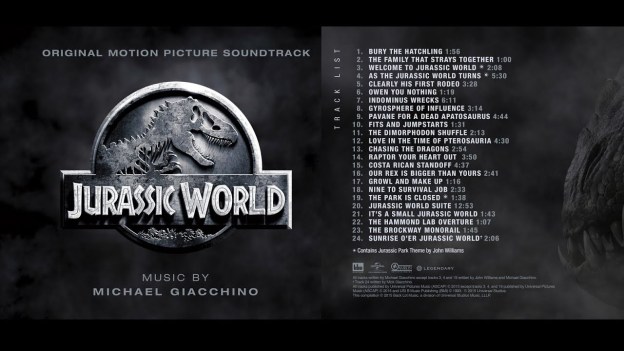
Michael Giacchino talks Jurassic World (2015)

I’m probably stretching things just a bit because this is from a red carpet interview, but he does speak about how he got the job of scoring Jurassic World, which is exciting.

Jurassic World was the long awaited sequel to Jurassic Park (it ignores the events of The Lost World and Jurassic Park 3, essentially erasing them from continuity), set over twenty years after the original story. Isla Nublar is now home to a massively successful dinosaur theme park, based on the original dream envisioned by John Hammond, who has sadly passed on and left the park in the charge of Simon Masrani.

hero_JurassicWorld-2015-1

Business couldn’t be better, but the corporations that ultimately control the park want to see even bigger profits. To that end, they commission a new dinosaur to be created using various strains of dino DNA. All of this is overseen by Claire Dearing, operations manager for the park. As the new dinosaur, dubbed “Indominus Rex” becomes prepped for its debut to the public, concerns are raised by Owen Grady, an ex-Navy SEAL and expert on Velociraptors (his job is to train the raptors to obey human commands).

As Owen sees it, breeding regular dinosaurs is dangerous enough, but creating a NEW one from scratch is opening up a whole new world of problems. To complicate matters, Dr. Wu refuses to disclose which strands of DNA were used to create Indominus Rex, meaning Owen initially has no idea what sort of abilities the dinosaur will have. During an inspection of the enclosure, Indominus Rex manages to escape, and Claire is suddenly faced with a rampaging dinosaur loose on an island full of thousands of unsuspecting guests…

jurassic-world.jpg.653x0_q80_crop-smart

According to Michael Giacchino, he was offered the job of scoring Jurassic World after he created some music for The Lost World video game and Steven Spielberg contacted him (after hearing the music) and said “This is great, when can you score this?” Spielberg was in fact so impressed with what Giacchino created that when the time came to pick a composer, he was the first person considered.

That being said, since John Williams score for the original film is so iconic, there are a number of references to the main theme of Jurassic Park throughout the film (this serves to tie the two films together musically). I think it’s really cool that Giacchino got the opportunity to score the film because he worked on the music for a video game first.

This little interview is pretty short, if I find a longer one I’ll be sure to add it, but for now, enjoy!

See also:

Michael Giacchino talks The Incredibles (2004)

Michael Giacchino talks Mission: Impossible 3 (2006)

Michael Giacchino talks Ratatouille (2007)

Michael Giacchino talks Up (2009)

Michael Giacchino talks Star Trek (2009)

Michael Giacchino talks Super 8 (2011)

Michael Giacchino talks John Carter (2012)

Michael Giacchino talks Star Trek: Into Darkness (2013)

Michael Giacchino talks Jupiter Ascending (2015)

Michael Giacchino scoring Rogue One: A Star Wars Story (2016)

Michael Giacchino talks Zootopia (2016)

Michael Giacchino talks Jurassic World: Fallen Kingdom (2018)

Film Composer Interviews A-H

Film Composer Interviews K-Z

Become a patron of the blog at: patreon.com/musicgamer460

Check out the YouTube channel (and consider hitting the subscribe button)

And don’t forget to like Film Music Central on Facebook


Brian Tyler “Alien vs. Predator: Requiem” scoring session (2007)

Note: I apologize for the blurry quality of the video, but the sound quality is perfect)

“Alien vs. Predator: Requiem” scoring session (2007)

It seemed like genius when Hollywood conceived the idea to do a crossover between the Alien and Predator franchises. Think about it: two “ultimate” alien species meeting each other, it’s potential movie GOLD! And to be fair, the first Alien vs. Predator did reasonably well, well enough for a sequel to be commissioned at any rate. Unfortunately, Alien vs. Predator: Requiem was….not so good (to put it politely). In fact, one of the few things praised about the film was Brian Tyler’s score (one of his earlier works).

u4S3eIGmG3LWEdPucNlEcFXv3Ng

If you haven’t seen the film, you’re not missing much. It basically picks up about five minutes after the first Alien vs. Predator film ends, with a hybrid Alien/Predator (known as a Predalien) bursting from a slain Predator, damaging their spaceship and sending it hurtling back to Earth. It sounds like it should be a great story (but trust me, it isn’t). Despite the film’s many, MANY flaws, Brian Tyler’s score does what it can to add some suspense to the story, and in the recording session footage that I found, you can hear the complexity that was woven into the material by the composer. I hope you enjoy listening to an example of Brian Tyler’s earlier work (he’d only been working on film scores for 10 years at this stage) and I apologize again for the blurry video quality.

You can become a patron of the blog at patreon.com/musicgamer460

See also:

Film Composer Interviews A-H

Film Composer Interviews K-Z

Brian Tyler scoring Partition (2007)

Brian Tyler talks War (2007)

Brian Tyler talks Rambo (2008)

Brian Tyler “Law Abiding Citizen” scoring sessions (2009)

Brian Tyler “Dragonball Evolution” scoring session (2009)

Brian Tyler talks The Expendables (2010) 

Brian Tyler talks Fast Five (2011)

Brian Tyler “Battle: Los Angeles” (2011) scoring session

Brian Tyler scoring session for Iron Man 3 (2013)

Brian Tyler “Teenage Mutant Ninja Turtles” (2014) scoring session

Brian Tyler conducting and scoring Now You See Me 2 (2016)

Brian Tyler “Power Rangers” scoring session (2017)

Brian Tyler conducts The Mummy (2017)

And don’t forget to like Film Music Central on Facebook

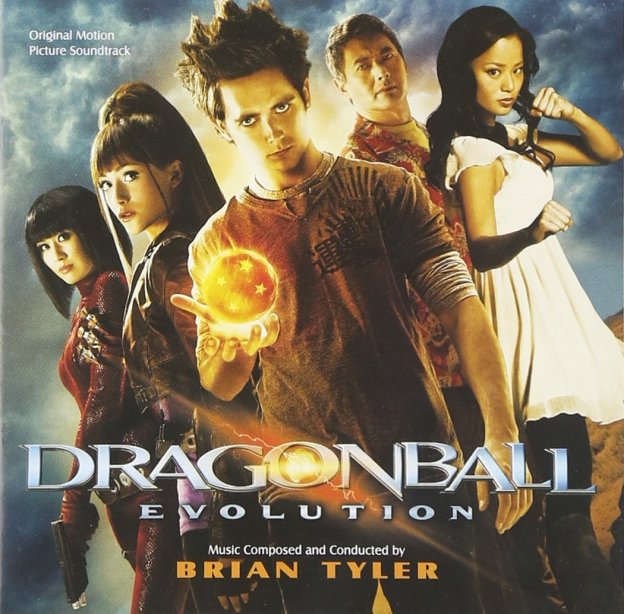
Brian Tyler “Dragonball Evolution” scoring session (2009)

“Dragonball Evolution” scoring session (2009)

I bet I know what you’re thinking: WHAT? They made a live-action movie based on Dragon Ball? Where, when and how can I get it???

Not.so.fast.

There’s a reason you likely haven’t heard of this film (and if you have seen it, you know what I’m about to say): it SUCKS. Badly. I mean REALLY badly. So badly that Akira Toriyama, the creator of the Dragon Ball manga, practically disowned the film. Yea, that’s pretty bad.

Based on the titular Dragon Ball manga, the film follows Goku and Bulma as they travel together to gather the seven Dragon Balls in a race to stop the demon Lord Piccolo before he can gather them first. Several of the major characters from the series are encountered: Goku, Chi-Chi, Bulma, Master Roshi, Piccolo and Yamcha. Shen Long, the legendary wish-granting dragon who only appears when the seven dragon balls are gathered, makes an appearance as well.

dragonball-evolution-poster

Despite the film being an overwhelming failure, there is one bright spot: the musical score, composed and conducted by Brian Tyler. The score was very well received and positively compared to other contemporary film scores.

dragon-ball-evolution-1013099

I found this short clip from a recording session for the film uploaded in February of 2009. What I love about Brian Tyler’s musical style, is that he doesn’t completely abandon classical conventions, the way some 21st century composers do. Instead, he works to blend the traditional orchestral sound with more “modern” themes using synthesizers and electronic instruments. He essentially goes for the best of both worlds and so far he has nailed it every time.

 Enjoy this look at the recording of the Dragonball Evolution soundtrack, and if you’re interested in the series, try the Dragon Ball and Dragon Ball Z anime instead of this film.

You can become a patron of the blog at patreon.com/musicgamer460

See also:

Film Composer Interviews A-H

Film Composer Interviews K-Z

Brian Tyler “Alien vs. Predator: Requiem” scoring session (2007)

Brian Tyler scoring Partition (2007)

Brian Tyler talks War (2007)

Brian Tyler talks Rambo (2008)

Brian Tyler “Law Abiding Citizen” scoring sessions (2009)

Brian Tyler talks The Expendables (2010) 

Brian Tyler talks Fast Five (2011)

Brian Tyler “Battle: Los Angeles” (2011) scoring session

Brian Tyler scoring session for Iron Man 3 (2013)

Brian Tyler “Teenage Mutant Ninja Turtles” (2014) scoring session

Brian Tyler conducting and scoring Now You See Me 2 (2016)

Brian Tyler “Power Rangers” scoring session (2017)

Brian Tyler conducts The Mummy (2017)

Like Film Music Central on Facebook here

*film poster is the property of 20th Century Fox