Category Archives: Interview

Michael Giacchino talks Up (2009)

So, I have a confession. It took me WAY too long to see Up (2009). All of my friends were raving about it when it came out, but for some reason I was not into the movie at all, so it was years later before I saw it. And then there’s that crazy huge bird, the talking dogs, a half-crazed explorer, etc. etc. But, I digress….
980x

Michael Giacchino talks Up (2009)

Up tells the story of retired widower Carl Fredrickson (Ed Asner), who turns his old house into a flying machine via thousands of balloons so that he can fulfill the last dream of his deceased wife: to visit Paradise Falls in South America. Almost immediately he picks up a stowaway: a young “Wilderness Explorer” named Russell (Jordan Nagai) who needs to earn his final merit badge for assisting the elderly.

Russell_dug_carl_fredricksen_in_pixars_up-wide

The journey is full of surprises, including an unexpected encounter with Charles F. Muntz (Christopher Plummer), a legendary explorer that Carl idolized as a child. Decades ago, he returned from an expedition claiming he’d discovered a new type of flightless bird, but was ridiculed by the scientific community as a liar. He departed, vowing to bring back a live specimen, and had never returned. As it turns out, Carl and Russell end up encountering a certain flightless bird (dubbed “Kevin” by Russell) which inevitably brings them to Muntz’s attention.

The music for this whimsical (and at the same time, deeply touching) film was composed by Michael Giacchino, whose prior work includes such films as Mission Impossible III, Star Trek and the sequel Into Darkness, The Incredibles, Dawn of the Planet of the Apes and Jurassic World.

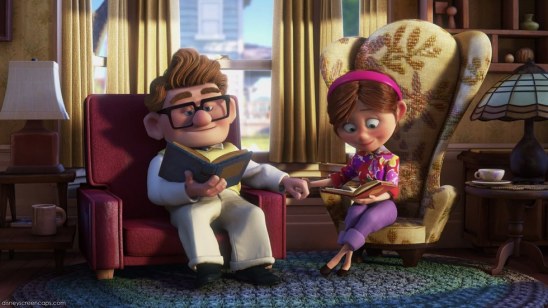
The opening of the film is what always sticks with me the most. In it, we see a montage of Carl’s life, from meeting Ellie as a young boy, to falling in love with her, to sadly discovering they can’t have children of their own, to the pair growing old. Over time, they continually save up to make that trip to Paradise Falls, but something always happens to stop them. Finally, Carl has the tickets purchased, but as he prepares to surprise his wife, she collapses and has to go to the hospital. That’s why Carl is so determined to make the trip, he knows it’s what Ellie would have wanted him to do. This part still makes me cry every single time I see it.

In this interview segment, Giacchino, along with the director, discuss how the score came together, and inbetween the moments of talking, there are wonderful scenes showing the orchestra in the recording studio (I love watching moments like these). Giacchino is an immensely talented composer, and Up is a great addition to both film and film music.

Become a Patron of the blog at patreon.com/musicgamer460
Check out the YouTube channel (and consider hitting the subscribe button)

See also:

Michael Giacchino talks The Incredibles (2004)

Michael Giacchino talks Mission: Impossible 3 (2006)

Michael Giacchino talks Ratatouille (2007)

Michael Giacchino talks Star Trek (2009)

Michael Giacchino talks Super 8 (2011)

Michael Giacchino talks John Carter (2012)

Michael Giacchino talks Star Trek: Into Darkness (2013)

Michael Giacchino talks Jupiter Ascending (2015)

Michael Giacchino talks Jurassic World (2015)

Michael Giacchino scoring Rogue One: A Star Wars Story (2016)

Michael Giacchino talks Zootopia (2016)

Michael Giacchino talks Jurassic World: Fallen Kingdom (2018)

Film Composer Interviews A-H

Film Composer Interviews K-Z

Don’t forget to like Film Music Central on Facebook 🙂

*all images are the property of Walt Disney Studios

Jerry Goldsmith talks Lionheart (1987)

While I am generally familiar with all of Jerry Goldsmith’s work, Lionheart (1987) is a film that I admit I have never heard of, and for good reason it turns out. The film received an exceptionally limited release in theaters, a VHS copy was not issued until 1994 and a DVD version was not seen until 2009.

220px-Lionheartposter87

Lionheart is loosely based on the real-life story of the Children’s Crusade. In this film, a young knight named Robert Nerra, who is disillusioned by the death of his brother, leads a band of orphans en route to join King Richard in the Third Crusade, and must also protect them from the Black Prince (who’d like to enslave all the children and sell them to the Muslims).

Lionheart-1987-4

The limited release does not change the fact that Goldsmith’s work was of exceptional quality and the video follows the composer as he works on recording the score in Budapest. I’m pleased to share a rare video of Goldsmith at work with all of you (if only more of these videos existed, what treasures they are!) Have a great weekend!

See also:

Jerry Goldsmith talks The Sand Pebbles (1966)

Jerry Goldsmith talks Chinatown (1974)

Jerry Goldsmith talks about Alien (1979)

Film Composer Interviews A-H

Film Composer Interviews K-Z

Become a Patron of the blog at patreon.com/musicgamer460

Don’t forget to like Film Music Central on Facebook 🙂

*all images and video are property of the film studio and the creator of the interview

Marco Beltrami and Marilyn Manson talk Resident Evil (2002)

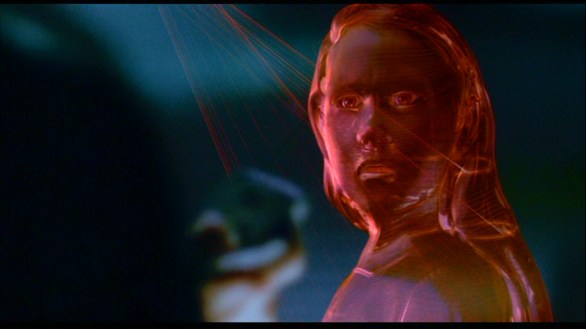
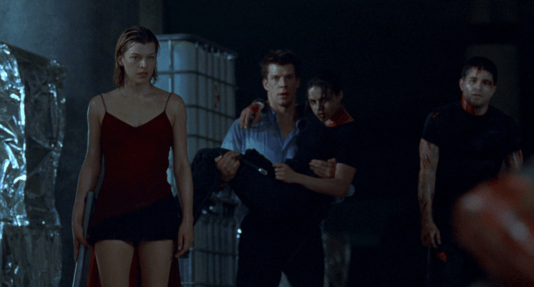
In 2002, the Resident Evil movie franchise launched with the first self-titled film in the series. Based on elements from the video games Resident Evil and Resident Evil 2, the movie Resident Evil follows Alice (Milla Jovovich) as she and a team must break into the Hive, a genetic research facility located underneath Raccoon City, to retrieve an anti-virus to stop a zombie plague. There’s one small complication however: the Hive is crawling with zombified employees and scientists.

125162

Not all of the zombies are alike either: while most are the typical flesh-eating zombie, others have mutated into “Lickers,” a more deadly creature with a monstrous appearance. On top of all this, the Red Queen A.I. that controls the facility is determined to stop them at all costs in order to protect the world above. Another complication in the story is that Alice initially wakes up in a deserted mansion with total amnesia. As the story progresses, she begins to remember bits and pieces (for example, she remembers the anti-virus was located in a specific room).

While this film (and the lengthy series which followed) clearly attempted to capitalize off the popularity of the Resident Evil video game, it is unfortunately remembered as yet another video game-to-film adaptation that did not do its subject material justice. And yet, despite receiving consistently terrible reviews (Roger Ebert put the film on his “Most Hated” list), the franchise spawned five sequels and is currently in the process of being rebooted. For those curious, here is the complete list of Resident Evil films:

  • Resident Evil (2002)
  • Resident Evil: Apocalypse (2004)
  • Resident Evil: Extinction (2007)
  • Resident Evil: Afterlife (2010)
  • Resident Evil: Retribution (2012)
  • Resident Evil: The Final Chapter (2016)

The score for this film was a collaboration between Marco Beltrami and Marilyn Manson (who knew?) and the interview regarding this film score features the two of them. Manson describes the score and overall soundtrack as being more “electronic” than previous works.

Streaming-Resident-Evil-2002

Resident Evil doesn’t rate that high on my list of favorite films (because of the zombies), but it’s definitely worth a try if you’re into straight-out action. I hope you enjoy this interview! Let me know what you think of Resident Evil (both the first film and the series) in the comments below!

See also:

Marco Beltrami talks Blade II (2002

Marco Beltrami talks Live Free or Die Hard (2007)

Marco Beltrami talks 3:10 to Yuma (2007)

Marco Beltrami talks The Wolverine (2013)

Marco Beltrami talks World War Z (2013)

Film Composer Interviews A-H

Film Composer Interviews K-Z

Become a patron of the blog at: patreon.com/musicgamer460

Check out the YouTube channel (and consider hitting the subscribe button)

Don’t forget to like Film Music Central on Facebook 🙂

Dimitri Tiomkin talks Giant (1956)

MPW-44556

Credit to Bill Gold

Dimitri Tiomkin talks Giant (1956)

When I first stumbled across this video, I thought I was imagining things. Dimitri Tiomkin (1894-1979) is one of those composers that you don’t necessarily expect to find with a recorded interview. He worked during the late Golden-Age of Hollywood, coming to California after the stock market crashed in 1929, and getting his big break by scoring Lost Horizon in 1937.

In this video, Tiomkin is interviewed and talks about film music and his score for the James Dean picture Giant (1956). Giant follows a single Texas family over the course of a quarter-century, from the 1920s until the post-World War II era. It was also the final film to star James Dean, who tragically died in a car accident before the film’s release.

This is probably one of the oldest interviews of this type that I will ever find, and it provides an invaluable look into classic Hollywood film music. I firmly believe that in order to appreciate film music  being made now, we must look at what has come before, so on that note, I hope you enjoy listening to Tiomkin discuss his work.

You can become a patron of the blog at patreon.com/musicgamer460

See also:

Film Composer Interviews A-H

Film Composer Interviews K-Z

Don’t forget to like Film Music Central on Facebook 🙂

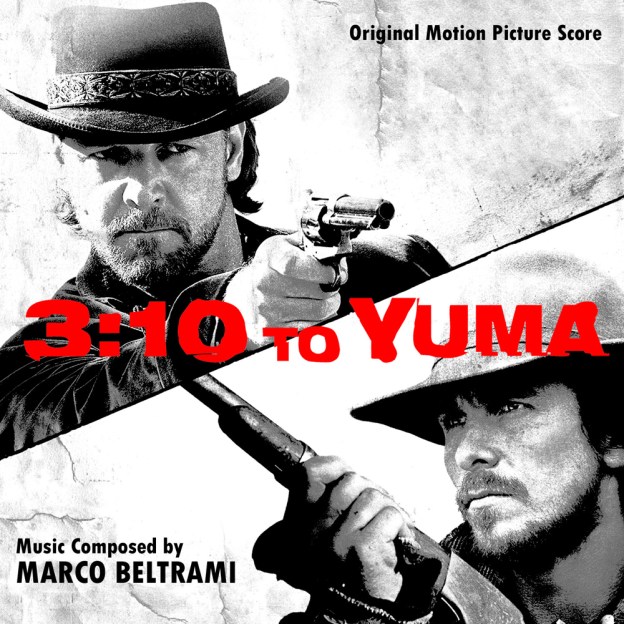
Marco Beltrami talks 3:10 to Yuma (2007)

Marco Beltrami talks 3:10 to Yuma (2007)

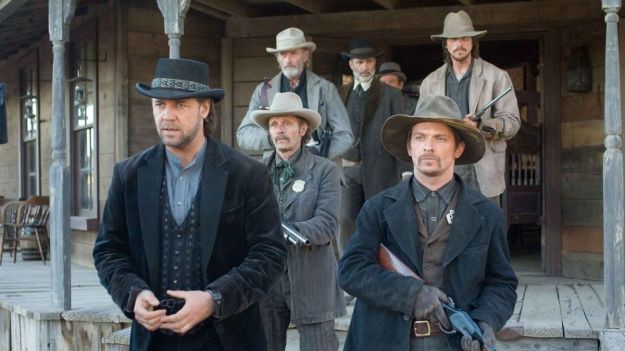
The 2007 film 3:10 to Yuma is a remake of the 1957 film of the same name, and tells the story of impoverished rancher Dan Evans (Christian Bale), who agrees to transport wanted outlaw Ben Wade (Russell Crowe) to the train station so he can board the 3:10 train to Yuma Territorial Prison. This mission is far from simple as Wade’s gang is in hot pursuit of their leader and will kill to free him again.

Evans, on the other hand, is seeking the $200 he will earn for safely delivering Evans to the train because it will greatly help his family. It also comes out that he wants to restore some sense of honor to his life so his sons will have something positive to remember about their father when they’re grown.

310-to-yuma-2007-1200-1200-675-675-crop-000000

By the end of the story, Evans is the only one of Wade’s captors still alive and the outlaw has developed a modicum of respect for the rancher (though an outlaw, Wade does have his own principles and he respects those who also have a firm sense of principles). Evans gets Wade all the way to the train only to be fatally shot by Prince, one of Wade’s men (despite Wade’s order that Prince not shoot).

Disgusted at the loss of a good man, Wade steps off the train and executes his entire gang before cheerfully surrendering to the authorities (thus ensuring that Evan’s contract is fulfilled and Evans’ sons will receive the money). Though he’s on the train to prison, he whistles for his horse, which follows along, implying that he’ll be on the loose again before long.

As a general rule, I am not overly fond of remakes. However, this film is an enjoyable way to pass a few hours, and the score is well done. The interview provides a great insight into how Beltrami put the score together. Enjoy!

See also:

Marco Beltrami talks Blade II (2002)

Marco Beltrami and Marilyn Manson talk Resident Evil (2002)

Marco Beltrami talks Live Free or Die Hard (2007)

Marco Beltrami talks The Wolverine (2013)

Marco Beltrami talks World War Z (2013)

Film Composer Interviews A-H

Film Composer Interviews K-Z

Become a patron of the blog at: patreon.com/musicgamer460

Check out the YouTube channel (and consider hitting the subscribe button)

Don’t forget to like Film Music Central on Facebook 🙂

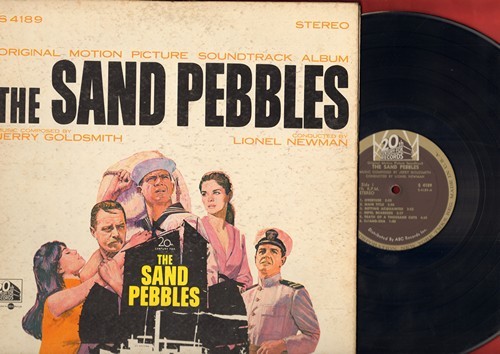
Jerry Goldsmith talks The Sand Pebbles (1966)

Jerry Goldsmith talks The Sand Pebbles (1966) Part 1

Jerry Goldsmith talks The Sand Pebbles (1966) Part 2

Jerry Goldsmith talks The Sand Pebbles (1966) Part 3

Jerry Goldsmith talks The Sand Pebbles (1966) Part 4

Video interviews of Jerry Goldsmith (who died in 2004) are few and far between, so when I saw that he gave an interview in 1989 for The Sand Pebbles (released in 1966), I knew I had to share it with you.=

220px-The_Sand_Pebbles_film_poster

The Sand Pebbles was directed by Robert Wise and stars Steve McQueen, Richard Attenborough and Richard Crenna, and tells the story of the (fictional) gunboat USS San Pablo as it patrols the rivers in 1920s China. The people refer to the boat as “The Sand Pebble” and its crew as “Sand Pebbles” (hence the name of the film).

Sand20

The plot follows Holman (McQueen), a machinist’s mate who joins the San Pablo. After an offscreen incident, tensions between the boat, the crew, and the Chinese grow tenser than ever. The boat is ordered to leave the river and return to the coast, but the commander disobeys in order to rescue two American missionaries, who will surely be killed by the Communists if they are not taken away.

sand-pebbles-mako-mcqueen

It’s been a long time since I saw this movie, but I remember the ending (I won’t tell you how it ends, you’ll have to see for yourself), had me very upset (but in a good way). Enjoy this interview from one of the masters of film music.

See also:

Jerry Goldsmith talks Chinatown (1974)

Jerry Goldsmith talks about Alien (1979)

Jerry Goldsmith talks Lionheart (1987)

Film Composer Interviews A-H

Film Composer Interviews K-Z

Become a Patron of the blog at patreon.com/musicgamer460

Check out the YouTube channel (and consider hitting the subscribe button)

Don’t forget to like Film Music Central on Facebook 🙂

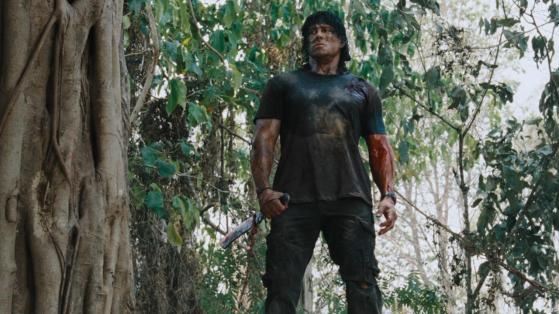
Brian Tyler talks Rambo (2008)

The Rambo franchise is a series of films consisting of: First Blood (1982), Rambo: First Blood Part II (1985), Rambo III (1988) and Rambo (2008). Of these films, the first three were all scored by Jerry Goldsmith. For the fourth (and ultimately final) entry in the series, the score was composed by Brian Tyler (Iron Man 3, Thor: The Dark World, Avengers: Age of Ultron). It’s been a while, but I’ve seen most of the franchise, including this film, and I remember enjoying it very much (though I found some of the violence hard to take, but that’s just me.)

Rambo is set twenty years after the events of Rambo III and finds John Rambo living in Thailand barely making a living from catching snakes and providing boat rides. He ferries a group of missionaries up the Salween River into Burma and drops them off at a village of Karen tribespeople. The group is later captured when the ruthless Major Pa Tee Tint attacks and massacres the village.

image-w1280

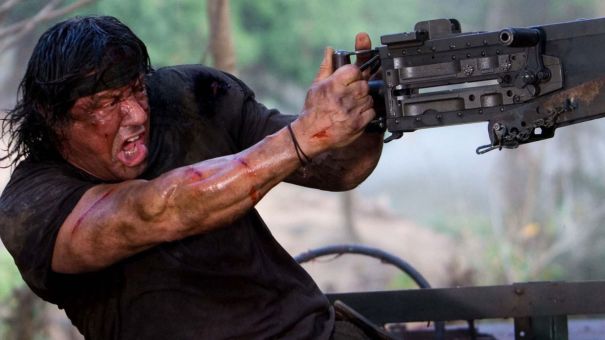
Rambo later transports a group of mercenaries on a rescue mission and secretly follows along after his offers of help are refused by the group’s leader. It is up to Rambo and his allies, a Karen rebel named Myint and the mercenary sniper nicknamed “School Boy” to save the mercenaries and the hostages when the former are also captured by Tint’s men. It’s a bloody fight that ends with Tint and all of his men dead (with Rambo personally dealing with the major). After all of this, Rambo decides it’s finally time to return to the United States and visit his family, which is where we see him as the story ends.

rambo-1200-1200-675-675-crop-000000

To help maintain continuity between this film and the rest of the franchise, Tyler was asked to incorporate Goldsmith’s original themes into his score. Tyler, in the interview, describes the score as an overall homage to Goldsmith’s work. At the same time, Tyler is incorporating new themes of his own, a sort of blending of the old and the new as far as the music goes.


I’ve been a fan of both Goldsmith’s and Tyler’s work for quite some time (if you’ve never heard of Brian Tyler before, I urge you to go look up his work, you can find just about anything he’s written on YouTube, he’s a phenomenal talent), and this interview provides great insight into his thought process. The interview also contains comments by Sylvester Stallone (who not only starred in this film, he also directed it and wrote the story.)

I hope you enjoy this interview and please, do check out Brian Tyler’s work, it really is amazing.

You can become a patron of the blog at patreon.com/musicgamer460

See also:

Film Composer Interviews A-H

Film Composer Interviews K-Z

See also:

Brian Tyler conducts The Mummy (2017)

Brian Tyler scoring Partition (2007)

Brian Tyler conducting and scoring Now You See Me 2 (2016)

Brian Tyler talks War (2007)

Brian Tyler “Alien vs. Predator: Requiem” scoring session (2007)

Brian Tyler “Law Abiding Citizen” scoring sessions (2009)

Brian Tyler “Dragonball Evolution” scoring session (2009)

Brian Tyler talks Fast Five (2011)

Brian Tyler “Battle: Los Angeles” (2011) scoring session

Brian Tyler scoring session for Iron Man 3 (2013)

Brian Tyler “Teenage Mutant Ninja Turtles” (2014) scoring session

Brian Tyler “Power Rangers” scoring session (2017)

 Don’t forget to like Film Music Central on Facebook 🙂

Marco Beltrami talks Live Free or Die Hard (2007)

51YtBMa-prL._SX200_QL80_

Marco Beltrami talks Live Free or Die Hard (2007)

I have a slight confession to make: I’ve never actually seen any of the Die Hard movies. I’ve heard of them yes, but actually sat down and watched? No. I do know they all star Bruce Willis, and as far as I know they’ve all done pretty well at the box office. I happened across this interview by Marco Beltrami, who composed the music for Live Free or Die Hard and I found myself entranced by his work.

0bcc97be74e725358380384f6c9f82d0bfe82380098076072d4a05d450118024

Beltrami mentions (and I did not know this) that the late Michael Kamen composed the music for the first three Die Hard films, and that he did his best to live up to Kamen’s musical legacy. What I love about this interview is the depth that Beltrami goes into. He actually describes (in brief) the recording process, so even if you don’t like Die Hard, you should still watch this interview because of the detail he goes into.

After all, it’s not every day you see an interview like this one. Enjoy! (I know you will)

See also:

Marco Beltrami talks Blade II (2002)

Marco Beltrami and Marilyn Manson talk Resident Evil (2002)

Marco Beltrami talks 3:10 to Yuma (2007)

Marco Beltrami talks The Wolverine (2013)

Marco Beltrami talks World War Z (2013)

My thoughts on: Live Free or Die Hard (2007)

Film Composer Interviews A-H

Film Composer Interviews K-Z

Become a patron of the blog at: patreon.com/musicgamer460

Check out the YouTube channel (and consider hitting the subscribe button)

Don’t forget to like Film Music Central on Facebook 🙂

Michael Kamen talks The Iron Giant (1999)

images

Credit to Warner Bros.

Part One

Part Two

Part Three

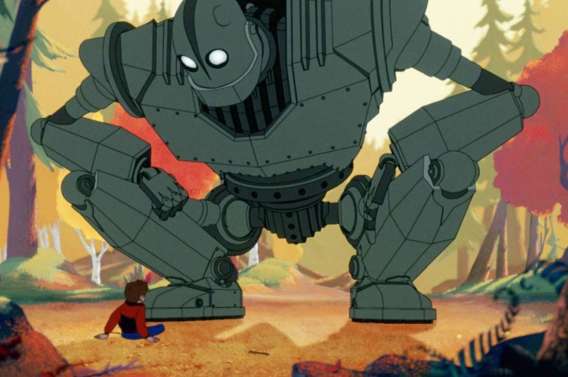
At the close of the old century, Warner Bros. Studio released The Iron Giant. The feature starred Eli Marienthal as Hogarth Hughes, Christopher McDonald as Agent Kent Mansley, Harry Connick Jr. as Dean, Jennifer Aniston as Hogarth’s mother and Vin Diesel (yes, THAT Vin Diesel) as the voice of the Giant. This film marked the directorial debut of Brad Bird (The Incredibles, Mission Impossible: Ghost Protocol).

The composer, Michael Kamen, was initially given a temp score of science-fiction music composed by Bernard Herrmann, but the music “scared him completely.” As a result, Kamen traveled to Prague for inspiration and eventually found it listening to the Czech Philharmonic.

the_iron_giant_hed

Rather unusually, Kamen not only recorded the score over a single week (as opposed to a month), it was also recorded without synchronizing the music to the picture. By that I mean, Kamen did not have a visual of the film present during the recording process (very unusual). Kamen visualized the score as something that could be recorded and listened to as a single piece of concert music.

The score went on to win an Annie Award for Music in an Animated Feature Production on November 6th, 1999.

The interview is broken into three parts (hence the three links) and I hope you enjoy Kamen’s talk about creating the score for this adorable film.

You can become a patron of the blog at patreon.com/musicgamer460

See also:

Film Composer Interviews A-H

Film Composer Interviews K-Z

Don’t forget to like Film Music Central on Facebook 🙂

James Horner talks The Perfect Storm (2000)

220px-Perfect_storm_poster

James Horner talks The Perfect Storm (2000)

In 2000, Wolfgang Petersen directed The Perfect Storm, a biographical disaster film that recounts the true story of the Andrea Gail, a fishing vessel lost with all hands during the “Perfect Storm” of 1991.

In the film, George Clooney plays Billy Tyne, captain of the Andrea Gail, a commercial fishing boat. Needing money, Tyne convinces his crew to join him on one last fishing trip, even though it’s already very late in the season. They proceed past their usual fishing grounds on the Grand Banks of Newfoundland and gain a large catch in the Flemish Cap. But just as the ship is fully loaded with fish, the ship’s ice machine breaks, making it imperative for the Andrea Gail to race back to port with their catch before it spoils.

However, in their absence, the “Perfect Storm” has been developing in the waters between the ship and the port. The “Perfect Storm” evolved from a nor-easter that absorbed the remnants of Hurricane Grace (briefly a category 2 hurricane) and ultimately became a small hurricane in its own right. The storm generated huge waves, with one buoy off Nova Scotia measuring one wave at 100.7 feet.

1513781404_xl

Learning of this storm, Tyne and the crew have a choice: wait out the storm (but lose their catch and all potential profits), or risk the storm and make for home as quickly as possible. Not wanting all their work to be for nothing, the decision is made to head for home and they sail into the storm. Even though this film is based on a true story, everything that happens after the Andrea Gail’s final radio contact is pure speculation since the ship (and the crew) has never been found.

Nevertheless, the film makes an effort to portray how the ship’s last hours might have gone: the ship is mercilessly battered by gigantic waves before finally capsizing and sinking, taking all hands down with it (except for rookie fisherman Bobby Shatford who briefly escapes to the surface before being carried away by the swells).

la-tormenta-perfecta-foto-critica

I have a love-hate relationship with movies based on true events, especially the ones where you know going in that the outcome won’t be good (like watching Titanic, that story has to end badly). I say love-hate because, while I love watching the movie and seeing the drama play out, deep down I hate knowing that, despite everything, the characters are doomed to failure and (in some cases) certain death. For me, it’s hard to cheer on characters that I know will die by the end of the story. That being said, The Perfect Storm, while heart-wrenching, is still told extremely well.

The score was composed by James Horner, and in this interview he discusses how he “created emotion” with this score, because so much of this story is driven by emotion and raw passion.

See also:

James Horner Star Trek II: Wrath of Khan

James Horner talks Aliens (1986)

James Horner talks Field of Dreams (1989)

James Horner talks The Rocketeer (1991)

James Horner scoring Braveheart (1995)

James Horner talks A Beautiful Mind (2001)

James Horner talks Windtalkers (2002)

James Horner talks Avatar (2009)

James Horner talks The Amazing Spider-Man (2012)

Film Composer Interviews A-H

Film Composer Interviews K-Z

Become a patron of the blog at: patreon.com/musicgamer460

Check out the YouTube channel (and consider hitting the subscribe button)

Don’t forget to like Film Music Central on Facebook 🙂