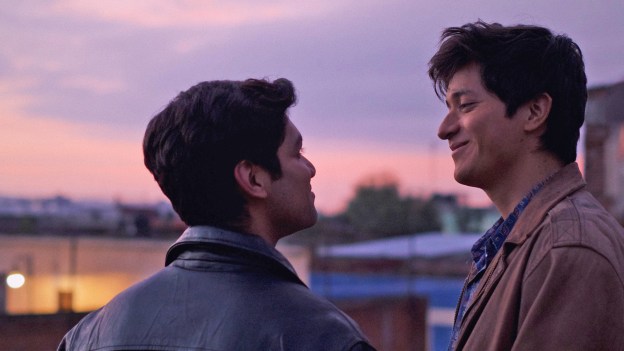
Milan Records is excited to announce the June 25 release of the Original Motion PictureSoundtrack from the Sony Picture Classics and Stage 6 Films’drama I Carry You With Me composed by Jay Wadley (I’m Thinking of Ending Things, Driveways). The soundtrack is composed of 19 lush tracks, which Entertainment Weekly calls, “a wrenching score that swells and fades to the rhythms of these men’s lives.” Making their debut today exclusively via Vehlinggo ahead of Friday’s wide release are two tracks from the soundtrack – listen to “One Year” and “Ivan’s Chance” HERE. Coinciding with the film’s theatrical debut, the soundtrack will release on June 25, 2021.
A two-time winner of the Charles Ives Award from the American Academy of Arts and letters and featured in IndieWire’s 2020 and 2016’s 10 Best Scores of the Year, Jay Wadley is a NY-based composer and music producer. He recently scored Charlie Kaufman’s phycological drama/thriller I’m Thinking of Ending Things, featuring an original ballet. Other recent projects include Heidi Ewing’s I Carry You With Me, Emma Tammi’s Blood Moon (from Hulu/Blumhouse’s Into The Dark Horror Anthology Series), and Season 2 of Amazon’s Emmy®-nominated series Modern Love.
“In the score for ‘I Carry You With Me,’ I aimed to create a vibrant sense of nostalgia and longing using a combination of textural electronics and piano, string orchestra and some familiar sourced sounds from the streets of Mexico,” says composer Jay Wadley. “[Director] Heidi [Ewing] sent me a collection of sounds she recorded in the streets to inspire the sound world and make unique connections to the specific sense of time and place. One of the most prominent sounds you can hear woven into the score is the sound of the Camotero whistle from the food trucks in Mexico. I tuned and stretched out the whistle to use as a musical punctuation and thematic device to help call back to Ivan’s childhood memories working the streets with his father.”
Premiering at the 2020 Sundance Film Festival, and based on true love, I Carry You With Me is a decades spanning romance that begins in Mexico between an aspiring chef (Armando Espitia) and a teacher (Christian Vázquez). Their lives restart in incredible ways as societal pressure propels them to embark on a treacherous journey to NYC with dreams, hopes, and memories in tow.
I CARRY YOU WITH ME (ORIGINAL MOTION PICTURE SOUNDTRACK)TRACKLISTING –
I Carry You With Me
Bar Franco
Chiles En Nogada
Sandra
Complicated Boyfriend
Gerardo’s Flashback
You Can’t Take Him From Me
Take That Off
One Year
We Are Not Going To Die
The Letter / New York
I’m Proud of You
He Should Come Back
Reunited
Ivan’s Chance
You Came To Me
I Just Can’t See It
Dad’s In the Hospital
There’s No Path
The soundtrack album for I Carry You With Me will be released on June 25, 2021.
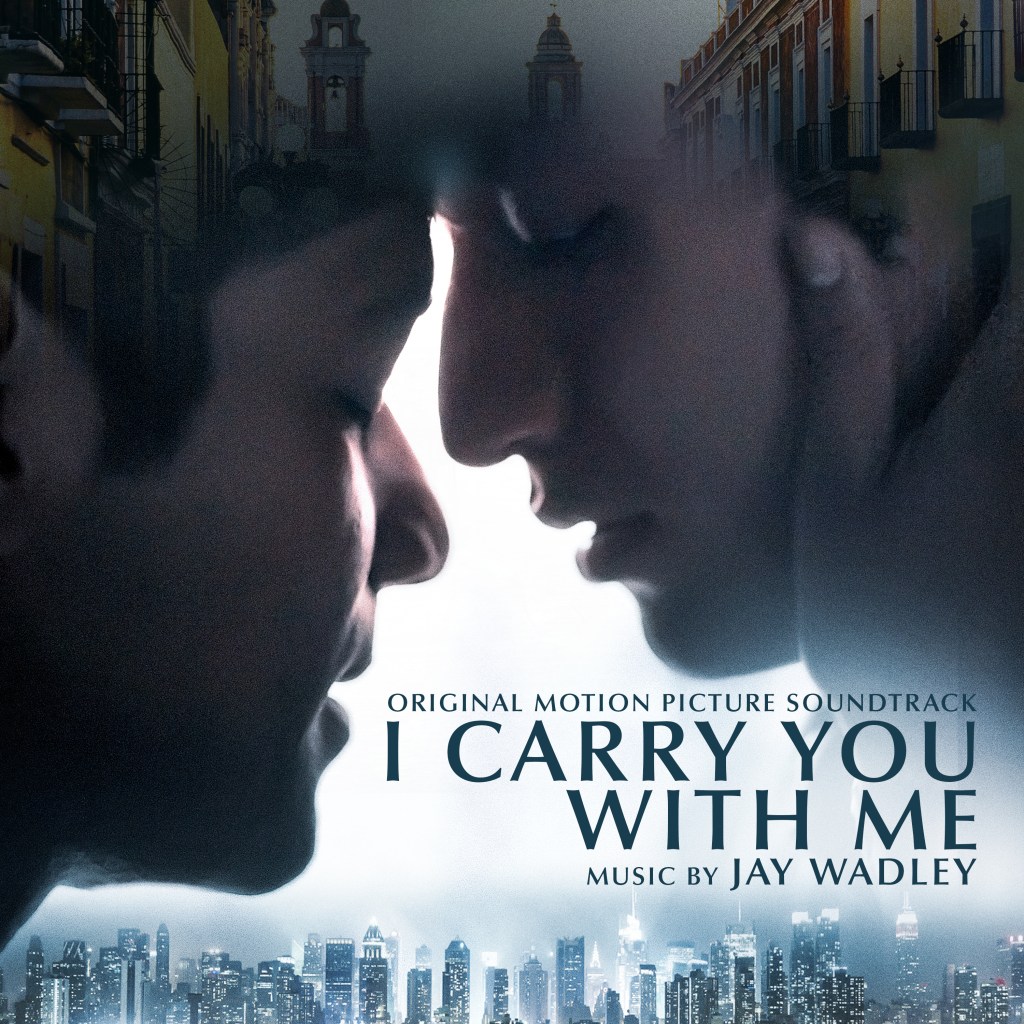
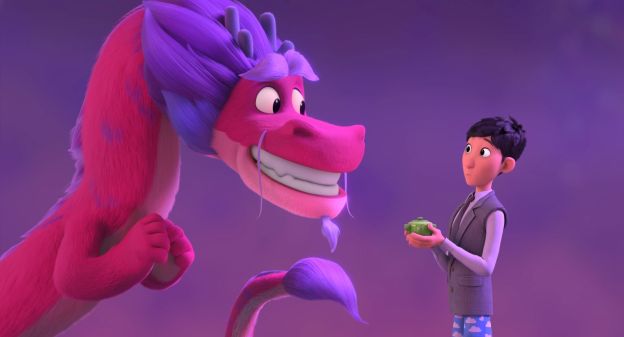
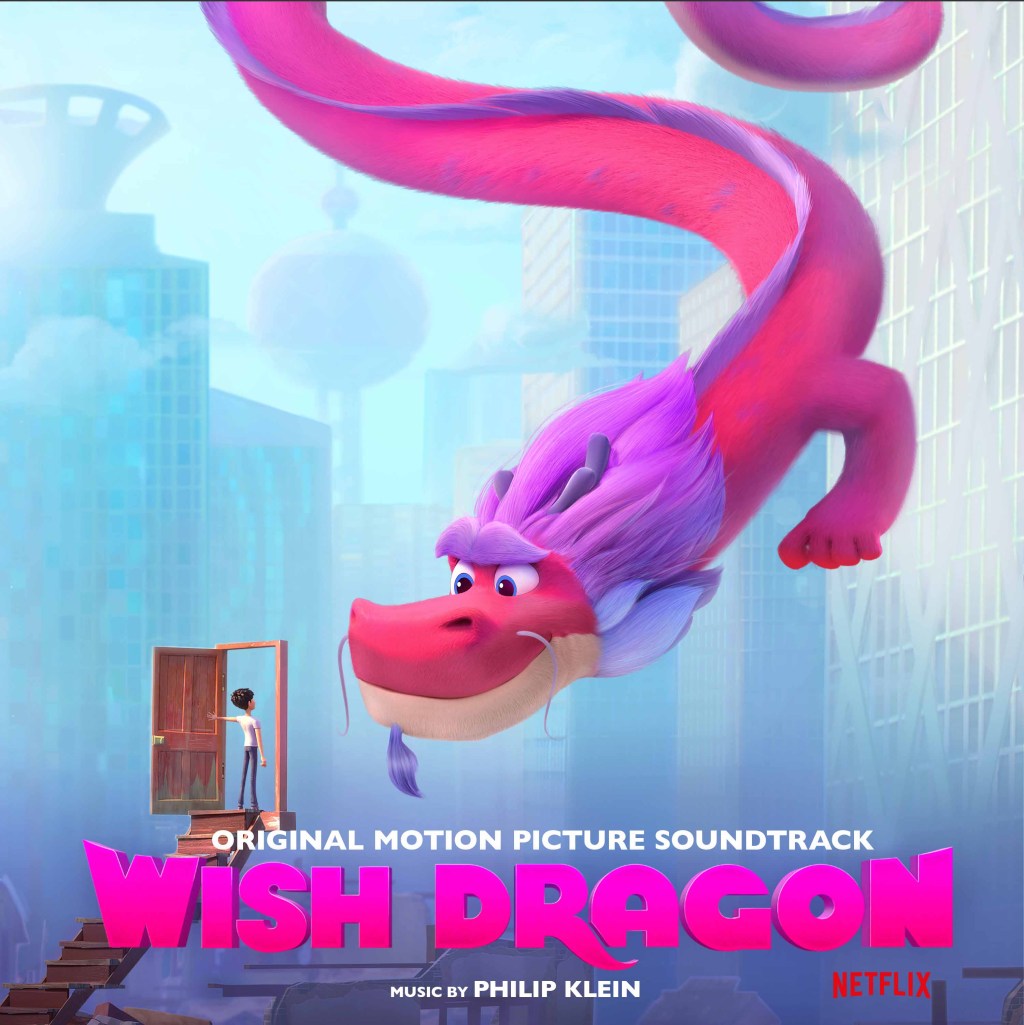
Earlier this month Milan Records released Sony Picture Animations Wish Dragon Original Motion Picture Soundtrack by Philip Klein. The 25 tracks feature a number of traditional Chinese instruments – the Pipa, the Sheng, Ruan – but run through synthesizers and given a modern touch.
Speaking about working on the score, Philip Klein said, “The journey of scoring Wish Dragon began with hours of creative discussions, a fair amount of geeking out and the trial and error of musical experiments with director Chris Appelhans.”
He went on to explain, “Our mutual love of exploring lesser known music and sound guided us through generations of Chinese folk songs, instruments, artists and expression. What we ended up with over a year later was a deeply layered, thematic score; richly colored by beautiful traditional instruments, wistful textures and the might of the New Zealand Symphony Orchestra. Chris’ deep love and respect for this story and all of the brilliant filmmakers and artists behind it made my job seem like I was the one being granted a wish.”
Following an inspiring trip to China in 2006, director Chris Appelhans returned fascinated by the country’s vibrant culture and overnight modernization. He realized it was the perfect setting for a story about wishes; in a world changing so fast, the big questions about life and values were impossible to ignore. Compelled to share this unique yet universal story with audiences around the world, he knew animation was the best way to express the story’s authenticity, humor and heart. He even learned Mandarin.
Chris Appelhans had this to say about the score, “[Philip Klein] has created the kind of score that not only elevates the film, but stands on its own — iconic melodies, true soul and a timeless mix of modern and traditional elements. Every time I listen, I’m moved — and to me that’s the highest praise any music can earn.”
Track List
1. Endless Sky – Kenton Chen, Katherine Ho & Weilim Lin 2. Free Smiles – Tia Ray 3. Prologue – Philip Klein 4. Li Na Says Goodbye – Philip Klein 5. I Gotta Go – Philip Klein 6. The Goons – Philip Klein 7. All Dressed Up – Philip Klein 8. The Tea Is Ready – Philip Klein 9. Finders Keepers – Philip Klein 10. City Walk – Philip Klein 11. Aerial Acrobatics – Philip Klein 12. Din and Li Na – Philip Klein 13. Long Admits – Philip Klein 14. Din and Mom Argue – Philip Klein 15. Shanghai Showdown – Philip Klein 16. That Same Old Shikumen – Philip Klein 17. Certain Expectations – Philip Klein 18. The Wish Dragon – Philip Klein 19. Teapot Battle – Philip Klein 20. True Sacrifice – Philip Klein 21. My Last Wish – Philip Klein 22. Everything That Matters / The End – Philip Klein 23. A Tale As Old As Time (Suite I) – Philip Klein 24. A Tale as Old as Time (Suite II) – Philip Klein 25. Din’s Piano – Philip Klein
Mercury KX has released the OST of the Sundance 2020 winning feature film The Reason I Jump composed by award-winning composer Nainita Desai. This is a soundtrack that has already been nominated for both a BIFA and Cinema Eye Honors Award for Best Music Score.
Based on the best-selling book by Naoki Higashida, The Reason I Jump is an immersive cinematic exploration of neurodiversity through the experiences of non-speaking autistic people from around the world, directed by Jerry Rothwell. The film blends Higashida’s revelatory insights into autism written when he was just 13, with intimate portraits of five remarkable young people. It opens a window for audiences into an intense and overwhelming, but often joyful, sensory universe.
Like the book upon which the film is based, Desai’s score opens a door to a constellation of divergent ways of experiencing reality. The aim was to evoke the intense sensory worlds described in the book with a Dolby Atmos 360 soundtrack. Distinctions were made between the musical worlds of the different characters in the soundtrack, using different instrumentation. True to the film’s themes, Nainita sought authenticity towards Autism and Neurodiversity, Elisabeth Wiklander, cellist with the LPO is autistic and a cultural ambassador for the National Autistic Society and her contribution brought great sensitivity and perception.
“This piece is my most personal musical reflection from the film and interpretation of the characters’ experience of neurodiversity. The lyrics are inspired by text from the original book where I gave a voice to the non-verbal characters, breaking their ‘silence’. I wanted the lyricism of the strings, the delicate piano and purity of the voice to shed a gentle light on all the facets of autism explored in the film, tying Naoki’s final words together with understanding and empathy”, says Nainita Desai about the focus track ‘The Reason I Jump’
The Reason I Jump is Desai’s 7th soundtrack release but also her most personal; a hybrid OST and personal album ‘the album embodies my roots in sound design, the human voice, electronic and sonic exploration of acoustic instruments that hint at the journey I am embarking on my own with my own personal music’.
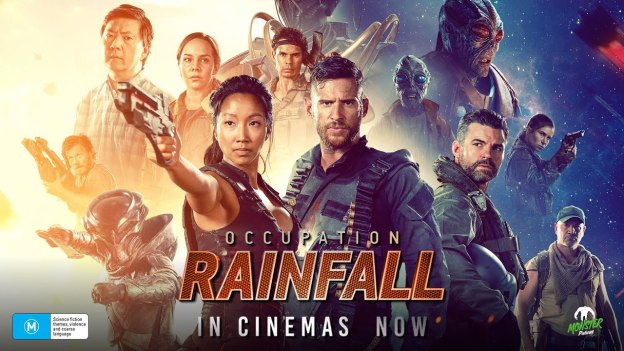
I recently had the chance to speak with composer Frederik Wiedmann about his work on the film Occupation Rainfall. Wiedmann has been inspired by film composition since he first heard John Barry’s score to Dances With Wolves at the age of 12. Wiedmann is the composer behind the hit Disney Junior show Miles from Tomorrowland, as well as the critically acclaimed Netflix animated fantasy series The Dragon Prince, which is from the writers of the popular series: Avatar: The Last Airbender. In 2016, he won a Daytime Emmy Award in the category of “Outstanding Original Song” alongside lyricist Mitch Watson, for the song “True Bromance” from Dreamworks Animation’s Madagascar spinoff All Hail King Julien.
Recently, Wiedmann composed music for the thriller Hangman (directed by Johnny Martin, starring Al Pacino, Karl Urban, Brittany Snow), and two projects for Millennium Films, Acts of Vengeance (featuring Antonio Banderas, Paz Vega and Karl Urban), and Day of the Dead: Bloodline (starring Sophie Skelton and Jonahon Schaech). His credits also include Universal’s “Doom – Annihilation” as well as the epic civil war drama Field of Lost Shoes (directed by Sean McNamara), Paul Schrader’s feature Dying of the Light, The Damned, and Intruders.
In Occupation Rainfall:
This film takes place two years into an intergalactic invasion of earth. Survivors in Sydney, Australia, fight back in a desperate ground war. As casualties mount by the day, the resistance and their unexpected allies, uncover a plot that could see the war come to a decisive end. With the Alien invaders hell-bent on making earth their new home, the race is on to save mankind.
I hope you enjoy my conversation withFrederik Wiedmann about Operation Rainfall!
Thanks for taking the time to speak with me! My first question is, how did you get started as a composer? Ever since I heard John Barry’s score for “Dances with Wolves” in 1990, I couldn’t stop fantasizing about becoming a composer myself. This slowly transformed into reality when my studies in Jazz helped me to become a proper composer. And once I completed my BA in FIlm scoring at Berklee College of Music in 2004, I was ready to go to Hollywood and dive into the industry. After having worked for a handful of busy and established composers in LA, I started my own journey as a film composer, and have since been writing cues every single day. My first film was the Warner Brothers direct to video horror film “Return to House on Haunted Hill”, which opened the doors to several more feature films of the same genre, as well as many other fantastic projects. How did you get involved with Occupation Rainfall? This happened through a rather unusual way for me. Generally I get work from either my agents, or previous collaborators, or by recommendation. In this case, I got an email through my website from the director Luke Sparke himself, inquiring about my availability. He said he’s heard a lot of my DC scores and has been appreciating them for a while now. So we started talking and he showed me some of the film’s incredible footage. I signed on to this amazing and hugely ambitious project almost immediately and we were off to the races. I think in my excitement i scored all of reel 1 in just a matter of days, and the rest is history.
I read that you and the director spotted about 117 minutes of music for this film, which is almost wall-to-wall music. How did you and the director decide on having a score that long, because that is a lot of music to write for one movie. We both are a big fan of huge, adventurous blockbusters, and some movies we discussed as a musical concept were “Transformers”, “Independence Day”, and even older films like “The Rock” and even “Star Wars”. We both agreed that music can become a driving force in this film, and almost another character, an element to guide us through this rather intense, and emotional story. It is a lot of music to write, no doubt, and I am sure this amount of music can be intimating for composers. But to be honest, it seems that I generally attracted music-heavy movies with a lot of score, and after having scored so many of these type of films, it sort of becomes second nature and simply a fun and exciting process for me. There are some moments of course where we decided to pull music out., but not that many. Was there a lot of collaboration on this score between you and the director on thisscore? Absolutely. Luke is incredibly knowledgeable in film music. He knows a lot about it and therefore could tell me exactly what he envisioned for his film. It almost felt like I’d known him for many years, since we had really great synergy and our ideas complemented each other really well. It is every composer’s dream to work for filmmakers that not only appreciate what you bring to the table, and give you the necessary creative freedom to “do your thing”, but also know how to guide you and “direct” you in a way that is nothing but inspiring.
What sets the music for Occupation Rainfall apart from earlier alien invasion films like Independence Day or Skyline to name a few examples? Good question. I’ve seen all of them, and I am total sucker for this genre (anything with Aliens, sign me up!). What I liked in particular about Occupation: Rainfall was the human component in the story. The script had such wonderfully nuanced characters, that are constantly conflicted with their beliefs and values, and have to decide more than on one occasion how far they will go for the greater good. And this very human and personal dilemma plays a roll not only for our heroes, but also villains (the human ones). I think this is a very interesting topic to focus on in an alien invasion film, something that goes far beyond the Sci-fi and Action/Adventure element. So in terms of the music, I think this becomes very apparent, as there are lots of very emotional pieces, and even our “hero theme” is more about “human sacrifice” than an actual “superhero”.
How did working on Occupation Rainfall compare to working on earlier projects like The Dragon Prince, Doom: Annihilation, and the DC animated films, just to name a fewexamples? Like I mentioned above, the amount of music was very similar (given the projects mentioned here are a lot shorter generally), all of them have a lot of complex orchestral music. The big difference from let’s say “The Dragon Prince”, which is a mostly “in the box’ score with the exceptions of soloists, to “Occupation” was that we planned on recording a rather large live orchestra, and during the peak of a pandemic no less (Summer 2020). So besides writing a lot of music and getting it approved in time, I had to account for a lot of time for recordings in London and Macedonia, and for orchestration (done by my partner in crime Hyesu Wiedmann). So suddenly you have 3-4 weeks less for writing since you need a lot of time to get 2 hours + orchestrated and prepared for the individual players, and at least 1 week of recording, and mixing. So that changes things a little in the process, but if you know what you are going to do in advance, and you have people behind you that full support you, it becomes an easy process.
How much time did you have to score this film? I had close to 3 months from start to finish, which felt very comfortable.
Did you create specific musical themes for different characters or ideas? Yes. One of the first cues I wrote for this film was the hero theme I mentioned above. A theme mostly used for our protagonist heroes, that selflessly try to save humanity, while sacrificing quite a bit themselves. The female lead, Amelia, had a theme which introduces her screen presence, the aliens had a dark and ominous, almost leaning into horror, type theme, and we had a theme for “humanity”, which is also not quite uplifting so to speak, but a nice mix of darkness and optimism that gives the situation humankind finds itself in a nice and authentic color. Is there any musical detail that you hope stands out to viewers who watch this film? I hope the audience will appreciate the thematic treatment throughout, the absolutely fantastic performances of my London Orchestra record at the famous AIR studios, the gorgeous string melodies performed by my orchestra in Macedonia, and the more unique instruments I layered in throughout, like the haunting Armenian Duduk, Japanese Shakuhachi, several layers of solo violins and cellos and dark female vocals, representing the rather scary alien queen.
I want to give a big thank you to Frederik Wiedmann for taking the time to talk with me about Occupation Rainfall and I hope you enjoyed the discussion!
I knew going in that there was a decent chance I wouldn’t like The Hitman’ Wife’sBodyguard. For one, I hadn’t seen the first film, The Hitman’s Bodyguard, and going to see the sequel without seeing the first film can be quite problematic depending on the film. However, despite going in completely blind I was willing to give the film a chance, the previews had certainly looked funny enough.
I should’ve known better.
Rule #1 of being a movie blogger: NEVER trust the previews.
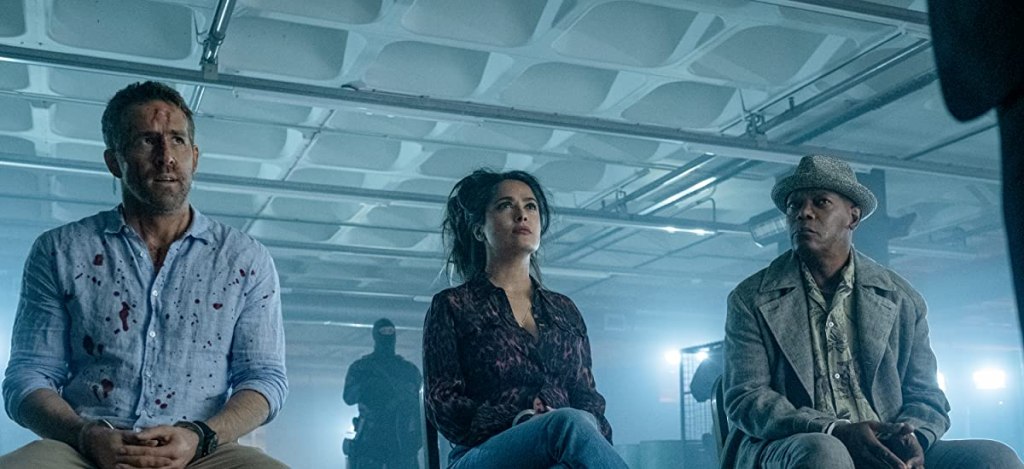
The Hitman’s Wife’s Bodyguard picks up, ostensibly, where the first film leaves off, with Michael Bryce (Ryan Reynolds) attempting to pick up the pieces of his life. Of course, Sonia (Salma Hayek) drags him back into the fray and he’s soon on the run with Darius Kincaid (Samuel L. Jackson) whether he likes it or not. It sounds coherent enough, and there’s actually a decent premise buried deep down with a pretty good villain, but it’s executed so badly that no inducement on Earth could get me to watch this mess again.
I was about halfway through the film when it dawned on me that I was watching a terrible movie. Make no mistake about it, The Hitman’s Wife’s Bodyguard is not a good film by any stretch of the imagination. If I had to sum up the film’s biggest problem, it’s that I feel like the writers flung three different film plots together, connected them with the three main characters, and prayed that it would make a roughly coherent story. That’s the only explanation I can come up with for the fractured story that comprises so many different moods and plot elements that it quickly loses any semblance to a rational story (though it’s entirely possible that that’s the point).
The one bright spot in this film is the spine-chilling performance turned in by Antonio Banderas as the film’s villain. I wish we could’ve gotten more of him in this film, because every time he was on the screen I visibly brightened up.
I also can’t get over how jarring the mood of this film was. The story flips from a weird humor to deadly serious and back at the drop of a hat and it was hard to get into the story and stay invested (about 3/4 of the way through I just gave up). Many of the emotional story twists felt completely unnecessary. There’s an entire story arc with Bryce’s dad that amused me, confused me, and finally infuriated me with how it was executed.
There’s only so many ways to put this so I’ll say it one last time: The Hitman’s Wife’sBodyguard is not a good movie, I’m honestly surprised I made it all the way through without leaving. The minor bright spots aren’t enough weren’t enough to save it, and it’s 90+ minutes of my life I can never get back (yes, it was that bad).
Whether you agree or disagree, let me know what you think of The Hitman’s Wife’sBodyguard in the comments below and have a good day!
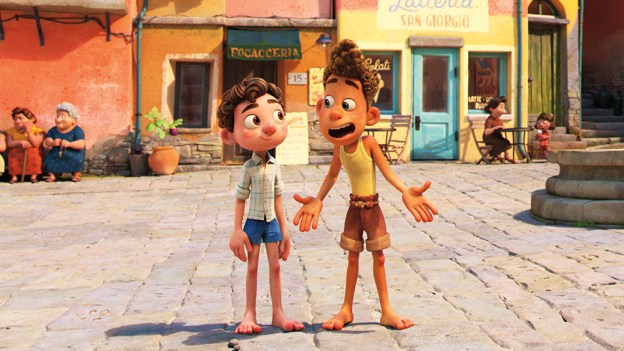
Walt Disney Records releases Disney and Pixar’s Luca Original Motion Picture Soundtrack, available today. The score is composed and produced by Dan Romer (“Beasts of the Southern Wild”). A story about two teenage sea monsters who experience a life-changing summer, Disney and Pixar’s “Luca” is now streaming exclusively on Disney+ (where Disney+ is available).
The score was recorded with an 82-piece orchestra at the Newman Recording Stage, and was orchestrated and conducted by Mark Graham. Romer performed on accordion and acoustic guitar.
Dan Romer is an award-winning composer, songwriter and music producer based in Los Angeles. Romer’s scores include Disney and Pixar’s feature, Luca (Disney+) coming out Summer 2021, four-time Oscar®-nominated Beasts of the Southern Wild (Searchlight),” “Maniac” (Netflix), “The Good Doctor” (ABC), “Beasts of No Nation” (Netflix), “Atypical” (Netflix), “Ski” (A24) Wendy (Searchlight) and Emmy® award-winning series “Ramy” (Hulu). In 2018, Romer composed the music for Ubisoft’s flagship video game Far Cry 5.
Luca director Enrico Casarosa turned to Romer to help set the stage and convey the youthful point of view of the main character, Luca. “I love his style—his accordion skills—and his ability to blend his style with the nuances of Italian music for this score,” said Casarosa.
The film is set on the Italian Riviera during the late 1950s, early 1960s. However, said Romer, “Enrico wanted something that felt like more of a nod, or a memory, than something that felt historically accurate. He told me what he really wanted was a more Italian-sounding version of the style of music I already make, which was very exciting and freeing!”
The composer especially liked working on the film’s dream sequences where Luca soars to great heights—feeling the freedom he craves. “They called for the most lush instrumentation, and usually the most wild rhythms,” he says.
Romer added, “It was an absolute joy getting to make such a melodically driven score and I’m excited for everyone to see the film.”
Track List
1. Meet Luca (4:08) 2. Did You Hide? (1:04) 3. The Curious Fish (1:39) 4. You Forgot Your Harpoon (0:39) 5. Phantom Tail (2:09) 6. Walking Is Just Like Swimming (2:02) 7. Vespa è Libertà (1:42) 8. You Hold the Ramp (0:59) 9. Silenzio Bruno (0:41) 10. That’s the Dream (2:05) 11. The Bottom of the Ocean (1:52) 12. Take Me, Gravity (1:44) 13. Portorosso (1:36) 14. Signor Vespa (1:17) 15. This Isn’t Any Old Race (2:55) 16. Buonanotte, Boys (1:27) 17. Land Monsters Everywhere (0:55) 18. Buongiorno Massimo (3:03) 19. The Out of Town Weirdo Tax (1:48) 20. Rules Are for Rule People (1:08) 21. How Humans Swim (1:03) 22. Not Our Kid (0:49) 23. Telescope (2:46) 24. Beyond the Solar System (1:02) 25. We Don’t Need Anybody (1:54) 26. The Sea Monster (3:33) 27. I Wish I Could Take It Back (4:01) 28. The Portorosso Cup (7:34) 29. How to Find the Good Ones (5:14) 30. Go Find Out for Me (1:39)
You can digitally download the soundtrack for Luca through any major digital music service. Enjoy!
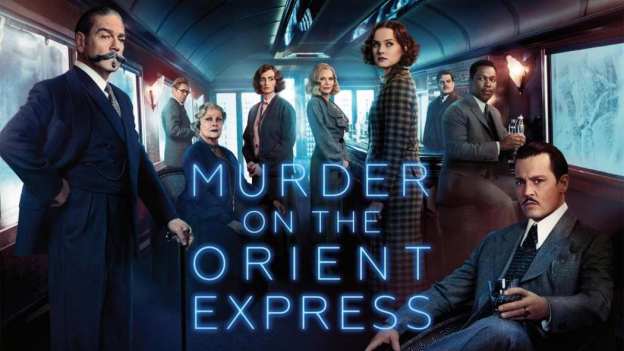
I’m so ashamed that it’s taken me 4 years to finally sit down and watch Murder on the Orient Express. Don’t ask me why it took so long, I honestly have no idea why I skipped out on seeing this film in theaters (though I imagine my school work played a major role in the decision). The good news is, I finally sat down and watched it tonight at the suggestion of my friends on YouTube and I’m so glad I did.
Murder on the Orient Express is adapted from the Agatha Christie novel of the same name and sees the famed detective Hercule Poirot tasked with solving the murder of a passenger on the titular Orient Express while he is en route to another case in London. Given the circumstances, it initially seems like an impossible crime, but Poirot soon discovers that all is not as it seems with this case and his longstanding notion of justice will be strongly challenged by the time it is all over.
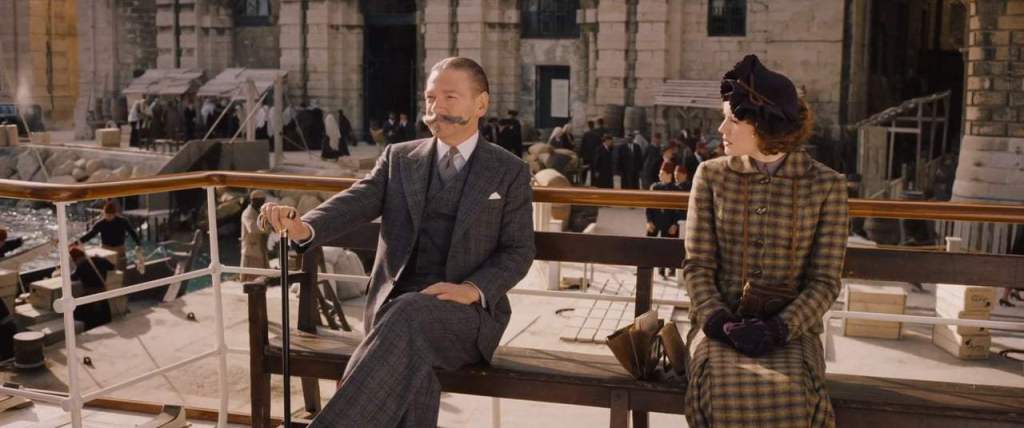
First of all, I’m blown away by the all-star cast in this film. This is an ensemble cast loaded with talent. There’s the legendary Kenneth Branagh playing Poirot (and playing him brilliantly), as well as Daisy Ridley, Leslie Odom, Jr., Josh Gad, Johnny Depp, Penelope Cruz, Willem Dafoe, Judi Dench AND Derek Jacobi, to name a few. And everyone turns in an eye-catching performance, even Depp, who I admit isn’t my favorite actor to watch. Branagh as Poirot is far and away my favorite part of the film. I’m almost completely unfamiliar with the character of Poirot, so the character’s eccentricities were completely new to me, and I delighted in all of them, particularly his fascination with getting two boiled eggs that were exactly the same size.
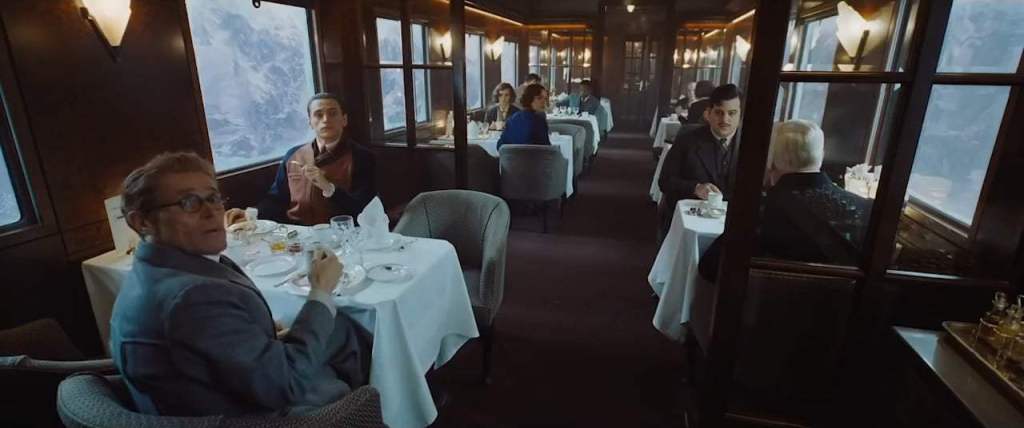
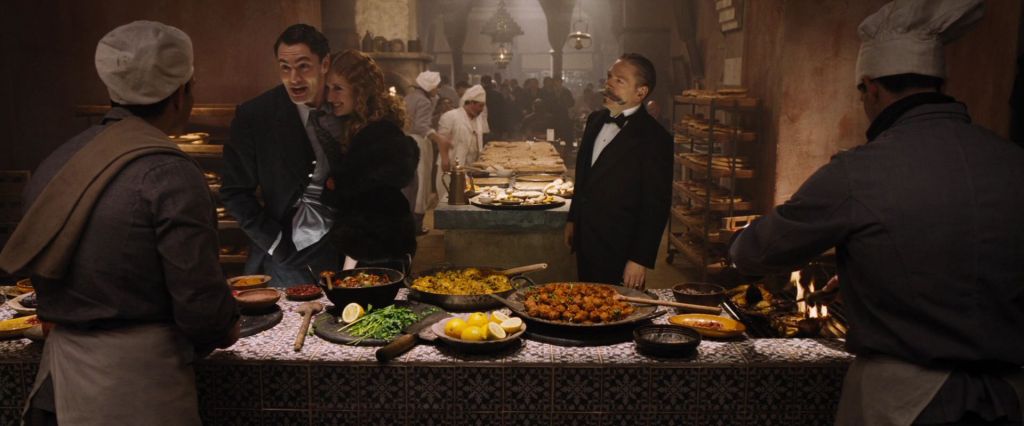
Then there’s the setting of the film itself. From 1930s Jerusalem to Istanbul to the train itself, I love all of the visual details in this film. This is a sensual film in the best sense of the word: I can practically smell the bread in an Istanbul kitchen, I can feel the rumbling of the train, feel the textures of all these wonderful surfaces and fabrics, what more can I say to indicate how visually delightful this film is to me? Everything about this film captures a glimpse of a bygone era, when train travel was still luxurious in a way that it just isn’t anymore. That’s not to say that there isn’t luxury in train travel anymore, but it’s not the same thing. This was a luxury you could touch and feel in every detail, and I couldn’t get enough of it. This will be a film I rewatch just to enjoy those little details, I know it.
And then there’s the plot, which slowly but surely drew me in. For years I’ve been a staunch fan of fictional detective Sherlock Holmes, but after seeing this film I’m starting to believe I was wrong for ignoring Poirot all of these years (nothing personal, I just never had a reason to check it out). I know the film has changed some details around from Christie’s original novel, but I know the solution of the case is more or less the same. If most of Christie’s Poirot stories are like this, or at least similar, then I think Hercule Poirot may soon become one of my favorite fictional detectives, or at least one I like just as much as Holmes.
But I digress, the murder plot that’s central to this story is very complex, and in a million years I would’ve never guessed the ultimate solution. This is a sign of good writing, because if the audience can deduce the culprit early on, that’s going to make the rest of the story boring. But what makes Murder on the Orient Express fascinating is that the plot twists and pivots to make you believe that a number of people can be the killer, leaving you no closer to the truth than Poirot until the very end of the film when everything comes together. Speaking of, the scene where Poirot spells out exactly what happened is very powerful, and I was mesmerized by Branagh’s performance. The solution will strongly challenge your notions of what “justice” entails, and I can imagine that some unfamiliar with Christie’s work may have been unsatisfied with how the story ends. But I loved it, it was the perfect conclusion to a gripping story and it serves as a reminder that not all criminal cases are black and white (in fact I believe a few Sherlock Holmes stories deal with justice in a similar way, though I can’t name the case off the top of my head).
I initially picked up this film to prepare for Death on the Nile (this is before the film was rescheduled to 2022). Now that I’ve finally seen Murder on the Orient Express, I’m more excited than ever to see Branagh’s Poirot return in Death on the Nile and I dearly hope this leads to a string of Poirot films, because I would happily watch all of them.
Let me know what you think about Murder on the Orient Express in the comments below and have a great day!
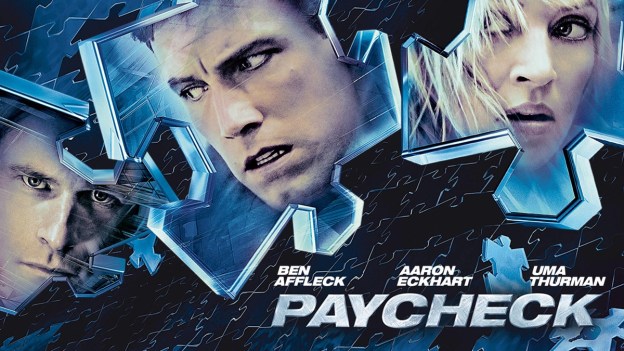
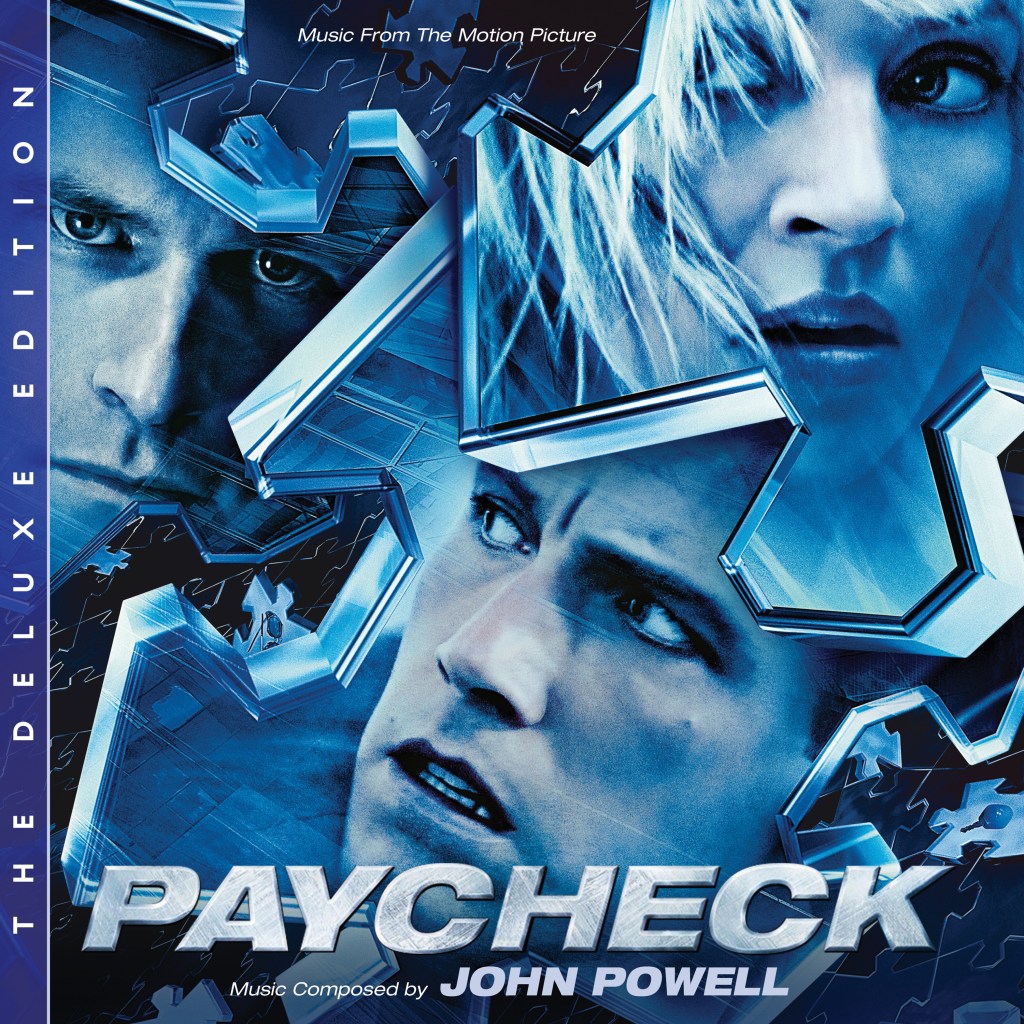
John Powell burst into film scoring with a magnificent, emotional and modern soundtrack to John Woo’s iconic hit, Face/Off (1997). Six years later, Woo and Powell reunited for Paycheck (2003), a sci-fi techno-thriller based on a 1953 short story by Philip K. Dick (Blade Runner, Total Recall).
Ben Affleck stars as a programming engineer who undergoes a voluntary memory wipe to protect his client’s secrets—but upon going to collect his paycheck, he is given an envelope of seemingly random trinkets and items. He must use these clues to unearth the terrible secrets of his own project.
By 2003, John Powell had already scored The Bourne Identity and had his finger on the pulse of the modern action-thriller score. Paycheck blends synth and pop-rhythms with orchestral scope and, most importantly, Powell’s impeccable sense of taste. Despite almost non-stop action and suspense, he focuses on emotion and utilizes melody to elevate the proceedings.
“I’ve always wanted to do a ballet, so I had been fascinated by choreographers and dance for quite some time. I utilized that conversation with John [Woo] as an inspiration to create the drama of a danced story,” says John Powell.
He explains, “This album has everything on it. It gives me a slight panic attack looking at how much music there is on this album. It all sounds very good to me and at the same time like utter nonsense. I’ve always tried to be better at harmony. A lot of composers I admire have this incredible sense of harmonic flow and flexibility. When I achieve that on occasion, it makes me happy.”
Paycheck was released by Varèse Sarabande at the time of the film. This 2-CD set Deluxe Edition greatly expands the playing time to over 95 minutes, and features new liner notes by Daniel Schweiger, incorporating new interview comments with Powell.
PHX Music has digitally released the Original Motion Short Film Soundtrack to Justin Floyd’s vision come to life, in the musical Quinceañero. The music is composed by Max Aruj and Steffen Thum, with lyrics by Antonio Sol, and songs performed by cast of the film. The album comprised of eight richly melodic Latin songs, including the film’s focus track “Ve El Momento” (“See the Moment”). The film recently premiered at Los Angeles Latino International Film Festival (LALIFF), as part of its Latinx Inclusion Series, in partnership with Netflix.
Max Aruj is a composer born and raised in Los Angeles. His latest feature release is Crawl, produced by Sam Raimi, and directed by Alexandre Aja. Aruj joined the Assassin’sCreed universe for the recently released Wrath of the Druids. Other upcoming releases this year include Eytan Rockaway’s Lansky, starring Harvey Keitel, and Jonathan Hensleigh’s The Ice Road, starring Liam Neeson. Aruj co-produced Gryffin’s Deluxe orchestral album (2020). He composed additional music on Mission: Impossible – Fallout for Lorne Balfe, and on The Crown, for Hans Zimmer and Rupert Gregson-Williams. This past year he wrote additional music on HBO’s His Dark Materials.
Steffen Thum is a composer for film, TV, games, commercials and mixed media, based in Berlin. He wrote the scores for feature films Crawl (Paramount) and iBoy (Netflix), as well as TV series This Is Football (Amazon) and Story of God (National Geographic), among others. Steffen’s music can be heard in over 60 international productions, including Mission Impossible: Fallout, Bad Boys for Life, Ad Astra, The Lego Batman Movie, The Crown, and His Dark Materials.
In the 20-minute whimsical musical, Gabriel is on the verge of his 15th birthday and dreams of having his own quinceañera, a tradition reserved for girls. When his father – steeped in tradition – sets himself against the quinceañero, the timid boy will have to rally his family to make his dream come true.
Composer Max Aruj had the following to say:
“Having director Justin Floyd entrust us to bring his vision to life in a new style was bothexciting and horrifying. But having an amazing team in Steffen and Antonio, made the process a blast. Additionally, writing a song like ‘Ve El Momento’ was a first – I never thought I’d get to do that, but here we are!”
Steffen Thum added:
“Writing a musical is a particular kind of challenge, going beyond just scoring to picture, as we’ve done before, so it was a bit of a daunting task. It was Justin’s vision and strong ambition that pulled us in, while Antonio’s expertise was crucial in getting the lyrics right. It all grew from there, and our actors and dancers brought the songs to life beautifully.”
Track List:
Ve El Momento
The Magic of Youth
La Quinceañera
Can I Be
Brother My Brother
Symphony in Q
I’m Proud of You
El Quinceañero
You can find the soundtrack album for Quinceañeroon iTunes here.
Let me know what you think about Quinceañero and its music in the comments below and have a great day!
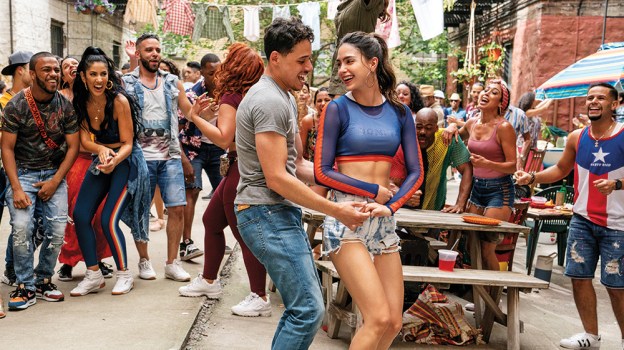
I originally learned about In the Heights while reading the behind the scenes book about the making of Hamilton that I bought last summer. If you weren’t aware, it was while In the Heights was running on Broadway that Lin-Manuel Miranda got the idea for what would eventually become Hamilton, but I digress…because this review isn’t about Hamilton but In the Heights. And after seeing this film, I have to say that this story should NOT be known as “the musical Lin-Manuel Miranda did before Hamilton” because oh my GOD the story of In the Heights is just as good!
The story of In the Heights takes place over a span of 3 days, before, during, and after a blackout that paralyzes New York City (while it is similar to the infamous 2003 Blackout, most of the show was actually written in 1999). Our narrator throughout the story is Usnavi (Anthony Ramos), the owner of a corner bodega who dreams of returning to the Dominican Republic. Through Usnavi, we meet the varied characters who live and dream in Washington Heights. These include Vanessa, an aspiring fashion designer, Abuela, who has adopted the entire block as her family, Nina, who’s back in town from attending Stanford, Benny the cab dispatcher (and Nina’s would-be boyfriend), and Sonny, Usnavi’s younger cousin who helps him run the bodega. It’s a colorful cast of characters and I was quickly drawn into the story. I was actually worried going in that I would have a hard time connecting to the story but I should have known that Lin-Manuel Miranda’s music would make it easy to dive right in.
To put it simply: if you loved the music of Hamilton, you will love the music of In the Heights. Like Hamilton, In the Heights is full of rap and freestyle melodies, though there’s obviously a Latin twist that doesn’t exist in Hamilton for obvious reasons. The music brings an entire culture to life throughout the story, and it’s so beautiful because this is a culture that’s full of life, passion, faith, and courage to go on in spite of facing huge obstacles in every direction. In fact, the community shown is so vibrant and so full of life, that it feels like you could just step right through the screen and be there with all of it, and I love a story where the world is this fully realized.
And oh yes, this story does not shy away from mentioning the obstacles people of color face on a daily basis. It’s mentioned several times by a number of characters that chasing dreams isn’t always easy, in fact it can be quite painful at times. And I like that the film makes it clear that sometimes you DON’T get your dream, even if you try. It’s a hard thing to hear of course, but it’s honest and I really like that because we’re still encouraged to go after our dreams, even if it hurts at times. And also, there’s a hint in the film that sometimes your “dream” isn’t what you think it is. That’s something I’m seeing more of in movies, but In the Heights does it really well.
What I wasn’t expecting was for In the Heights to make me cry but there’s one portion of this story that absolutely wrecked me. It all centers on “Paciencia y Fe” and “Alabanza” and the character of Abuela. I’m not the kind to readily cry in a movie theater, but the scenes with those two songs ripped at my heartstrings in a way that I didn’t expect going in.
I think my two favorite songs (that didn’t make me cry) were “In the Heights” and “96,000.” I like the opening song because it throws you in headfirst to the colorful world of Washington Heights and it was a really fun song to bop my head in rhythm with the music too. And I love “96,000” because it brought me back to my own childhood when I would go swim at the community rec center pool and everyone would be there.
I also love that Lin-Manuel Miranda appears in the film as the piragua vendor and there’s also a blink and you might miss it cameo from Christopher Jackson too.
What I’m trying to say is that In the Heights is absolutely the summer movie we’ve been waiting for. I laughed, I cried, it felt like an entire summer squeezed into a single film, all the good and bad. I know In the Heights is currently available on HBO Max but if your local movie theater is open, I highly recommend going to see this in theaters instead. It’s such a good experience and it deserves to be seen on the biggest screen possible.
Let me know what you think about In the Heights in the comments below and have a great day!















 Film Music Central