My Thoughts on: Pokémon Heroes: Latios and Latias (2002)

As my adventure through the Pokémon films continues, I made my way to Pokémon Heroes: Latios and Latias, the fifth Pokémon movie overall. This movie was released in 2002 and follows the adventures of Ash, Misty, and Brock in the town of Alto Mare (a place that bears a significant resemblance to Venice). This town is protected by two legendary Pokémon named Latios and Latias and, predictably, members of Team Rocket want these magnificent creatures for their own nefarious ends.

By and large I really liked Pokémon Heroes: Latios and Latias. Alto Mare is a beautifully rendered location with adorable Pokémon around every corner. There’s a fun opening scene with Ash and Misty taking part in a water-chariot race (Totodile is adorable). I was initially dismissive of the idea that there were Pokémon modeled after fighter jets, but that is indeed what Latios and Latias are and it just works! They’re incredibly cute (as most Pokémon are), and you can get a pretty good idea of what they’re saying to each other, an impressive feat since neither speaks a recognizable language. Also I think it’s really fun that Latios and Latias can take human form, though I am disappointed that we didn’t get to see the human form of Latios.

Pokemon_Heroes_2003_03-cc_100058

That being said…there were a few things that bothered me with this movie. First of all, there’s the extremely limited presence of Brock and Misty in the film. By and large, these two don’t do very much, especially compared to the previous four films. Ash does most of the work this time. And then there’s the almost complete absence of Team Rocket (Jessie, James and Meowth) from this story. Really, aside from a glorified cameo, they don’t play any part in this story whatsoever and I am not okay with this. Here’s the thing, if you aren’t going to involve this trio in the story, then don’t include them at all. For that matter, Annie and Oakley are okay villains (I especially like Oakley’s power trip at the climax of the film), but we don’t really know that much about them (and no, that one line about Giovanni is not enough, I want backstory for my villains).

unnamed-2

Ultimately, while I enjoyed Pokémon Heroes: Latios and Latias, it is inferior to the first Pokémon movie (which admittedly set a pretty high bar). However, don’t let that stop you from checking this movie out. As with any lengthy film series, there are highs and lows, and this one just isn’t the best (it’s still fun though!)

Oh, and for what it’s worth, I’m pretty sure that’s Latias at the end of the film. I know it’s supposed to be up in the air, but I can’t see it being anyone else.

Let me know what you think about Pokémon Heroes: Latios and Latias in the comments below and have a great day!

See also:

My Thoughts on: Pokemon-The First Movie: Mewtwo Strikes Back (1998)

My Thoughts on: Pokémon: The Movie 2000 (1999)

My Thoughts on: Pokémon 3: The Movie: Entei – Spell of the Unown (2000)

My Thoughts on: Pokémon 4Ever- Celebi – Voice of the Forest (2001)

My Thoughts on: Pokémon: Jirachi—Wish Maker (2003)

My Thoughts on: Pokémon: Lucario and the Mystery of Mew (2005)

My Thoughts on: Pokémon Ranger and the Temple of the Sea (2006)

My Thoughts on: Pokémon: The Rise of Darkrai (2007)

My Thoughts on: Pokémon: Giratina & the Sky Warrior (2008)

My Thoughts on: Pokémon: Arceus and the Jewel of Life (2009)

My Thoughts on: Pokémon: Detective Pikachu (2019)

Animated Film Reviews

Become a patron of the blog at: patreon.com/musicgamer460

Check out the YouTube channel (and consider hitting the subscribe button)

Don’t forget to like Film Music Central on Facebook


Star Wars: The Force Awakens “Rey’s Theme” (2015)

This is my honest opinion: if you try to tell me there are no great musical themes in Star Wars: The Force Awakens, then you haven’t been paying attention, because John Williams introduces a beautiful, original theme relatively early in the film. This is “Rey’s Theme” and it comes when, you guessed it, we first meet Rey living as a scavenger on Jakku.


The theme starts as Rey is leaving the ruins of the crashed Star Destroyer, having finished her work for the day. It starts off with a bit of whimsy, a soft chiming melody that soon grows into a flowing theme with the strings and woodwinds. This melody tells us several things: that Rey is young and idealistic (much as Luke Skywalker was many years ago), but also that she has her own inner strength even before she starts to use the Force. The former is heard in the opening part of the theme, and the inner strength is revealed when the strings come in, pushing the theme to new heights.

This original version of “Rey’s Theme” lays the foundation for several melodies to come in the sequel trilogy, particularly in The Rise of Skywalker. Williams will put this melody through several variations, altering it to meet Rey’s changing circumstances as the story progresses.

As a musical introduction to one of the most pivotal characters of the sequel trilogy, “Rey’s Theme” performs its purpose beautifully. This theme deserves to be remembered just as much as “The Force Theme”, “The Imperial March”, “Duel of the Fates” and any other classic Star Wars theme. For me, this theme is clear proof that John Williams is just as talented as ever when it comes to creating memorable film music themes.

I hope you enjoy listening to “Rey’s Theme” as originally heard in Star Wars: The Force Awakens, let me know what you think about it in the comments below and have a great day!

See also:

Star Wars: The Force Awakens “Kylo Ren’s Theme” (2015)

Star Wars: The Force Awakens “March of the Resistance” (2015)

Star Wars: The Last Jedi “The Spark” (2017)

Star Wars: The Rise of Skywalker “Kylo Ren’s Theme (Redeemed Version)” (2019)

Film Soundtracks A-W

Become a Patron of the blog at patreon.com/musicgamer460

Check out the YouTube channel (and consider hitting the subscribe button)

Don’t forget to like Film Music Central on Facebook 🙂

Star Wars: The Rise of Skywalker “Kylo Ren’s Theme (Redeemed Version)” (2019)

*warning (in case you haven’t seen it): some plot details from The Rise of Skywalker are mentioned

I understand that Star Wars: The Rise of Skywalker has polarized Star Wars fans in every way imaginable and likely will continue to do so for years to come. That being said, this film, as with all the others in the Skywalker Saga, is full of interesting musical moments that we’ll be spending years breaking down and analyzing.

One moment that caught my attention the very first time I saw the film in theaters comes at the end of film, just as the dust is settling from Rey’s climactic fight with Emperor Palpatine. It’s a short moment in a larger theme, but it essentially makes up Kylo Ren’s “redeemed” theme.

You can find this moment in the cue “Farewell” starting around the 0:50 mark. In the film itself, it starts the moment we see Ben’s hand emerge from that crack in the ground, revealing that he is, in fact, alive and didn’t fall to his death.


In strictly technical terms, this is the same theme we’ve heard for Kylo Ren all along. The notes haven’t changed all that much…but how they’re presented is. Gone is the harsh brass, the loud, angry tones. Instead, we have a soft theme gliding along in the strings and woodwinds. In essence, this is John Williams making it as clear as possible that Kylo Ren is indeed dead and gone, that this is a changed man before us crawling and making his way towards Rey.

But as with anything John Williams does, there’s a lot more going on just in this short moment. As the redeemed theme emerges, it begins to layer on itself, building and growing as the layers rebound off one another. All of this symbolizes Ben’s grief at finding Rey dead and the battle over. How incredible is it that all of this happens in just a short space of time? It’s so effective, which is why this is one of my favorite musical moments in the entire sequel trilogy.

And of course, there is yet another connection to Ben’s grandfather Anakin Skywalker/Darth Vader. You see, this isn’t the first time a Star Wars villain’s music has changed to a milder, “redeemed” style. All the way back in Return of the Jedi, Williams did something very similar for the cue “Darth Vader’s Death” (starting around 0:48)


Sounds familiar doesn’t it? It’s the same Imperial March, same notes and all that, but it’s been moved to the strings and sounds a lot more mild, just like what we hear in The Rise of Skywalker. I’m fairly certain that John Williams did this on purpose, to heighten the connection between Ben and his grandfather. It seems that Ben is exactly like Anakin after all, angry in life and redeemed at the moment of death.

Let me know what you think about Kylo Ren’s “redeemed” theme in the comments below and have a great day!

See also:

The Empire Strikes Back: “The Imperial March” by John Williams

Star Wars: Return of the Jedi “Final Duel” (1983)

Star Wars: The Clone Wars “Bad Batch Theme” (2020)

Star Wars: Rebels “It’s Over Now”

Star Wars: The Force Awakens “Kylo Ren’s Theme” (2015)

Star Wars: The Force Awakens “Rey’s Theme” (2015)

Star Wars: The Force Awakens “March of the Resistance” (2015)

Star Wars: The Last Jedi “The Spark” (2017)

Film Soundtracks A-W

Become a Patron of the blog at patreon.com/musicgamer460

Check out the YouTube channel (and consider hitting the subscribe button)

Don’t forget to like Film Music Central on Facebook 🙂

Star Wars: Return of the Jedi “Final Duel” (1983)

While it’s fairly common now to have epic lightsaber duels with equally epic soundtracks backing them up, it’s easy to remember that this wasn’t always the case. The first lightsaber duel (in Episode IV) had no music until the very end, and even the iconic duel in Episode V has minimal music in the background. The action was more of the focus at this time, music just didn’t play that large a role, presumably because it was felt it would be a distraction.

And then came Episode VI, with the final lightsaber duel between Luke Skywalker and Darth Vader (with the Emperor watching).

This duel changed everything as far as the relationship between lightsaber action and film music is concerned. For the first time, the music firmly established the tone of the fight, not only that, it also illustrated what was at stake. For this reason and more, I need to talk with about the “Final Duel” cue in Return of the Jedi.


This cue comes at the very end of the duel between Vader and Luke. It starts when Luke has fallen from the gantry and Vader is hunting for him in the shadows below the Emperor’s throne. I’m pretty sure this is low woodwinds in the beginning, but it could easily be low strings as well. Regardless of instrumentation, this opening portion screams of the menacing evil personified in Vader as he hunts for his son. Furthermore, Luke himself is fighting the urge to give in to the Dark Side, something the music could also be symbolizing.


But this is just the beginning. After Vader comes to the conclusion that Luke has a twin sister (note the *crash* in the music as Vader makes the connection), the music ups the ante. Take note, when Vader begins the line “If *you” will not turn to the Dark Side…” listen to how the strings begin to rev up and join the melody. They sound tightly coiled, as if ready to spring and boy, do they ever! Once Vader makes his threat to turn Luke’s sister to the Dark Side, all hell breaks loose, both physically and musically speaking. (And on a practical note, the sudden appearance of the strings could also be helping to transition between the opening part of this cue and the climax).

For over twenty years this has been my favorite piece of music in all of Star Wars. When Luke gives in to his anger and lunges at Vader with all of his fury, you KNOW this is it, this is the critical moment, and it’s all because of the music. This is the first time John Williams paired a choir with the lightsaber duel, and it works to perfection. The chorus is mournful as we watch Luke chase Vader across the scene, a reminder that this is a BAD thing we are watching, if Luke goes all the way, he’s doomed. This all culminates in a series of brass “strokes” not quite timed with Luke’s own hits until finally…WHAM!! There’s a musical “blow” as Luke cuts off Vader’s hand, effectively ending the cue as the music transitions to the Emperor’s Theme in full force (no pun intended).

I have to go back through, to the key moment in the duel when Luke gives in to the Dark Side because I can’t emphasize enough how powerful this part is. The music here is simple, but extremely effective. Sure, it’s child’s play compared to “Duel of the Fates” and “Battle of the Heroes” but it’s safe to say that “Final Duel” provided the genesis of both of those themes by proving that film music and lightsaber duels work very well together.

If you’re going to properly appreciate all of the lightsaber duels and their music, then you really need to start here, with the climax of Luke and Vader’s duel in Episode VI. This scene laid the foundation for so much that was to come later and I will defend the awesomeness of this scene forever.

Let me know what you think about “Final Duel” in the comments below and have a great day!

See also:

The Empire Strikes Back: “The Imperial March” by John Williams

Star Wars: The Force Awakens “Kylo Ren’s Theme” (2015)

Star Wars: The Last Jedi “The Spark” (2017)

Star Wars: The Rise of Skywalker “Kylo Ren’s Theme (Redeemed Version)” (2019)

Star Wars: The Clone Wars “Bad Batch Theme” (2020)

Star Wars: Rebels “It’s Over Now”

Film Soundtracks A-W

Become a Patron of the blog at patreon.com/musicgamer460

Check out the YouTube channel (and consider hitting the subscribe button)

Don’t forget to like Film Music Central on Facebook 🙂

Star Wars: The Force Awakens “Kylo Ren’s Theme” (2015)

Something I was really excited about when the sequel trilogy was announced was finding out all of the new music John Williams would create for the galaxy far far away. After all, this is the composer who brought us “The Imperial March” as well as the Star Wars Overture, just to name two of many, MANY examples. We’ll be arguing for years about how these themes stack up against the musical themes created for the original trilogy, but for now I’ll be satisfied in just looking at the sequel trilogy themes that interest me the most.

One such theme that I want to talk about is the theme for Kylo Ren, the primary villain for most of the sequel trilogy. Well, properly speaking this is more of a motif than a proper theme. The difference is in length: a theme, like “The Imperial March” is somewhat longer, lasting for several minutes while a motif consists of a bare handful of notes in comparison. Listen below, the motif comes around the 0:50 mark and I’ll explain after.


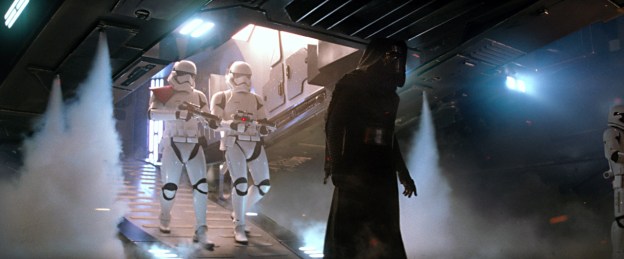
You hear that, right? Those five notes? That’s the sum total of Kylo Ren’s theme. It doesn’t seem like much at first glance, but there’s really a lot going on here. First, the sharp tone of that brass is designed to grab your attention, this is a character to pay attention to. As a result, even before we know who Kylo Ren is, we know that this is someone important. Second, and more importantly, these five notes are actually related to “The Imperial March.”

For instance, here’s the first part of “The Imperial March” below:

Screen Shot 2020-03-03 at 4.55.27 PM

Now, look at Kylo Ren’s Theme:

Screen Shot 2020-03-03 at 4.59.35 PM

To see the similarity, compare the last five notes of the “Imperial March” motif to Kylo Ren’s Theme. Notice how they move in the same way? If it helps, hum the last part of “The Imperial March” and then hum Kylo Ren’s Theme to yourself. They’re not identical by any means, but the similarity is there.

And how fitting is it that Kylo Ren’s theme be derived from “The Imperial March”?? This is Darth Vader’s grandson after all, musically speaking it makes all the sense in the world that their themes would have a connection. It’s also a great way to musically connect the original trilogy to the sequel trilogy, even if the connection isn’t that obvious at first glance.

This is yet another example of John Williams’ musical genius at work. He can go back to a theme he created decades ago and derive something completely new from it. Not all composers can do that AND do it well, and Williams handles it masterfully. This is just one example of how well the master can work.

Let me know what you think about this look at Kylo Ren’s Theme in the comments below and have a great day!

See also:

The Empire Strikes Back: “The Imperial March” by John Williams

Star Wars: Rebels “It’s Over Now”

Star Wars: The Clone Wars “Bad Batch Theme” (2020)

Star Wars: The Force Awakens “Rey’s Theme” (2015)

Star Wars: The Force Awakens “March of the Resistance” (2015)

Star Wars: The Last Jedi “The Spark” (2017)

Star Wars: The Rise of Skywalker “Kylo Ren’s Theme (Redeemed Version)” (2019)

Film Soundtracks A-W

Become a Patron of the blog at patreon.com/musicgamer460

Check out the YouTube channel (and consider hitting the subscribe button)

Don’t forget to like Film Music Central on Facebook 🙂

Star Wars: The Last Jedi “The Spark” (2017)

My general opinion of The Last Jedi has changed a great deal since I first saw the movie in 2017, but one thing that hasn’t changed is my love of the film’s soundtrack. It’s been my longstanding opinion that the Star Wars soundtrack as a whole is one of the greatest film music creations ever made and the music for The Last Jedi is up there with some of the best themes Williams ever created.

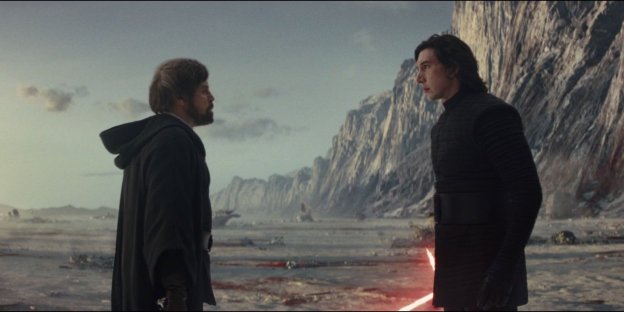
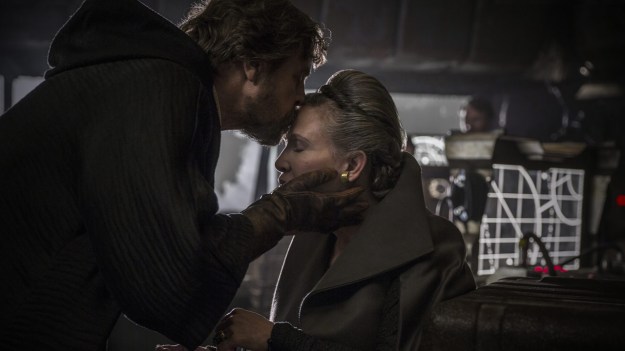
“The Spark” is one such theme and one I’ve wanted to talk about for a while. It occurs very late in the film, when Luke Skywalker appears out of nowhere in the remains of the Rebel base on Crait. Most of the cue, starting around 1:00 is actually from a Return of the Jedi theme known as “Luke and Leia” and plays when Luke finally reunites with his twin sister. You would know this as the music that plays in ROTJ when Luke reveals that Leia is his twin. It’s pretty much the same theme all over again and it really is perfect for this scene that happens to be the first and sadly, only, time we see Luke and Leia together in the sequel trilogy (everything after this was done with body doubles and CGI so it doesn’t really “count” for me if that makes sense).

After this memorable theme runs its course, then the fun really starts. Starting around 2:15 the music begins to morph into something different but it doesn’t latch onto the new theme until around 2:30. From that point on, the music enters a weird march-like motif that might sound odd at first, or vaguely familiar depending on your point of view. There’s a deep, booming motif that repeats over and over again as Luke strides out to confront the First Order and his wayward nephew Kylo Ren. As you listen to it, you might realize that this is actually from the bass line of The Imperial March, known the world over as “Darth Vader’s theme.”

luke-leia-tlj-tall

Think of the symbolism in this choice on the composer’s part. We have Luke Skywalker, Jedi, hero of the Rebellion, etc. and so on, marching out to face the evil First Order to more or less the tune of the Imperial March. I don’t know if it’s merely ironic or also meant to send a message, maybe something to the effect that it’s Luke who has the power and authority that Kylo has always sought but will never find because he’s too much of a hothead. It could be I’m thinking too much into it but it always sends chills down my spine to hear the remnants of that immortal theme when Luke walks out, all alone, to stare the enemy down.

Some people gave John Williams a lot of flack for not creating a new Imperial March or something equivalent for the sequel trilogy, but I really feel he didn’t need to, and “The Spark” is a prime reason why. It’s a combination of the old and new that lends sadness and power to this scene in a way that only Williams can make possible.

Enjoy listening to “The Spark” from Star Wars: The Last Jedi. Let me know your thoughts about this moment in the comments below and have a great day!

See also:

The Empire Strikes Back: “The Imperial March” by John Williams

Star Wars: The Force Awakens “Kylo Ren’s Theme” (2015)

Star Wars: The Force Awakens “Rey’s Theme” (2015)

Star Wars: The Force Awakens “March of the Resistance” (2015)

Star Wars: The Clone Wars “Bad Batch Theme” (2020)

Star Wars: Rebels “It’s Over Now”

Film Soundtracks A-W

Become a Patron of the blog at patreon.com/musicgamer460

Check out the YouTube channel (and consider hitting the subscribe button)

Don’t forget to like Film Music Central on Facebook 🙂

Disturbing Bluth #7: Charlie Dreams of Hell in All Dogs Go to Heaven

Oh boy….let’s talk about this shall we?

I’ve made no secret of the fact that Don Bluth’s animated films have given birth to some of my worst childhood nightmares, and All Dogs Go to Heaven is a prime example. Aside from Charlie being brutally murdered in the film’s opening act, the most disturbing part of this entire film is a sequence that takes place mid-film, when Charlie has a nightmare about falling into Hell. It’s a very real prospect, since Charlie’s impulsive act in winding up a certain watch and escaping Heaven means he’s forbidden from returning there, meaning Hell is the only place he can go when he dies.

The sequence starts ominously, with the faint voice of Annabelle (the dog who welcomed Charlie to Heaven) repeating “You can never come back, you can never come back…” before suddenly Charlie is thrown headlong into a nightmarish landscape that quickly opens up to reveal the mouth of Hell.

And then it gets worse.

After being dragged into the mouth of Hell, Charlie falls into a demonic boat surrounded by lava, fire, and brimstone. It’s a nightmarish image, and the ominous music certainly doesn’t help. Oh yes, and there’s also a skeletal monster onboard that lunges and snaps at Charlie. But then comes the worst of all: from out of the flames and lava comes what can only be described as a terrifying Hellbeast, one that breathes fire and causes other, smaller demons to appear and torment Charlie.

d7yb5ac-012ba5b3-e89b-4629-81e6-aa9054bcee76

This creature is terrifying, horrifying, the last thing you’d expect to see in a children’s movie (which All Dogs Go to Heaven is supposed to be don’t forget). The thing is…I think this isn’t the only time we see this creature. Look at the picture of the Hellbeast again and notice the reddish fur/skin and the jutting chin. Look at all familiar? If it does, it’s because that’s awfully similar to Red, the demonic villain of All Dogs Go to Heaven 2. I admit Red isn’t nearly as demonic in appearance, but I have a theory that this appearance in Hell is how Red really looks while his appearance in the sequel is the appearance he chooses to wear while on Earth.

Thankfully, the nightmare comes to an end as the boat sinks back into the lava, trying to take Charlie with it. The sequence barely lasts two minutes but it makes quite the impression. For years this scene scared me out of my mind, and to this day I don’t understand why anyone would think a little kid could handle something like this. On the one hand, I do get that Bluth was trying to get across how scared Charlie is of going to Hell (hence why he’s so protective of that watch), but surely there was another way to do it that didn’t involve…this. I can’t overstate how messed up this entire scene is. I’ve wanted to write about this one for a while, and I hope my words did justice to how disturbing it all is.

Let me know what you think about Charlie’s nightmare of Hell in the comments below and have a great day!

See also:

Disturbing Bluth #1: The Secret of NIMH (Overview and Trivia)

Disturbing Bluth #2: The Secret of NIMH: Dragon the (Demon) Cat

Disturbing Bluth #3: The Great Owl in The Secret of NIMH (1982)

Disturbing Bluth #4: Jenner in The Secret of NIMH (1982)

Disturbing Bluth #5: The House is Sinking in The Secret of NIMH (1982)

Disturbing Bluth #6: Meeting Brutus in The Secret of NIMH (1982)

Become a patron of the blog at: patreon.com/musicgamer460

Check out the YouTube channel (and consider hitting the subscribe button)

Don’t forget to like Film Music Central on Facebook


Soundtrack Review: The Invisible Man (2020)

The soundtrack for Universal Pictures’ remake of The Invisible Man is now available digitally and will be available on LP starting March 4th, 2020. Starring Emmy Award winner Elisabeth Moss (The Handmaid’s Tale), The Invisible Man is a terrifying modern tale of obsession inspired by Universal’s classic Monster character.

Trapped in a violent, controlling relationship with a wealthy and brilliant scientist, Cecilia Kass (Moss) escapes in the dead of night and disappears into hiding. But when Cecilia’s abusive ex, Adrian Griffin (Oliver Jackson-Cohen, Netflix’s The Haunting of Hill House), commits suicide and leaves her a generous portion of his vast fortune, Cecilia suspects his death was a hoax. As a series of eerie coincidences turn lethal, threatening the lives of those she loves, Cecilia’s sanity begins to unravel as she desperately tries to prove that she is being hunted by someone nobody can see.

The film’s score was composed by Benjamin Wallfisch (Blade Runner 2049, IT). He has worked on over 75 feature films and has received Golden Globe®, BAFTA®, two-time GRAMMY® and Emmy® nominations. It was recently announced that Wallfisch will score the New Line/Warner Bros reboot of Mortal Kombat, which is slated for a 2021 release.

Regarding the film’s score, Wallfisch had the following to say:

It was about using silence rhythmically. When there is music, the gestures and sonic attitude are sometimes so left-field and extreme that you almost don’t trust the score’s absence when it’s not there. As a kind of analogue to the presence of Adrian Griffin [the Invisible Man] in the film.

Also, the orchestral instrumentation is deliberately constrained to strings- only so that the musicians were pushed to their max, without the support of a full orchestra. That choice was also an homage to one of my heroes, Bernard Herrmann and one of his masterpieces, the Psycho score.

As the film progresses, Cecilia (Moss) devolves into questioning her every move, then grows into her power. The composer reflected that journey musically as well:

Cecilia’s Theme,’ a simple melody for cello and strings, was written to be a musical reminder of her own sanity, as everything unravels around her,” Wallfisch said. “You only hear it a handful of times in the movie, at key turning points in the story. There is also a piano motif that recurs a few times, something building and insistent, meant to portray the way she still manages to hold on to who she really is, against all the odds, ultimately triumphing.”

Because Wallfisch was tasked with creating musical space for an antagonist who is literally not present, the composer had to factor into his choices for Adrian/the Invisible Man some elements that he’d not previously considered for a villain:

Rather than a melodic theme, we needed a signature sound for Adrian—something that just creeps up on you. The sonic for the Invisible Man himself is entirely electronic, and when it goes full tilt, we tried to push things as hard as they could possibly go.

Knowing that the Invisible Man is characterized by electronic sounds makes listening to the soundtrack very interesting indeed, as his motif truly does creep up on you, appearing when you least expect it. There’s a jarring contrast between the strings of the orchestra and the electronic tones as well, which could be symbolizing how unnatural Griffin’s invisible existence really is (after all humans weren’t meant to be invisible). Also, I can definitely sense the homage to Herrmann with the all-strings orchestra. These days it’s somewhat unusual to get a film orchestra that’s all strings, as it creates a musical dynamic that you don’t hear all that often anymore.

Wallfisch really appears to be ratcheting up the tension with this soundtrack as well, as each track is just full of it. Even the tracks that don’t contain references to the Invisible Man are full of subtle tensions (which you would expect in a horror film), as if the next encounter could happen at any moment. It was enjoyable to listen to, but also more than a little nerve wracking since after a while you come to expect that at some point the Invisible Man sonic will jump in and surprise you.

All in all, the soundtrack for The Invisible Man was quite enjoyable, just from listening to it I’m half tempted to check out the film itself once it arrives in theaters.

TRACK LIST
  1. Cobolt
  2. Escape
  3. He’s Gone
  4. This Is What He Does
  5. We’ve Got That In Common
  6. Make It Rain
  7. Attack
  8. Why Me
  9. The Suit
  10. Asylum
  11. He’s Behind You
  12. House Fight
  13. It’s All a Lie
  14. Surprise
  15. Denouement

Check out the soundtrack for The Invisible Man when you get the chance. And let me know what you think of it (and the film) in the comments below, and have a great night!

See also:

Film Soundtracks A-W

Become a Patron of the blog at patreon.com/musicgamer460

Check out the YouTube channel (and consider hitting the subscribe button)

Don’t forget to like Film Music Central on Facebook 🙂
Soundtrack Review: Wendy (2020)

It’s been announced by Milan Records that the original motion picture soundtrack for Wendy will be released on February 28, 2020. It will be released the same day the film comes out, and you can view the trailer for Wendy below:


The album features music co-written by Dan Romer and Benh Zeitlin. The album is the latest in a series of scoring collaborations for the duo that includes both Zeitlin’s own critically-acclaimed, breakout film Beasts of the Southern Wild as well as additional titles Brimstone & Glory and Mediterranea.

Of the soundtrack, Wendy director and co-composer BENH ZEITLIN has this to say:

We set out to create a score the charges straight at you, with all the energy and reckless abandon of a toddler on a rampage. The themes are meant to feel timeless and cathartic, iconic yet dizzying.  We wanted to take the ragtag back yard orchestra concept from Beasts of the Southern Wild and explode it to new heights.

A single from the new soundtrack, “The Story of Wendy” has been made available already. You can listen to it below:


“The Story of Wendy” is a beautiful piece of music. It starts off with some whimsical strings but quickly grows in power, adding in brass and the rest of the orchestra. If this piece is representative of the soundtrack as a whole, then Romer and Zeitlin have indeed taken the story of Peter Pan and Wendy in a completely different direction than anything we’ve seen before (and that’s really not a bad thing). I’m excited to hear what the rest of the soundtrack is like just based on this single track. Romer and Zeitlin really have gone for a timeless feel here as they said, and that’s the type of feeling you want in any story dealing with Peter Pan and not growing up.

Enjoy this sneak peek at the Wendy soundtrack and be sure to check it out when it becomes available on February 28, 2020.

WENDY (ORIGINAL MOTION PICTURE SOUNDTRACK)
TRACKLISTING –
1. Sneak Away
2. Straight On ’till Morning
3. The Haunted Train
4. Into The Night
5. Neverbirds
6. The Mother
7. Never Grow Up
8. The Old Hand
9. Where Lost Boys Go
10. Want To Fly?
11. To Grow Up is a Great Adventure
12. Battle for Mañana
13. I Love My Mother
14. Counting the Days
15. The Story of Wendy
16. Once There Was a Mother

Let me know what you think about “The Story of Wendy” in the comments below and have a great day!

See also:

Film Soundtracks A-W

Become a Patron of the blog at patreon.com/musicgamer460

Check out the YouTube channel (and consider hitting the subscribe button)

Don’t forget to like Film Music Central on Facebook 🙂

Star Wars: The Clone Wars “Bad Batch Theme” (2020)

To the immense joy of Star Wars fans everywhere, episode 1 of season 7 of Star Wars: The Clone Wars finally premiered on Disney+. Not only does this new season reunite the original voice cast, it also sees the return of composer Kevin Kiner to the 12 episode season. Honored with multiple Emmy and Annie nominations, as well as 12 BMI awards, Kevin Kiner is one of the most versatile and sought-after composers in Hollywood. In creating intimate soloistic guitar music over the grim realities of the Juarez Cartel, to grand orchestral music for a galaxy far, far away, Kevin’s wide musical range has allowed him to take on such diverse projects as Netflix’s hit series Narcos: Mexico, Star Wars: The Clone Wars, Showtime’s City on a Hill, AMC’s Hell on Wheels, CW’s Jane the Virgin, CBS’s CSI: Miami, and Netflix’s Making a Murderer.

The first piece of music released from the final season of Star Wars: The Clone Wars is the “Bad Batch Theme”, the main musical theme heard in the first episode. You can listen to this theme below

This theme shares all the hallmarks of a good Star Wars theme as established by John Williams: a rich, brass sound bound together with a strong melodic framework. It could be coincidence, but portions of the “Bad Batch Theme” put me in mind of John Williams’ “March of the Resistance” (one of the best motifs that came out of the sequel trilogy). There’s a certain thematic similarity that sticks in my mind every time I heard that theme. It would be interesting to know if Kevin Kiner had that motif in mind at all when he put the “Bad Batch Theme” together.

Aside from the release of the “Bad Batch Theme” there are three further soundtrack releases scheduled featuring music from the new season. Those release dates are as follows:

3/13: Star Wars: The Clone Wars – The Final Season (Episodes 1-4)
4/10: Star Wars: The Clone Wars – The Final Season (Episodes 5-8)
5/4: Star Wars: The Clone Wars – The Final Season (Episodes 9-12)

“The Bad Batch” is only the first episode in a 12 episode season that will conclude The Clone Wars in the manner they’ve always deserved:

Now it is the end of the historic Clone Wars, as the forces of darkness have amassed great power in their bid to transform the Republic into the Galactic Empire. In the conflict’s final days, clone troopers specialize for the dangerous missions ahead, Ahsoka Tano confronts life outside of the Jedi Order, and a familiar menace returns to wreak havoc. The explosive final chapters of the Clone Wars chronicle the end of a major era in Star Wars history. 

Let me know what you think about the “Bad Batch Theme” in the comments below and have a great day!

See also:

Star Wars: Rebels “It’s Over Now”

Film Soundtracks A-W

Become a Patron of the blog at patreon.com/musicgamer460

Check out the YouTube channel (and consider hitting the subscribe button)

Don’t forget to like Film Music Central on Facebook 🙂