Tag Archives: film music

Hans Zimmer talks Inception (2010)

I have watched a lot of movies, but few have bent my brain more than Inception (2010), a film set in a world where it is possible to enter the subconscious and “extract” information. Cobb, a “dream thief”, is tasked by a wealthy businessman named Saito to perform “inception” on the son of a rival, which is planting an idea in the subconscious mind, and it is supposed to be an impossible task.

The stakes for Cobb are pretty high: he’s been on the run for years after being framed for the murder of his wife (she actually committed suicide believing she was still in the dream world), and if he succeeds, Saito will make the charges go away so he can return home to his two children. But…in a world where we enter dreams within dreams within dreams, how do we know any of this is even real to begin with? (That question is never really answered by the way, we’re meant to make our own conclusions).

image-w1280

The visuals in this film are like nothing you’ve ever seen before: the scene where Ariadne and Cobb visit the dream world and bend the landscape around them is spectacular beyond words. Even if you’re paying attention to which level of consciousness the characters are on, it’s very easy to get lost and wonder “what is actually real here?” This is especially true when the film gets into the question of what really happened to Cobb’s wife (and why apparitions of her keep appearing in Cobb’s mind).

inception-2

The score for this reality-bending film was composed by the legendary Hans Zimmer, who returned to collaborate again with director Christopher Nolan on this project (Inception marked their third collaboration together). This brief “making of” video shows how Nolan and Zimmer brought this score into existence. Zimmer described the music of Inception as “a very electronic, dense score, filled with nostalgia and sadness.” What I love best about the score is how it changes as the characters move deeper and deeper into the “dream within a dream.” The deeper they go, the more “unreal” the music becomes; this all reaches a head when Cobb and Ariadne are in Limbo (the bottom level) while the other members of his group are moving through three separate dream levelsĀ above them.

If you’ve seen Inception, what did you think of the story? And what did you think of the film’s soundtrack? Let me know in the comments below šŸ™‚ And I hope you enjoy this behind the scenes look at the making of the film score for this film šŸ™‚

You can become a patron of the blog at patreon.com/musicgamer460

Check out the YouTube channel (and consider hitting the subscribe button)

See also:

Film Composer Interviews A-H

Film Composer Interviews K-Z

Hans Zimmer talks The Road to El Dorado (2000)

Hans Zimmer talksĀ HannibalĀ (2001)

Hans Zimmer talksĀ The Dark KnightĀ (2008)

Hans Zimmer talksĀ Sherlock HolmesĀ (2009) andĀ Sherlock Holmes: A Game of ShadowsĀ (2011)

Hans Zimmer (and Richard King) talkĀ The Dark Knight RisesĀ (2012)

Hans Zimmer talksĀ Man of SteelĀ (2013)

Hans Zimmer talksĀ InterstellarĀ (2014)

And don’t forget to like Film Music Central on Facebook (your support means everything to me) šŸ™‚

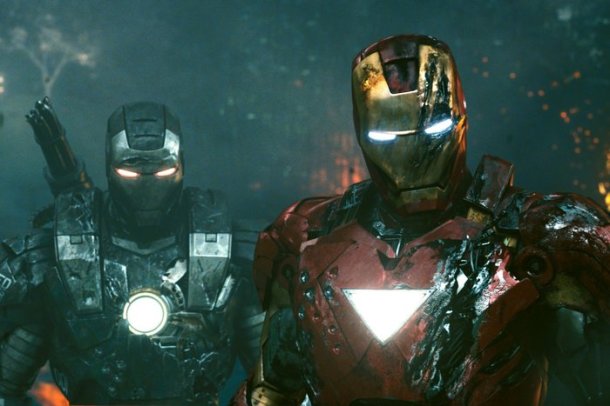
John Debney (and Tom Morello) talk Iron Man 2 (2010)

It’s hard to create a sequel that lives up to the awesomeness that was the original Iron Man film, but Iron Man 2 did a pretty good job. The film follows Tony Stark after he publicly reveals that he is Iron Man to the world.

See, as it turns out, the palladium in the arc reactor that’s keeping Tony alive is also slowly killing him, so he begins to live life very recklessly (as he doesn’t have much time to live), to the consternation of Pepper Potts and James Rhodes, who have no idea that Tony is slowly dying. But there are other problems: Ivan Vanko, determined to seek vengeance on Stark, builds his own arc reactor and sets out to kill him. (This is also the film that introduces Natasha Romanoff, aka Black Widow) to the MCU.

RASPUTIN

Stark is also under increasing pressure to sell the designs of his Iron Man suits to the government, but he is unwilling to do so. Everything comes to a head when Tony gets drunk at a birthday party while wearing his Mark IV armor. Rhodes dons the Mark II prototype and the two fight to a stalemate which ends with Rhodes flying off with the armor to give to the Air Force. At the same time, rival Justin Hammer has enlisted Vanko to build his own set of armored suits (which he passes off as his own work), not realizing that Vanko has sabotaged them so that they can be remotely controlled by him. It’s up to Tony to stop Vanko once and for all!

images

While the film’s score features a healthy selection of rock songs (including two from AC/DC), the orchestral score was composed by John Debney and Tom Morello. The above video featurette details how Debney collaborated with Morello to create the score for the film.

iron_man_2_poster_7_by_scorpionsoldier

Some have criticized the MCU for not having a “consistent” sound, which is to be expected since multiple composers have been employed to score these films, but I think each composer puts their own unique twist to each installment of the MCU, and Iron Man 2 is no exception. I hope you enjoy this behind the scenes look at the making of this film’s score.

Become a Patron of the blog atĀ patreon.com/musicgamer460

Check out the YouTube channel (and consider hitting the subscribe button)

See also:

Film Composer Interviews A-H

Film Composer Interviews K-Z

John Debney scoring Predators (2010)

John Debney talks The Scorpion King (2002)

John Debney talks The Passion of the Christ (2004)

John Debney talks The Jungle Book (2016)

Don’t forget to like Film Music Central on Facebook

Hans Zimmer talks The Road to El Dorado (2000)

While it wasn’t a big hit at the time, 17 years later there is still a soft spot in my heart for The Road to El Dorado. The story follows two Spanish con-men, Miguel (Kenneth Branagh) and Tulio (Kevin Kline) as they accidentally stow away on the ship of Hernan Cortes on his way to conquer whatever empires of the New World he may come across, and end up discovering the legendary city of gold, El Dorado, where they are mistaken for gods.

maxresdefault

(I wrote about one of the film’s songs here)

Miguel and Tulio are initially content with their plan to amass as much gold as possible and then sailing away to “ascend to the heavens” in a boat they’re having the residents of El Dorado build for them, but complications quickly begin to emerge. For one, Miguel is quickly becoming enamored of life in the hidden city. And, as he points out to Tulio, leaving to live like a “king” somewhere else would be a step-down from “god.”

For another, the high priest, Tzekel-Kan, is suspicious of the pair as they do not behave as the gods are supposed to (nor are they supposed to bleed as Miguel does after cheating to win a ball game) and is determined to expose the two as frauds. There’s also the looming threat of Hernan Cortes, who will surely destroy El Dorado and enslave the populaceĀ if he can find it.

dorado-2

And yes, I admit, the music has something to do with why I like this film as much as I do. With the orchestral score composed by Hans Zimmer, the music is a blend of Spanish sounds (heard mostly in the beginning of the film) and a “New World” sound that takes over once Miguel and Tulio discover El Dorado. I was delighted to discover a full length behind the scenes look at creating the score for this movie, with thoughts from Hans Zimmer, Elton John (who worked with Tim Rice on the songs) and also Kevin Kline and Kenneth Branagh, the voices of Miguel and Tulio.

Ā If you haven’t given The Road to El Dorado a try, I sincerely hope that you give the movie a chance. It has terrific animation and, as I’ve said, a wonderful musical score.

Become a Patron of the blog atĀ patreon.com/musicgamer460

Check out the YouTube channel (and consider hitting the subscribe button)

See also:

Film Composer Interviews A-H

Film Composer Interviews K-Z

Hans Zimmer talksĀ HannibalĀ (2001)

Hans Zimmer talksĀ The Dark KnightĀ (2008)

Hans Zimmer talksĀ Sherlock HolmesĀ (2009) andĀ Sherlock Holmes: A Game of ShadowsĀ (2011)

Hans Zimmer talks Inception (2010)

Hans Zimmer (and Richard King) talkĀ The Dark Knight RisesĀ (2012)

Hans Zimmer talksĀ Man of SteelĀ (2013)

Hans Zimmer talksĀ InterstellarĀ (2014)

See also:

The Road to El Dorado ā€œIt’s Tough to Be a Godā€ (2000)

Don’t forget to like Film Music Central on Facebook šŸ™‚

Alan Silvestri talks FernGully: The Last Rainforest (1992)

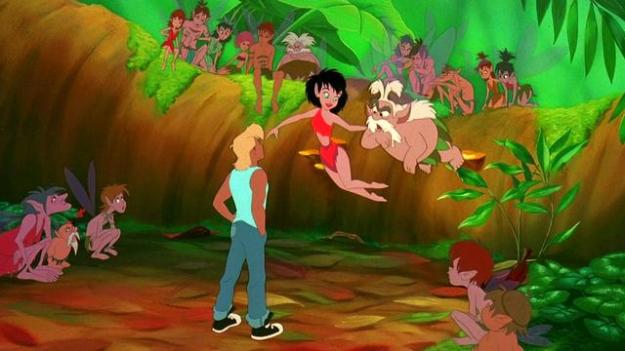
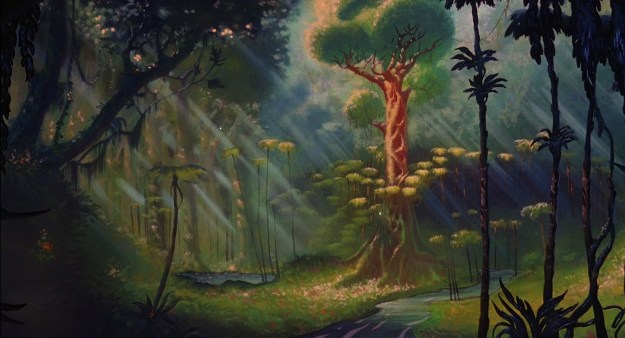
FernGully: The Last Rainforest is one of my favorite animated films that doesn’t come from the Walt Disney studio. It tells the story of Crysta, a fairy who lives in the untouched rainforest of FernGully.

She is learning to use magic as she will one day be the leader of the fairies. According to their legends, fairies and humans used to be very close until an evil spirit named Hexxus drove them away, presumably to their extinction.

FernGully2

Of course the humans didn’t go extinct, and they’re very close to FernGully even now in the form of loggers cutting the forest down acre by acre. And when the tree containing the spirit of Hexxus is destroyed and the evil spirit is set loose, it’s up to Crysta and her new human friend Zak to stop him.

FernGully

I absolutely LOVE the music for FernGully, it was composed by Alan Silvestri (of Back to the Future fame) and it will stick with you long after the story is over. One of my favorite pieces from the score is “The Spirit of the Trees” and I hope to talk about that piece at some time in the future. But for now, I have a behind the scenes look at making theĀ overall score that I think you will enjoy.

Become a patron of the blog at patreon.com/musicgamer460

Check out the YouTube channel (and consider hitting the subscribe button)

See also:

Film Composer Interviews A-H

Film Composer Interviews K-Z

Don’t forget to like Film Music Central on Facebook šŸ™‚

The Two Towers “Last March of the Ents” (2002)

I think we can all agree that the Ents are one of the greatest things about The Two Towers. After Merry and Pippin rescue themselves from the Uruk-hai, they head into Fangorn Forest and run straight into Treebeard, de facto leader of the few Ents that remain in Middle Earth. Ents…are like trees, sort of. They resemble different varieties of trees, but they have legs, and eyes and they can talk too. Oh and they live for a really LONG time. So long in fact, that regular events in Middle Earth like war very rarely bother them. They’d just as soon let the humans, elves and other races sort it out among themselves, despite the pleas Merry keeps making to them.

But just as Treebeard is set to take Merry and Pippin to a place where they can safely head off to the Shire, Pippin has an idea: he tells Treebeard to take them south past Isengard, having a fairly good idea of what the Ent will run into on the way.

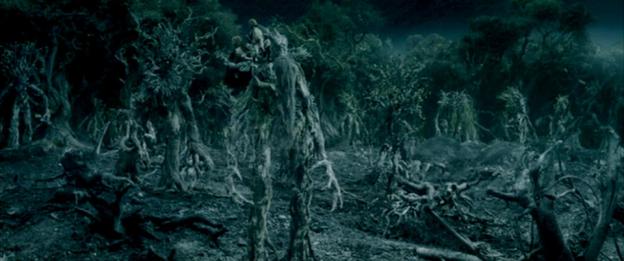
See, while the Ents have been busy deep in the forest, Saruman the wizard has been busy having the forest surrounding Isengard chopped down as fuel for the furnaces helping to produce weapons and armor for his army. So when Treebeard comes to the slopes nearest the wizard’s tower, he emerges to find that acres of forest have been chopped down and completely destroyed, trees that he had known since they were seedlings.

That does it!! Exclaiming that “a wizard should know better” Treebeard lets out a howl of pain and anger that summons all the remaining Ents to his side as he explains to the hobbits:

“There is no curse in Elvish, Entish or in all the tongues of Men, for this treachery.”

Now the Ents will go to war, as they have not done for ages. But there is no optimism here: as the females of their species disappeared centuries ago, there are no more Ent children. Whatever losses they suffer in the coming battle will only hasten the extinction of their race, hence the reason this is called “the last march of the Ents.”

The Ents Attack Isengard

I love the scene when all the Ents are striding across the ruined plain, the Ent theme sounding clear in the background. This is one of those moments that is absolutely pure Tolkien and I never get tired of it. It’s such a sad theme, sad and bittersweet, but it matches the Ents perfectly.

Become a Patron of the blog atĀ patreon.com/musicgamer460

Check out the YouTube channel (and consider hitting the subscribe button)

For more of The Two Towers, see also:

The Two Towers ā€œLament for Theodredā€ (2002)

See also:Ā Film Soundtracks A-W

Don’t forget to like Film Music Central on Facebook šŸ™‚

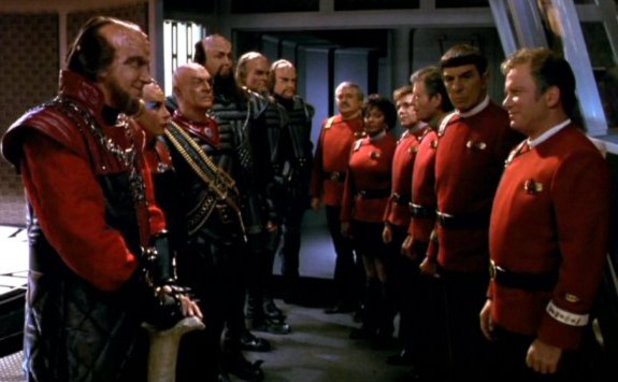
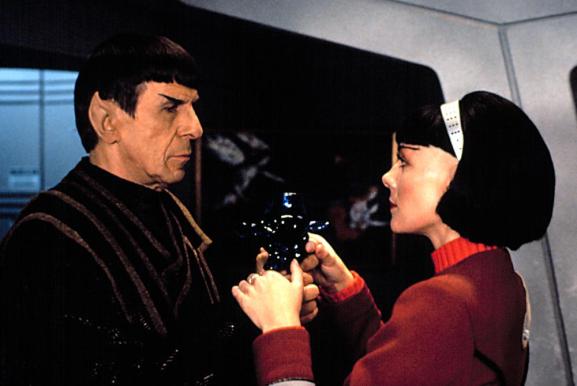
Star Trek VI: The Undiscovered Country “Main Theme” (1991)

images

After Star Trek V: The Final Frontier went FLOP at the box office, it was very nearly the end of the Star Trek films. But the studio managed to persevere and plans were laid to make a sixth film. Initially, Star Trek VI was going to be a prequel, featuring Kirk and co. at the Academy (which later became the basic plot of Star Trek (2009)), but that was scrapped in favor of a final adventure with the original Enterprise crew.

Star Trek VI: The Undiscovered Country “Main Theme” (1991)

Now when it came to scoring Star Trek VI, director Nicholas Meyer had some trouble finding a composer. Jerry Goldsmith was so disappointed after Star Trek V that he currently wanted nothing to do with the project. James Horner felt that his career had advanced beyond Star Trek, so he declined as well. With no other alternatives, Meyer looked to a pile of demo tapes sent in by other composers wishing to work on the project and he ultimately selected a tape sent in by composer Cliff Eidelman, as he felt his music best captured the “spirit of Star Trek”.

1_z2UOsN_zJ3FXzU77Ww2FTw

Eidelman’s music is a big part of why I love The Undiscovered Country so much. It’s dark, occasionally eerie, and chock full of tension at all the right moments. And the main theme is a perfect introduction to this score. The music plays over the opening credits before the story proper begins and instantly lets you know that this isn’t like the other Star Trek films. Jerry Goldsmith’s bright fanfare is absent, Horner’s beautiful strings aren’t there. What we have instead is a dark motif that will recur throughout the film.

MSDSTTR EC068

As the credits move on towards the end, the music becomes more and more tense, and it will later come out that what we are hearing is the music from the final battle between Captain Kirk and General Chang. The tension builds higher and higher, until finally the music ends on almost a literal cliffhanger, as the music cuts off just before a huge explosion fills the screen (talk about starting a story off with a bang!)

I really enjoy the main theme of Star Trek VI: The Undiscovered Country, it is an underrated gem in the musical canon of Star Trek. I hope you enjoy listening to this theme as well.

See also:Ā Film Soundtracks A-W

You can become a patron of the blog atĀ patreon.com/musicgamer460

Check out the YouTube channel (and consider hitting the subscribe button)

See also:

A Tale of Two Spocks: Spock’s Theme in Wrath of Khan and The Undiscovered Country

Don’t forget to like Film Music Central on Facebook šŸ™‚

Disturbing Disney #8: The Whale Who Wanted to Sing at the Met (from Make Mine Music, 1946)

Make Mine Music is the 8th animated feature in the Disney canon and for the most part has been completely forgotten today. Unlike other animated films, which consist of a single story, Make Mine Music is an anthology, that is, it is a collection of unrelated animated shorts that all heavily feature music in some way. The most famous short from this film (in my opinion) is Peter and the Wolf (narrated by Sterling Holloway), but the finale piece is what I’d like to draw to your attention.

11

The Whale Who Wanted to Sing at the Met (quite the mouthful to say) concludes Make Mine Music and is without a doubt one of the most disturbing pieces of animation you will ever see. The story is about Willie, a large sperm whale who has the gift of singing grand opera and dreams of starring at the famous Metropolitan Opera in New York City (how a whale would do that I don’t know, but it’s Disney so why not?).

As Willie continues to sing for any ships that pass by (or for the local seagulls), word eventually spreads back to the city that there is a whale with tremendous operatic talent. This news reaches the ears of the famed head of the Metropolitan opera, Tetti-Tatti, who quickly (and wrongly) deduces that Willie must have SWALLOWED a talented opera singer, and he must go rescue him straight away!!

Disney-willie-the-operatic-whale-the-whale-who-wanted-to-sing-at-the-met-make-mine-music-Old-Met-Opera-House

Tetti-Tatti sails out with a harpoon boat to “rescue” the (non-existent) opera singer, and Willie, thinking this is an audition, goes to perform for him. The crew, enthralled by Willie’s singing, does everything they can to stop Tetti-Tatti from firing the harpoon (up to and including sitting on him). We then see a montage of Willie’s operatic career, implying that Tetti-Tatti changed his mind and accepted that Willie COULD sing opera.

But then…just as Willie is performing the role of Mephisto from Faust, we see Tetti-Tatti appear amongst the flames (Mephisto is a devil), harpoon poised to strike…and then he fires!!!! In the midst of his singing Tetti-Tatti fires and KILLS WILLIE!!!!! I mean brutally kills him too, there’s a shot of Willie thrashing away over the sea, harpoon embedded (albeit it’s at a great distance, we can’t see it clearly) and then the sad truth that a great talent has been extinguished forever, on Earth anyway. The “silver lining” is that Willie can sing on forever in Heaven (hence his appearance below as a member of the heavenly choir) but for me that doesn’t make up for the fact that a singing whale was killed, KILLED!!! Up until this point it was just another cartoon, you don’t expect the main character to actually DIE!!

13

Yes, I know they called the story “tragic” from the outset, but “tragic” doesn’t have to equal death. I mean come on Disney!! Let me tell you, when I first saw this, the ending traumatized me, and that’s why this story belongs in the list of “Disturbing Disney.”

I am dying of curiosity to know what you think of this cartoon and of the ending. Did it disturb you just as much as it does me? Please let me know in the comments below.

Become a Patron of the blog atĀ patreon.com/musicgamer460

Check out the YouTube channel (and consider hitting the subscribe button)

For more Disturbing Disney, see also:

Disturbing Disney #1: The Coachman in Pinocchio (1940)

Disturbing Disney #2: The truth of Pleasure Island in Pinocchio (1940)

Disturbing Disney #3: Escaping Monstro from Pinocchio (1940)

Disturbing Disney #4: Dumbo loses his mother (1941)

Disturbing Disney #5 The death of Bambi’s Mother

Disturbing Disney #6: Faline vs. the dogs (1942)

Disturbing Disney #7: Cruella wants to do WHAT??

Disturbing Disney #9: Dr. Facilier’s Fate (The Princess and the Frog, 2009)

Disturbing Disney #10: The rat in Lady and the Tramp (1955)

Disturbing Disney #11: Clayton’s Death in Tarzan (1999)

Disturbing Disney #12: The Bear from The Fox and the Hound (1981)

Disturbing Disney #13: ā€œSmoking them outā€ in The Fox and the Hound (1981)

Disturbing Disney #14: The Salt Trap in The Jungle Book (1994)

Disturbing Disney #15: Night on Bald Mountain from Fantasia (1940)

Disturbing Disney #16: King Triton destroys Ariel’s grotto

Disturbing Disney #17: Ratigan becomes a monster

Disturbing Disney #18: The Queen’s assignment for her Huntsman

Disturbing Disney #19: Cinderella’s dress is destroyed (1950)

Disturbing Disney #20: Quasimodo is crowned ā€˜King of Fools’ (1996)

Don’t forget to like Film Music Central on Facebook šŸ™‚

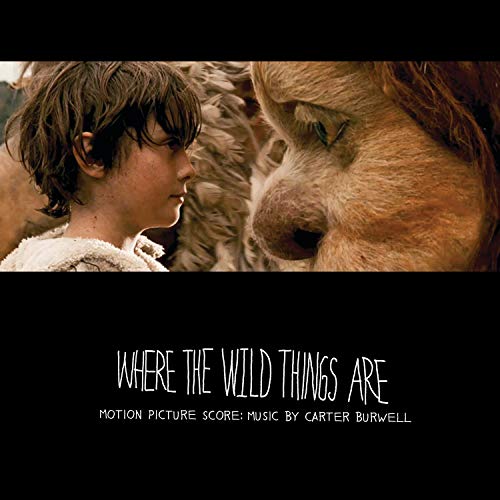
Carter Burwell talks Where the Wild Things Are (2009)

I was surprised when Where the Wild Things Are became a motion picture in 2009. As a kid, I remember having this book read to me and I enjoyed it very much, but it didn’t seem like the best story to adapt into a movie (after all, it isn’t very long). But to my surprise, the movie actually turned out to be very good. If you haven’t read the book before, the story in brief is about a young boy named Max who sails to a magical island inhabited by oversized monsters. Max makes himself their king and happily rules over them for a while until he becomes homesick and returns to where he came from. The film expands on this story quite a bit by giving names and distinct personalities to the different “wild things” on the island, but the basic elements of the story remain the same.

While Carter Burwell might not be a name as familiar as, say, John Williams, James Horner or Brian Tyler, he has done a fair share of great film scores. He composed several scores for the Twilight series (Twilight; Breaking Dawn parts 1 and 2) and collaborated six times with director Bill Condon. Burwell has certainly done some interesting work over the years.

AndĀ the composerĀ has some interesting thoughts to share on the story’s musical score, as seen in the video above. For instance, once Max arrives on the island “where the wild things are”, the composer thought it appropriate to completely change the music from something familiar to something more exotic (like using non-traditional instrumentation).


One part involves literally banging on pots and pans to create a musical effect. The idea is that these are things you might literally find on the forest floor on the island. Using non-traditional items to create music is always exciting and I had no idea that Burwell and his fellow musicians had done this to create the music for Where the Wild Things Are.

See also:

Film Composer Interviews A-H

Film Composer Interviews K-Z

Check out the YouTube channel (and consider hitting the subscribe button)

You can become a patron of the blog atĀ patreon.com/musicgamer460

Don’t forget to like Film Music Central on Facebook šŸ™‚

Danny Elfman talks Fifty Shades of Grey (2015)

Let me just start by saying that I am not a fan of the Fifty Shades of Grey trilogy; not the books or the movies. I don’t like the concept behind the story (did you know this started as Twilight fanfiction?) and it just…*shudders* it doesn’t sit well with me.

That being said…my ears perked up with interest when I discovered that Danny Elfman wrote the score for Fifty Shades of Grey (and he has also scored Fifty Shades Darker). I have been a fan of Elfman’s work ever since I first heard the music for Batman (1989) and I was surprised to hear that he is working on this film trilogy. Elfman isn’t the first composer I would think of when it comes to dark romantic films, but to each his own.

I can’t recommend this film, but it was interesting to briefly hear Elfman’s thoughts on how he put the important musical themes together for this story.

Now I have to ask, for those of you who may have seen Fifty Shades of Grey, did you like it at all? Was it worth seeing? I would love to hear your comments on this film, so let me know in the comments below šŸ™‚

Check out the YouTube channel (and consider hitting the subscribe button)

You can become a patron of the blog atĀ patreon.com/musicgamer460

See also:

Danny Elfman talksĀ BatmanĀ (1989)

Danny Elfman talksĀ Batman ReturnsĀ (1992)

Danny Elfman ā€œPlanet of the Apesā€ scoring session (2001)

Danny Elfman talksĀ Spider-ManĀ (2002)

Danny Elfman talksĀ Meet the RobinsonsĀ (2007)

Danny Elfman talksĀ Alice in WonderlandĀ (2010)

Danny Elfman talksĀ Alice Through the Looking GlassĀ (2016)

Film Composer Interviews A-H

Film Composer Interviews K-Z

Don’t forget to like Film Music Central on Facebook šŸ™‚

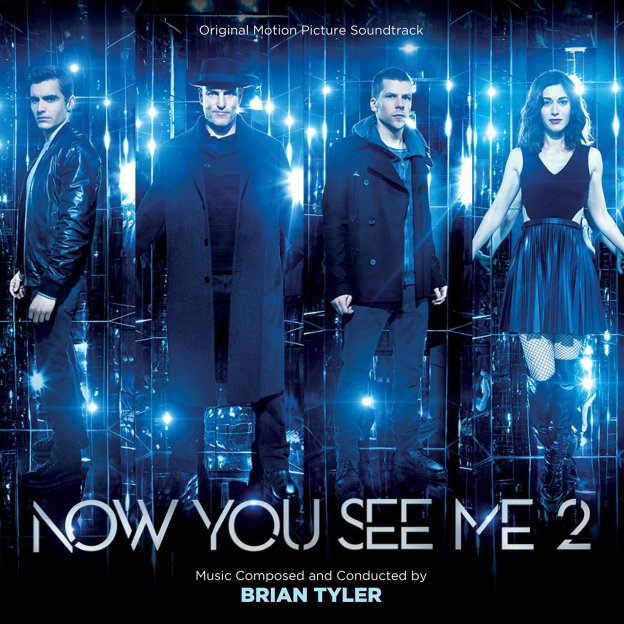
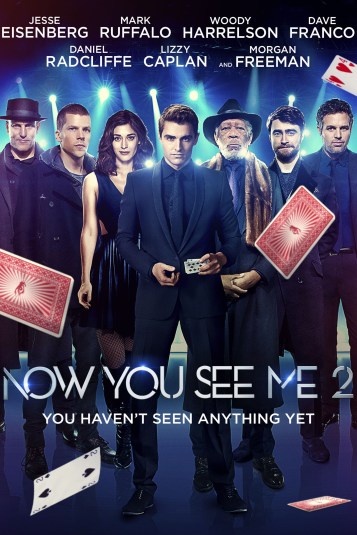
Brian Tyler conducting and scoring Now You See Me 2 (2016)

Main Theme from Now You See Me 2 (2016)

I have not seen Now You See Me (2013) or its sequel Now You See Me 2, though I have heard plenty about both films. Both films feature a group of stage magicians who use their talents to pull off huge and daringĀ heists. The scores for both films were composed by Brian Tyler, and what I have here is two clips relating to the sequel, Now You See Me 2, which came out last year. The top link takes you to a concert performance of the film’s main theme, which I found very beautiful. I will never stop loving the experience of hearing movie music in a concert environment.

The bottom link comes from a scoring session led by Tyler at the famous Abbey Road studio in London. There is something enthralling about watching Brian Tyler at work; when he is on the podium, you can tell he is 100% into the music.

838522ccb86bde6ee59df3909dbea63b

I know Now You See Me 2 got mixed reviews upon its release, but surely the music was not a part of any problems the film had. I hope you enjoy the recording session and the performance.

You can become a patron of the blog at patreon.com/musicgamer460

Check out the YouTube channel (and consider hitting the subscribe button)

See also:

Film Composer Interviews A-H

Film Composer Interviews K-Z

Brian Tyler ā€œAlien vs. Predator: Requiemā€ scoring session (2007)

Brian Tyler scoring Partition (2007)

Brian Tyler talksĀ WarĀ (2007)

Brian Tyler talksĀ RamboĀ (2008)

Brian Tyler ā€œLaw Abiding Citizenā€ scoring sessions (2009)

Brian Tyler ā€œDragonball Evolutionā€ scoring session (2009)

Brian Tyler talksĀ The ExpendablesĀ (2010)Ā 

Brian Tyler talksĀ Fast FiveĀ (2011)

Brian Tyler ā€œBattle: Los Angelesā€ (2011) scoring session

Brian Tyler scoring session forĀ Iron Man 3Ā (2013)

Brian Tyler ā€œTeenage Mutant Ninja Turtlesā€ (2014) scoring session

Brian Tyler ā€œPower Rangersā€ scoring session (2017)

Brian Tyler conductsĀ The MummyĀ (2017)

Don’t forget to like Film Music Central on Facebook šŸ™‚