Category Archives: Films

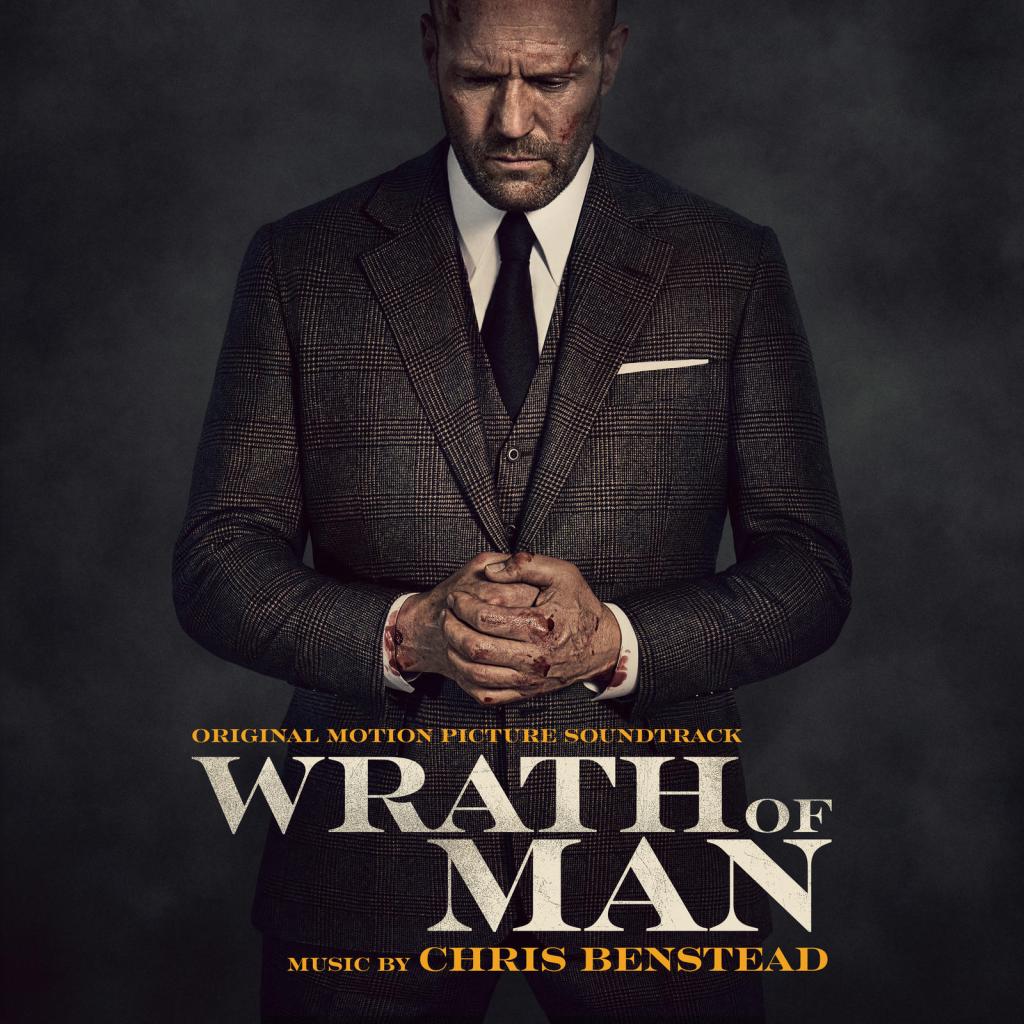
Soundtrack Review: Wrath of Man (2021)

Sony Music Masterworks has released the Wrath of Man (Original Motion Picture Soundtrack) by composer Chris Benstead. Available everywhere now, the album features score music written by Benstead for director Guy Ritchie’s latest action thriller starring Jason Statham. The score is the latest collaboration between Benstead and Ritchie, the duo having previously worked together on The Gentleman and Aladdin

Chris Benstead is a British film composer, arranger and Academy Award®-winning re-recording mixer. Chris received Oscar® and BAFTA awards for his work as re-recording mixer on Alfonso Cuaron’s masterpiece Gravity, starring Sandra Bullock and George Clooney. Chris’ unique skillset allowed him to mix and sculpt the music in an extremely immersive way, pushing the limits of surround sound and exploiting the new ‘Dolby Atmos’ standard.

Of the soundtrack for Wrath of Man, composer Chris Benstead had the following to say:

“The score for Wrath of Man is centered around the cold and mysterious character ‘H’. Super close-mic’d cellos and double basses were used (and abused) to created awkward and jarring stabs as well as angry and unnervingly dark textures. A stoic main ‘hook’ is constantly repeated in different guises to help amplify the sense of impending unease and, ultimately, revenge. Sometimes only percussion was needed to create the brutal and exigent action cues. It was an amazing experience to collaborate with the utterly brilliant Guy Ritchie once again.”

I’m probably guilty of saying this too often, but I really enjoyed listening to the soundtrack for Wrath of Man. This is the kind of soundtrack I live for hearing, because it’s the type of music you feel in the very depths of your soul (yes it really is that good). Benstead uses the cello and double bass in a way that is pure genius. Normally, I think of those two instruments as producing warm and gentle music. Not here, not this soundtrack. Benstead turns the cello and double bass into weapons, making sharp, jagged sounds that cut through everything else and demand your attention. This is not the type of soundtrack that just fades into the background, you’re going to notice this music.

I also absolutely love how Benstead utilizes percussion throughout the soundtrack. It sounds like gunshots in a lot of places (and I’m certain that was done on purpose) and gives the music a distinctly prickly feeling. It’s a nice contrast to the harsh sounds of the cello and double bass and serves as a reminder that this is not ‘comfortable’ music in any sense of the word. Once this music gets started, you are on edge and I love that so much about this soundtrack.

There isn’t too much more to say about this music without sounding repetitive. Chris Benstead has created a soundtrack that doesn’t pretend to be anything other than what it is: the music for (what is hopefully) a badass action film. This is one of the most purely enjoyable soundtracks I’ve heard this year so far, and I think all of you will like it.

Track List

1. Coffee Frother (3:29)
2. Wrath of Man (2:14)
3. Dangerous Job (2:17)
4. Tooling Up (3:09)
5. Bullet Taken Hostage (3:04)
6. F**king Lunatic (1:57)
7. Coroners Report (1:22)
8. China Town (0:55)
9. Dark F**king Spirit (3:58)
10. Know The Route (1:45)
11. Dougie (3:20)
12. Idolised You (3:40)
13. Built for Combat (2:03)
14. Porn Factory (3:34)
15. Precious Ornaments (3:24)
16. Staples Center (2:38)
17. Go to Work (1:44)
18. Number 1 Loses It (3:58)
19. 120 Million (2:04)
20. The Inside Man (4:42)
21. Wanna be Hero (5:36)
22. Come Out Little Piggy (4:16)
23. Bullet Executions (3:31)
24. The Victor (4:48)
25. Liver Lungs Spleen Heart (4:13)

Let me know what you think about Wrath of Man (and its soundtrack) in the comments below and have a great day!

See also:

My Thoughts on: Wrath of Man (2021)

Film Soundtracks A-W

Become a Patron of the blog at patreon.com/musicgamer460

Check out the YouTube channel (and consider hitting the subscribe button)

Don’t forget to like Film Music Central on Facebook 

Heartfelt Music for a Heartfelt Story: Talking with Composer Peter Baert About ‘The Water Man’ (2021)

Just recently I had the opportunity to talk with composer Peter Baert about his work on the upcoming film The Water Man, which is directed by David Oyelowo. In the film, a young boy named Gunner (Lonnie Chavis) sets out on a quest to save his ill mother (Rosario Dawson) by searching for a mythic figure who possesses the secret to immortality, the Water Man. This score marks Peter Baert’s major Hollywood feature debut and will release in theaters on May 7, 2021.

I hope you enjoy my conversation with Peter Baert about The Water Man.

How did you get started as a film composer?
I grew up in a musical family , a kind of Belgian sea-side Von Trapp setting. My Dad was a principal at a music school, and also an organist. He definitely nudged us towards classical music careers. However, I diverted slightly from that path and went into sound design and avant-garde electronic music. When my mother died of pancreatic cancer I reconnected with my classical upbringing and started to study classical music and film scoring. That was in 2008.


How did you get involved with The Water Man?
My wife and I own and run a commercial sound studio together in Brussels. One day we were booked for a Penguin audiobooks recording with David Oyelowo. That day, one of our engineers called in sick so I had to jump in to engineer. During the breaks, David and I talked about his work, and about my ambition to compose film music. We stayed in touch afterwards and at some point I asked him if I could pitch on this project that he was producing. He sent me the script and I made 8 cues based on a number of scenes.Long afterwards, David called me to say that they kept coming back to my demo, so I flew out to LA to sit with David and editor Blu Murray in the edit room and eventually I got hired.


Where did you start with putting the score together?
This heartfelt story of The Water Man took me back to two periods in my life. The first reminded me of being in my early teens, always playing in the neighborhood with my friends and going on adventures in a nearby forest. The second transported me back to a day in 2008 when my mom and I found out the diagnosis of her pancreatic cancer. She would be gone in 6 months. At some moment during the composing process the music found me and it glued to the screen. So, it started there, with that feeling and with the script that I’d received to base my demo on. The themes that I wrote for the demo pretty much evolved into the final score.

How much collaboration was there, if any, with director David Oyelowo?
I have a feeling that David kindly guided me through this process. He is an amazing man, very kind and generous. He even invited me into his home when I first came to LA. The Brussels – LA time difference worked well for us, I miss waking up with David’s notes on a cue. Later, when he was shooting in London for the Netflix film The Midnight Sky, he sent me notes from his trailer on set.


What type of music would you classify this score as? Is it adventure film music, YA drama music, or (and I ask this after watching the trailer) a bit of horror music? Or a combination of all of the above?

It’s a bit all of the above, without being a multi-headed animal. I consciously worked with a definite set of sounds throughout the movie. That’s why I used a lot of wooden percussion, some African Marimba in addition to a Concert Marimba, prepared piano..There is an emotional part of the score that blends well with the more adventurous parts.


Are there musical themes for specific characters? I have to imagine there’s some kind of motif for The Water Man himself.

When I read the Water Man Rhyme in the script, I instantly wrote a melody fitting the lines. I recorded that in my demo and later, in the movie that piece was interpreted by Amiah Miller who plays Jo. That rhyme became the Water Man theme and is used throughout the film in different forms.When Gunner is in a happy place we’ll hear Gunner’s Theme, a simple piano melody line based on a simple scale. There is a theme for Mary, that I blended with Gunner’s theme in the final score cue “Prayer.” The relationship between Gunner and Jo has a more playful theme. Amos, the father in the movie played by David, has a more texture approach, like Col Legno cello and electric distorted cello lines.

Were there any types of specific instruments that you focused on in the overall mix? Or specific instruments/sounds for specific characters or ideas?
One of the first things I did when I first saw the film, was ask the assistant editor Kevin Murray for all the non-dialogue takes of the actor who played the Water Man. So, back in Belgium, we’ve manipulated all these cries, and whispers, sighs,… through tape delays, modular synths and so on, to create a Water Man Synth. Later on in the proces, when David proposed to have some Motherly presence in the Forest scene, we also created a Mother Synth.I recorded long notes, and a number of little vocalizations with vocalist Judith Okon… and processed this as well.So in the film I could always use either some Water Man energy or Mother energy.


How much time did you have to score the film?
About 4 months. David called me near the end of October 2019 and we were planning to record in Budapest in March of 2020. However the global pandemic complicated everything and we ended up recording at Galaxy Studios in Belgium in a Covid safe setup with 9 players around mid May 2020. Cues got revised until the very end, as the edit was adapted during lockdown.


Are there any musical details you hope stand out to the audience?
There’s a Swirly Tube somewhere in the score and I played the recorder in the more funny parts between Jo and Gunner. ;-)I hope people will enjoy my style, which is a unique blend of classical and electronics.


Do you have a favorite part of the score?
I like the opening cue “Gunner’s Theme” because it has been with me since the demo. My daughters aged 5 & 7 sang it at home while I was working on it. And when Gunner finds the Water Man’s Hut and draws his Samurai sword, that’s also one of my favourite cues.

I’d like to say thank you to Peter Baert for taking the time to speak with me about his work on The Water Man.

See also:

Composer Interviews

Become a Patron of the blog at patreon.com/musicgamer460

Check out the YouTube channel (and consider hitting the subscribe button)

Don’t forget to like Film Music Central on Facebook 🙂

Writing Music for Planet Earth: Talking with Composer Ilan Eshkeri About ‘A Perfect Planet’ (2021)

Earlier this year I had the opportunity to speak with composer Ilan Eshkeri about his work on the documentary series A Perfect Planet. This is my second interview with this composer, as we’d previously talked about his work on the hit video game Ghost of Tsushima. Eshkeri attended Leeds University, where he studied music and English literature. During this time he also worked with fellow film composers Edward Shearmur, Michael Kamen and music producer Steve McLaughlin. His extensive catalogue of film and TV scores include Still Alice, Stardust, The Young Victoria, Doctor Thorne, Shaun The Sheep and David Attenborough’s Natural History Museum Alive.

I hope you enjoy my conversation with Ilan Eshkeri about the music of this spectacular documentary.

Have you worked on documentaries like ‘A Perfect Planet’ before now?
Yes, this is my fourth collaboration with David Attenborough. What made me to work with him again was the focus of this series on climate which is an issue that is also close to my heart. Silverback, the production team making the programme were also very supportive of my creative approach so the which made the project creatively very satisfying as well as feeling like I was getting an important message out to the world. 

Is scoring a documentary like this very different from working on a film? Or is it mostly the same?
It’s quite different because you are writing 40 short films. You have a sequence about ants that’s a heist or a sequence about whales that’s a love story or a sequence about monkeys that’s about guarding territory and protecting family and so you have to think of each story on its own terms, they have their own completely new themes and instrumentation/sound-world, so it is much more work than writing a film score where you would have a handful of themes or motifs that you re-use. 


Where did you start with the scoring process for ‘A Perfect Planet’? I hear what sounds like a recurrent theme that reappears from time to time, but I wasn’t sure if it was a central or main theme or something else.
My writing process was varied because there were so many stories, I decided to take a hit and run approach… look at a scene and pick up a guitar and put an idea down and immediately move on to another scene pick up another instrument and so on… if I couldn’t come up with an idea immediately I’d leave it out, then I would go back around the whole episode again. 
You are right that there is a recurring theme. I’ve noticed that these kinds of shows tend to go from one piece of music to another without a musical anchor and I wanted to keep taking the audience back to a theme that represented the planet / Mother Nature. The theme comes at the beginning the end and in-between all the set animal sequences. Typically it has voices and piano, voices because it’s connected to nature and humanity and piano because it’s an instrument of the home and I wanted to reinforce the idea of the whole of our planet being collectively our home. 


So, this may be the same question over again but, how did the overall process for scoring this work? Were you given any guidelines for what each segment should sound like or was it pretty much a free rein? 
The film and TV making process always and has always used guide music, it helps the director producer and editor work out what kind of music they need, which can often inform how they’re going to cut the scene. For composers the guide music can be helpful too, music is very hard to describe in words so examples are useful. For a perfect planet I had a very set approach on how I wanted to approach the music and so after th first watch though I worked without reference to the guide in the first instance, and then there were a couple of times where we needed to refer back but not often. I am grateful to the team for supporting my process and believing in it. 


Did you have footage of the animals to watch while you worked or was it described in storyboards? 
I was brought on at an early stage before there was much to see so I could think about it early on but I did a lot of my recording to early clips so this way the music and the editing could evolve together 


How did you decide on which instruments to use for the different animals featured in ‘A Perfect Planet’?
We all have a sense of what is appropriate, there is an unspoken semiotic language that both film makers and audience are aware of, for example, a harp might seem an inappropriate choice for an elephant and a trombone might jar for a butterfly.  As a film maker and a composer you need to take these things into consideration, but rules are there to be broken!


How long did you have to work on the music? Was the process impacted by the pandemic at all?
I recorded the first 2 episodes before the pandemic but recording became very difficult. Orchestras couldn’t come together obviously, especially not wind and brass because of all the blowing. This meant that the post production process had to expand. I was able to put a small amount of strings together in Iceland and then brass and woodwinds individually in the player’s living rooms. It was extremely time consuming to prep, but fortunately the technology exists where we can place those recordings inside of digital acoustic spaces which meant we could make the recording sound very real. I also had to take these limitations into consideration in the writing. It was fortunate that I had taken a more contemporary approach, not straight symphonic, and I like to think that that creativity comes out of limitations, so I enjoyed the challenge. In the end my producer / engineer Steve McLaughlin made it all sound incredible and I think anyone would be hard pushed to tell the difference, It was just incredibly labour intensive.


Was it hard to write for any particular animal?
Yes, one scene in particular at the end of the sunlight episode where there was a huge feeding frenzy in the Ocean with birds, whales and fish, the music I had written was good but something about it was not quite right and the day before recording the director and I decided that to do something completely new it was incredibly difficult to write a 7 minute sequence to end an episode. It is such a short time whilst also prepping for the recording but somehow I managed to make it happen. 

I want to say thank you to Ilan Eshkeri for taking the time to speak with me about his work on A Perfect Planet.

I hope you enjoyed reading this interview and have a great day!

See also:

Composer Interviews

Become a Patron of the blog at patreon.com/musicgamer460

Check out the YouTube channel (and consider hitting the subscribe button)

Don’t forget to like Film Music Central on Facebook 🙂

Soundtrack Review: Stowaway (2021)

With Netflix recently releasing the soundtrack for their new film Stowaway, I had the opportunity to sit down and listen to the film’s official soundtrack. The music was composed by Volker Bertelmann (The Old Guard, Lion) and recently made available digitally.

The film’s synopsis is as follows:

In Stowaway, on a mission headed to Mars, an unintended stowaway accidentally causes severe damage to the spaceship’s life support systems. Facing dwindling resources and a potentially fatal outcome, the crew is forced to make an impossible decision.

Says Bertelmann of the Stowaway soundtrack:

“Working on Stowaway and collaborating with director Joe Penna was a special experience in many respects: Joe, who is a musician himself, gave me a lot of freedom to explore different sounds and we had a joint understanding of the purposes the music should serve. This facilitated the compositional process, which was extremely helpful given the considerable amount of music the film needed. The music for Stowaway is one of my favorite scores so far.”

Given what’s at stake in Stowaway, I was surprised at how low-key and passive a lot of the music is. There’s an underlying sense of tension of course, most notably in ‘How Much Oxygen’ but for the most part Bertelmann’s soundtrack is almost perfectly serene. The biggest exception to this comes in ‘Solar Flare’ which covers what is undoubtedly one of the climax points of the film. But even then, there’s still a polished smoothness lingering in the music that takes some of the edge off what might otherwise be a raw piece of action music.

All of this smoothness and serenity in the music confused me until I considered where the film is set. Stowaway is set entirely in space, aboard a ship bound for Mars, and it could be that Bertelmann had it in his mind to back up the interstellar background of the film with music that fit the location. After all, there’s something about space that can generate a lot of musical grace and beauty, and this film is surely no exception. It could also be that the composer wanted to remind viewers that in the grand scheme of things this conflict is barely a blip in the cosmos (or I could be overthinking it entirely). Most likely of all the options is the possibility that Bertelmann wanted the score to backup the story, but not overwhelm it with sheer depth of volume, as some film scores have been known to do.

I really enjoyed listening to the soundtrack for Stowaway. It really subverted my expectations for what I thought this movie would sound like but in the end it was really enjoyable. In some places it actually reminded me a little bit of 2001: A Space Odyssey with some of the more quiet tracks. If you get the chance to listen to the Stowaway soundtrack separate from the movie, I highly recommend doing so.

Track List

  1. Earth Rise
  2. Regaining Consciousness
  3. Favorite Spot on the Ship
  4. How Much Oxygen
  5. Setting Up the Algae
  6. It’s Literally My Job
  7. Can I Take His Place?
  8. I Was in the Fire
  9. Can You Talk?
  10. What Did You Do?
  11. The Algae Are Dead
  12. Climbing the Tethers
  13. On the Kingfisher
  14. More Than Enough Oxygen
  15. Solar Flare
  16. I Will Go
  17. Climbing the Tethers Alone
  18. Into the Solar Storm

Let me know what you think of Stowaway’s soundtrack (and the film) in the comments below and have a great day!

See also:

Film Soundtracks A-W

Become a Patron of the blog at patreon.com/musicgamer460

Check out the YouTube channel (and consider hitting the subscribe button)

Don’t forget to like Film Music Central on Facebook 

My Thoughts on: Mortal Kombat (2021)

This time last year I never would’ve dreamed that I’d be so excited to sit down and watch a movie based on the Mortal Kombat video games. But these are strange times we live in and as it turns out Mortal Kombat was quite an enjoyable experience.

As the name implies, Mortal Kombat is based on the iconic video game series of the same name and sees Earthrealm under threat from Outworld. After losing 9 Mortal Kombat tournaments, if Earthrealm loses once more, they’ll belong to Outworld forever. Quite the high stakes wouldn’t you say? While the film does try to explain the ramifications of everything, I couldn’t help wondering more than once if my understanding of the movie would have been greatly enhanced if I’d played more of the games (my exposure is currently limited to Mortal Kombat X).

That’s not to say that you can’t follow the movie if you haven’t played the games at all. The film does a pretty good job in explaining who is who and why they’re important. It’s just that some of the bigger aspects could have used a bit more exposition, like why Outworld wants to rule Earthrealm so badly. Or why, and this was my biggest issue with the film, a certain character is able to engage Sub-Zero in the fight that dominates the trailers promoting the movie. Don’t get me wrong, that fight (you all know the one I’m talking about) is beautifully shot and is a lot of fun to watch, but I legitimately do not understand how it was able to happen. There’s the loosest explanation given, but it wasn’t quite enough to satisfy me. Sometimes it’s best to include that extra five minutes of exposition, even if it does risk slowing the plot down a little, and part of me wishes Mortal Kombat had done that.

Aside from those issues, Mortal Kombat really is a lot of fun to watch. My favorite part has to be the sequence that emulates the video game (you can’t miss it), right down to the different combat arenas and fatality sequences. While it is a little cheesy how they would duplicate the game’s performance (one character even proclaims “Flawless Victory”), you can tell it’s all done in good fun. I mean, if you’re going to adapt a video game to film, an homage like this is probably the best way to go. A word of warning though about those fatalities: they really are as gory as you’ve been led to believe. So if that bothers you….you’ve been warned.

Of all the characters in the film, my two favorites are definitely Lewis Tan as Cole Young and Jessica McNamee as Sonya Blade (with an honorable mention to Joe Taslim as Sub-Zero). Watching these two get thrown into the world of Mortal Kombat was a lot of fun, and I feel like Tan perfectly played Cole Young as someone who is initially disbelieving but quick to buy in once he realizes his family is at risk. Part of me was disappointed the film didn’t include Kitana (my favorite Mortal Kombat character) but there IS an Easter Egg reference to her if you look closely. I also have to briefly mention Taslim’s performance as Sub-Zero which is one of the best in the film. The only real complaint I have is that I feel like we don’t know enough about him, his motivations and why he is what he is.

The music, which I’ve already reviewed, is just as amazing with the film as it is without it. I stand by my previous thought that in terms of music, the Mortal Kombat soundtrack is one of the best that’s come out this year. Especially during the fights in the latter half of the film, the music sucks you into the drama and adds that extra layer of detail that makes the film fun to watch.

One last note: the film ends with a blatant tease for a sequel and despite the many flaws I would be more than happy to see a sequel happen. There’s so much more they could do with the Mortal Kombat story and I’d like to see the filmmakers given an opportunity to keep the story going. This has the potential to be a really fun popcorn film franchise, so I’ll be waiting eagerly to see if a sequel gets greenlit.

While deeply flawed with some aspects of its storytelling, Mortal Kombat is a really enjoyable experience that does its best to faithfully bring the story of Mortal Kombat to the big screen. There are more than enough Easter Eggs and references to satisfy any fans of the video games and the teased sequel left me begging for more. My final verdict: Go see Mortal Kombat, it’s worth it.

Let me know what you think about Mortal Kombat in the comments below and have a great day!

See also:

Soundtrack Review: Mortal Kombat (2021)

Film Reviews

Become a Patron of the blog at patreon.com/musicgamer460

Check out the YouTube channel (and consider hitting the subscribe button)

Don’t forget to like Film Music Central on Facebook 

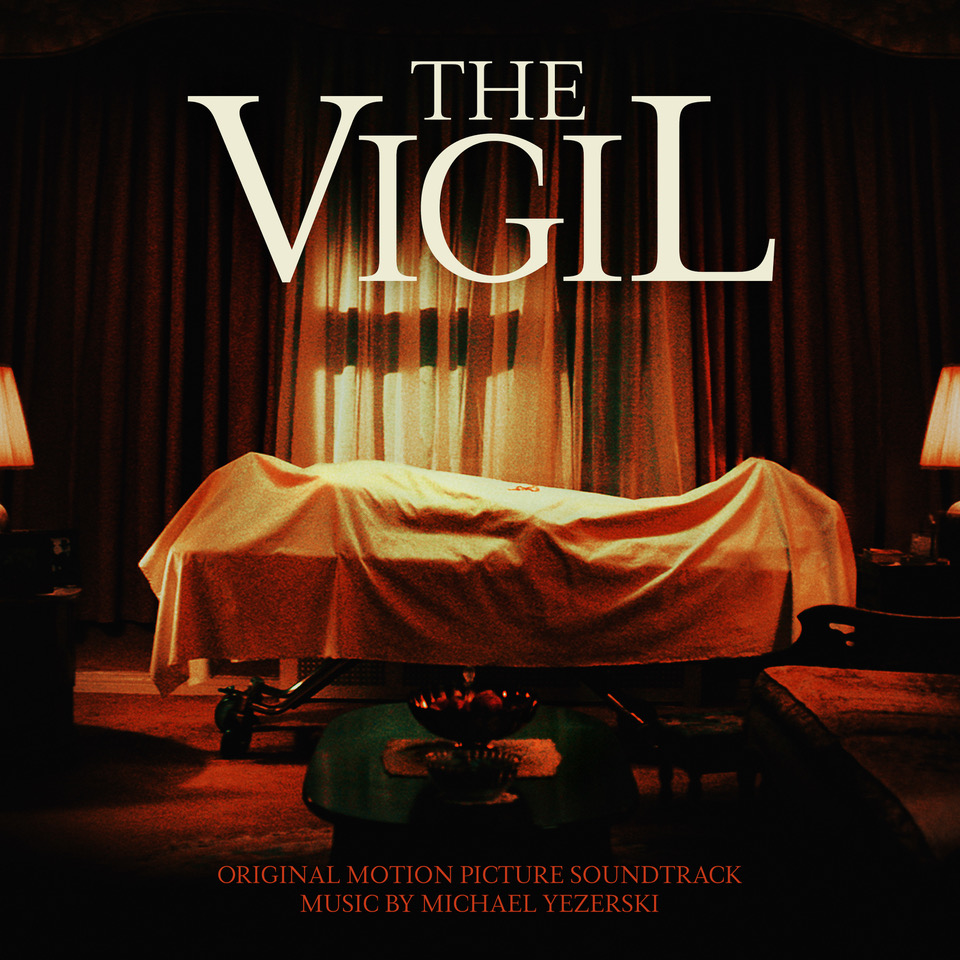
Soundtrack Review: The Vigil (2021)

Back in February of 2021, Lakeshore Records digitally released The Vigil Original Motion Picture Soundtrack – with music by Michael Yezerski (The Tax Collector, Blindspotting). Earlier career highlights for Michael Yezerski include HBO’s Only the Dead See the End of War, his first feature film The Black Balloon (winner of 8 AFI/AACTA Awards including Best Picture), PJ Hogan’s Mental, Wolf Creek Series 2, Catching Milat, Peter Allen, the Academy Award winning animated short, The Lost Thing and his collaboration with the Australian Chamber Orchestra, The Red Tree.

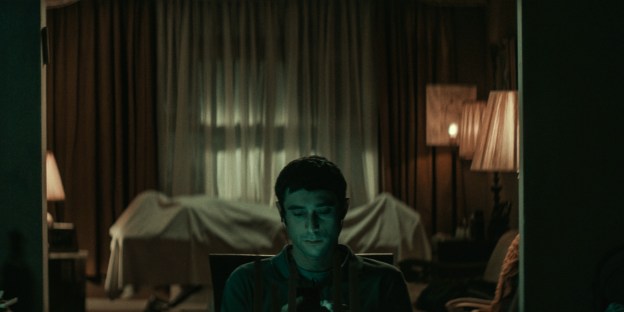
Steeped in ancient Jewish lore and demonology, The Vigil is a supernatural horror film set over the course of a single evening in Brooklyn’s Hasidic Borough Park neighborhood. Low on funds and having recently left his insular religious community, Yakov reluctantly accepts an offer from his former rabbi and confidante to take on the responsibility of an overnight “shomer,” fulfilling the Jewish practice of watching over the body of a deceased community member. Shortly after arriving at the recently departed’s dilapidated house to sit the vigil, Yakov begins to realize that something is very, very wrong.

Speaking about the philosophy behind the score, Yezerski said:

“As [director] Keith Thomas and I discussed, music is memory. We associate music with the best and the worst times in our lives. For The Vigil we needed to create a score that explored the malevolence of memory (both personal and cultural).” Yezerski went on further to note, “We needed massive textures that could read as both beautiful and brutal. The music attacks but also meditates on long and difficult lives. After all, what is the greater horror at play here – the supernatural or our lived reality?”

Going in, I thought I knew how The Vigil would sound, but to my surprise I was quite wrong. It’s true that like many horror film scores I’ve listened to in recent years, there’s an ongoing feeling of malevolence that pervades the entire score. But it’s how this feeling is delivered that sets The Vigil apart in my mind from recent scores in similar genres.

For example, the score’s use of the human voice (especially chanting) really emphasizes to me the story’s religious background (as it is based in Jewish folklore). That’s not something you hear in a lot of horror film scores so already the story is set apart in my mind. I also really like it because it evokes the feeling that you are around something ancient, as chanting is one of the earliest song forms in existence.

I also really like how the composer creates aural “textures” that literally make your skin crawl when you listen to them. “Lair” is an excellent example of that technique, but it really pervades most of the score if I’m honest. This is fitting as horror films, to the best of my understanding, are designed to make the viewer uncomfortable. It’s only natural that this should extend to the film’s score as well.

One final note, I also like how the music for The Vigil is full of various creaks and groans created by the instruments. It creates a similar sense of age that the chanting does, but it also gives you a sense that you’re in a space that is falling apart or in disrepair (as I understand it the film is set in a dilapidated house). This is most definitely a unique score, one that’s small but contains some powerful musical thoughts. This is yet another example of why you should never dismiss a soundtrack out of hand because it belongs to a horror film.

The Vigil Soundtrack Track List

  1. Tefillin (4:23)
  2. The Ghost, Pt. 1 (1:58)
  3. The Ghost, Pt. 2 (2:52)
  4. Past (3:15)
  5. Lair (4:25)
  6. Broken by Memories (5:08)
  7. Video Games (4:12)
  8. Behind You (3:32)
  9. Face to Face (4:12)
  10. Begin the Vigil (3:31)
  11. Ner (3:41)
  12. Echo (4:26)
  13. Sunlight (2:24)

Let me know what you think of The Vigil and its soundtrack in the comments below and have a great day!

See also:

Film Soundtracks A-W

Become a Patron of the blog at patreon.com/musicgamer460

Check out the YouTube channel (and consider hitting the subscribe button)

Don’t forget to like Film Music Central on Facebook 

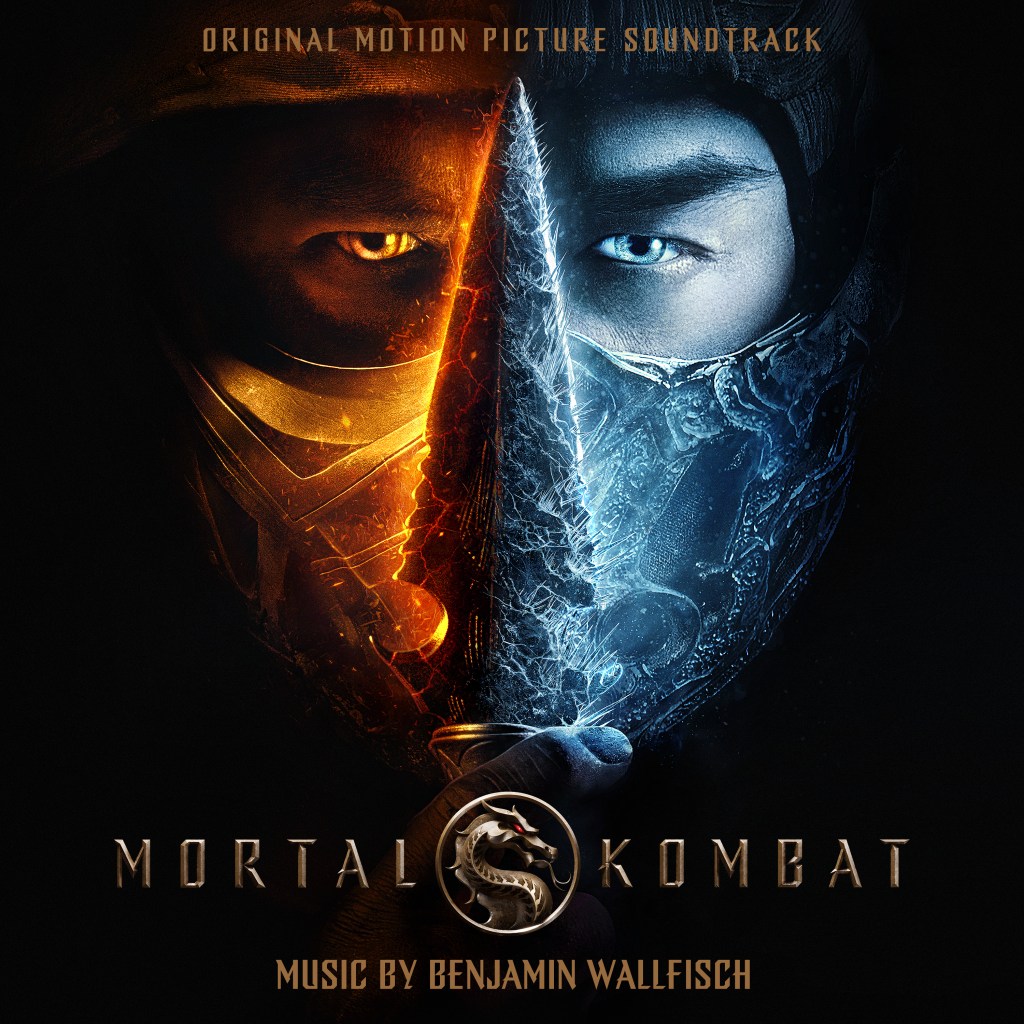
Soundtrack Review: Mortal Kombat (2021)

WaterTower Music has released the soundtrack to New Line Cinema’s explosive new movie Mortal Kombat, which brings to life the intense action of the blockbuster video game franchise in all its brutal glory, pitting the all-time, fan-favorite champions against one another in the ultimate, no-holds-barred, gory battle that pushes them to their very limits. The Mortal Kombat (Original Motion Picture Soundtrack) contains all new score by Golden Globe-, Emmy-, and Grammy-nominated composer Benjamin Wallfisch (IT and IT Chapter 2, Shazam, Blade Runner: 2049 [w/ Hans Zimmer]). It features 24 tracks by Wallfisch, who interpreted the film’s themes and emphasized the story’s hard-driving, visceral action through his music.

Director Simon McQuoid discussed working with Wallfisch on the score:

“Ben and I both knew that we needed to use the classic Immortals track ‘Techno Syndrome’ as source material for the entire score of Mortal Kombat. But along with that we knew that an updated elevated version of the song also needed to be created. And Ben certainly delivered! I am so excited by this new 2021 version of the track, when I first heard it, it blew my mind. Actually, Ben kind of blew my mind on a daily basis through the making of this film, so we can all thank Benjamin Wallfisch for his genius and passion in creating ‘Techno Syndrome 2021’.

Wallfisch further elaborated:

“When I was invited to come on board ‘Mortal Kombat,’ I was very aware of the responsibility that comes with scoring a franchise so deeply embedded in pop culture and with such a passionate fanbase. My first question was what can we do with ‘Techno Syndrome,’ a piece of music so much part of the DNA of the game and the original movies? What motifs could be reinvented and blown up to a full-scale symphonic sound world in the score, and might there be room for a full reinvention of the whole song as an EDM single in 2021? A huge thank you to The Immortals for giving us their blessing to reimagine their classic track in this way, as a celebration of the world of Mortal Kombat and its fans, and of the uplifting power of Electronic Dance Music, which the original did so much to light the fuse of 30 years ago.”

I have rarely experienced such a turnaround as what I’ve felt regarding Mortal Kombat. Having minimal contact with the video game series (and the one time I made an effort to play not going particularly well), I was initially on the fence and unable to emotionally invest in the idea of the film at all. But then THAT trailer came out, and I was intrigued. Then came the chance to listen to the soundtrack ahead of its release on April 23…

And I think my brain exploded.

I may have the bad habit of using superlatives too often in my reviews, but please believe me when I say Benjamin Wallfisch’s score for Mortal Kombat is one of the best I’ve ever heard. This isn’t just a soundtrack for an action film, this is an entire world realized through sound and melody and I am here for every last minute of it. During the music for the fight scenes (it’s not hard to tell which ones those are) you can feel every punch and every attack with brutal clarity. For the music alone, I am now itching to see these fight scenes in their proper context, because I need to know how this music connects to the action. And it’s such beautiful music, it has what I like to call “height” which is to say it expands and creates the illusion of space as it goes along. You can literally hear the music grow and soar in certain places, which helps to create the idea of a world existing within the music.

However as I said there’s far more to this soundtrack then just action. Wallfisch also demonstrates a keen ability to take the music in the opposite direction, to slow it down and allow the audience to take a collective breath. That’s an important thing for any film: if the soundtrack is just GO GO GO constantly, it can eventually begin to grate on the ear and become quite tiresome. But the music for Mortal Kombat isn’t like that at all (much to my surprise). There’s plenty of action to go around, but also more than enough moments of calm and relative quiet, though it is more often than not the “calm before the storm” type of quiet. There’s an impressive amount of balancing going on between the two extremes of loud and quiet, and I love it all.

Another detail I like about this soundtrack? The track list doesn’t give too much away regarding plot details. In fact, if I’m reading the track list correctly, most of these tracks appear to be themes for specific characters, which is great because I love thematic-based soundtracks (when done properly). Even so, very little is given away in terms of plot, and that’s great. I’ve seen too many soundtracks where you can suss out the plot of a film from the track list names alone, but you can’t do that here.

I could go on and on about the music for Mortal Kombat, but I’ll wrap it up by saying that listening to this soundtrack has rocketed this film to the top of my must see list for 2021 (and six months ago I couldn’t imagine saying that). If you get the chance, you need to check out this soundtrack independently of the film itself, it is that good.

TRACK LIST

  1. Techno Syndrome 2021 (Mortal Kombat)
  2. Hanzo Hasashi
  3. Lord Raiden
  4. Bi-Han
  5. Shang Tsung
  6. Cole Young
  7. Birthmark
  8. Sonya Blade
  9. Kano v Reptile
  10. Liu Kang
  11. The Great Protector
  12. Sub-Zero
  13. Kung Lao
  14. Origins
  15. Kabal
  16. Goro
  17. Arcana
  18. Jax Briggs
  19. The Void
  20. The Tournament
  21. Sub-Zero v Cole Young
  22. I Am Scorpion
  23. We Fight as One
  24. Get Over Here

Let me know what you think about Mortal Kombat (and its soundtrack) in the comments below and have a great day!

See also:

Film Soundtracks A-W

Become a Patron of the blog at patreon.com/musicgamer460

Check out the YouTube channel (and consider hitting the subscribe button)

Don’t forget to like Film Music Central on Facebook 

My Thoughts on: Godzilla vs Kong (2021)

After delays and delays, I finally sat down this afternoon to watch Godzilla vs Kong, the fourth entry in the MonsterVerse that also includes Godzilla, Kong: Skull Island and Godzilla: King of the Monsters. As the title implies, this film centers around an epic clash between Godzilla and Kong, the two most dominant Titans left on Earth after the events of Godzilla: KOTM.

Given that there are currently no concrete plans for a fifth entry in the MonsterVerse, it would not be unreasonable to look at Godzilla vs Kong as the ending for the story that started in 2014 with Godzilla. Even if the story does continue, there’s no denying that Godzilla vs Kong gets almost everything right and blows every expectation away. Everyone who comes in hoping for that epic kaiju fight is going to get exactly what they wanted. The action is huge, explosive, and was definitely made with an IMAX screen in mind (indeed, I found myself cursing several times throughout the film that I was limited to my TV screen at home because i could tell how this was meant to look in a theater).

Due to wanting to avoid major spoilers, I’m not going to go too in depth with my analysis, but I do want to try and cover some things that I liked. That being said, you should be warned that spoilers of varying sizes may be found after this point.

One of my biggest gripes in Godzilla: King of the Monsters was that the ‘Hollow Earth’ concept (first broached in Kong: Skull Island) wasn’t touched on enough. Well, to put it bluntly, Godzilla vs Kong gave me everything and more that I ever wanted of the Hollow Earth. Not only was it beautifully rendered, it was presented in a way that felt completely believable and, most tantalizingly, it feels like a location that could be visited in future films. And not just in sequels either, I could easily visualize a prequel (or series of prequels even) that details certain events hinted at in this film but set completely in the Hollow Earth. I would pay big money to see that happen.

The best part of the entire film is the conflict between Godzilla and Kong, which as you might expect spans most of the film. I admit to being skeptical about how the filmmakers would pull this fight off, but by god not only did they DO it, they also made it completely believable. I have no trouble believing that Godzilla and Kong are equal combatants (more or less), and while I won’t say who comes out on top, it is presented like a fight that could have gone either way. And that’s how it SHOULD be, you would never sell me on the idea that one opponent far outclasses the other. This was a nail-biting fight to the bitter end and that’s what I got and that’s what I loved about it.

And then there’s MechaGodzilla. I almost considered not mentioning this but I figured at this point I think we all pretty much knew about him being in the film (thanks Internet). I was almost disappointed about this character being in the film, but then I saw how it was presented and I was enraptured by the entire sequence. That was the best way possible to introduce MechaGodzilla to American audiences.

If I had one gripe about Godzilla vs Kong, it’s that there seems to be a clear divide between the characters we met in Godzilla: KOTM and those associated with Kong. It gave me the faint feeling of two films spliced together, but then I remembered that this is the kind of film where, we’re not really here to see the human characters, we’re here strictly for the giant monster fight. And at the end of the day, I’m okay with that because the monster action rocked!

That being said, I need to give a shout out to Kaylee Hottle, a deaf actress that appears in the film as Jia. Deaf characters still don’t get highlighted in major films as much as they should be (John Wick Chapter 2 features Ares (Ruby Rose) signing ASL), and it was refreshing to see not only a character that was acknowledged to be deaf, but also played by an actor that’s deaf too (in John Wick Chapter 2, Ares might have been deaf but Ruby Rose is not). That was one of my favorite parts of the film and I hope future films use this as an example for how they can include deaf characters moving forward.

Finally, it wouldn’t be a proper review on Film Music Central if I didn’t mention the music for a moment. While I feel that Bear McCreary’s score for Godzilla: KOTM is superior, I did enjoy Hans Zimmer’s music for Godzilla vs Kong, even if the parts I liked best were the amalgamations of past Godzilla and Kong themes joined together. If you listen carefully, you can hear musical excerpts from all the past MonsterVerse films throughout the story. And, rather cleverly, I think a big portion of the Kong “musical homage” was including songs in the musical score, a la Kong: Skull Island in 2017. It heightened the idea that all of the past MonsterVerse films were leading to this moment.

In case it wasn’t obvious, I really enjoyed Godzilla vs Kong, it’s the fun big action movie I’ve been wanting to see since the pandemic madness started. Whether you go see it in theaters (please be safe if you do) or on HBO Max, please go see it, it really is worth the time. If this is how the MonsterVerse ends, then I am content with the story it has told. But I wouldn’t say no to more entries either. I guess only time will tell if the story of Godzilla and Kong (and more) continues.

Let me know what you think about Godzilla vs Kong in the comments below and have a great day!

See also:

Kong: Skull Island (2017), my thoughts

My Thoughts on: Godzilla: King of the Monsters (2019)

Film Reviews

Become a Patron of the blog at patreon.com/musicgamer460

Check out the YouTube channel (and consider hitting the subscribe button)

Don’t forget to like Film Music Central on Facebook 

My Thoughts on: Raya and the Last Dragon (2021)

I have been super excited about Raya and the Last Dragon for so long, a part of me felt like the movie would never actually come. But at last, the movie became available on Premiere Access on Disney+ and against all the odds I found myself paying up the $30 to check it out on release day because the film looked that good in the previews.

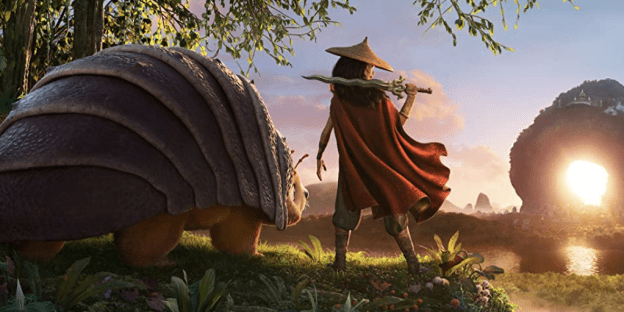
As it turns out, this was a great decision to make, because Raya and the Last Dragon is amazing. Seriously, believe the hype you hear about this movie because this is some of Disney’s best work. The story is set in the fictional world of Kumandra, which is based on various parts of Southeast Asia. With her world threatened, Raya (Kelly Marie Tran) sets out to find Sisu, the Last Dragon (Awkwafina) and save the world.

With a premise like that, you might think you know how the story is going to play out, I know I did. And I was completely okay with how I thought the story was going to go: girl goes on an adventure, girl finds dragon, girl saves the world. However….that’s not what ended up happening because the movie is about so much more. To be sure, there is a LOT of girl power in Raya and the Last Dragon, and I loved every minute. But at the end of the day, the story isn’t just about a heroine saving the world, or even two or three heroes getting together to save the day. The real story is about coming together and trusting people, and building a better world on that basis. Given how messed up the world has been with racism and similar issues, the message in Raya and the Last Dragon couldn’t be more timely. There’s also a strong message about taking responsibility for one’s actions. I admit to being resistant about this particular message, but the character pointing this thing out was right: you need to admit when something is equally your fault and not just blame the other person.

Along with this amazing story is an equally awesome voice cast. Kelly Marie Tran absolutely kills it as Raya, it doesn’t take much and you’re completely hooked into her character. This is the type of Disney princess I’ve been dreaming about for years, even Queen Elsa (despite her awesomeness) didn’t quite hit the nail on the head for me as much as Raya does. She’s a badass warrior, but also sweet and compassionate. Watching her grow from beginning to end of the story is a fun experience.

And pairing her with Awkwafina’s Sisu makes one of the best parts of the movie. Sisu is nothing like what I was expecting, but that’s okay because I loved every minute of screen time she had. I’ve never seen a dragon like Sisu (I’m used to large scaled dragons like Smaug) before but she’s beautifully animated and she feels alive, which is a sign that you’ve nailed the CGI.

Then there’s the music (you know I had to mention that part). James Newton Howard, one of my favorite composers, has put together an amazing score that helps bring the different areas of Kumandra completely to life. As you might expect, it’s tinged with elements of Southeast Asia as well, I’m sure a behind the scenes look would confirm that a number of traditional instruments were used in the instrumental mix. The music definitely helps create the idea that the different areas of Kumandra are their own separate and unique places.

All of this is to say that Raya and the Last Dragon was not only worth the wait, it was also worth the $30 I paid to see it now instead of waiting until June. Disney has put together a story that honors its Southeast Asian inspiration, while also creating a new world that I would be more than happy to visit again. And the story will take you by surprise in the best way possible. I would love to go into more detail than that, but to say literally anything else would be giving too much away. You really do need to see this for yourself.

Go watch Raya and the Last Dragon (available now through Premiere Access on Disney+) and then let me know what you think about it in the comments below and have a great day!

See also:

 Animated Film Reviews

Become a patron of the blog at: patreon.com/musicgamer460

Check out the YouTube channel (and consider hitting the subscribe button)

Don’t forget to like Film Music Central on Facebook 

Soundtrack Review: Bliss (2021)

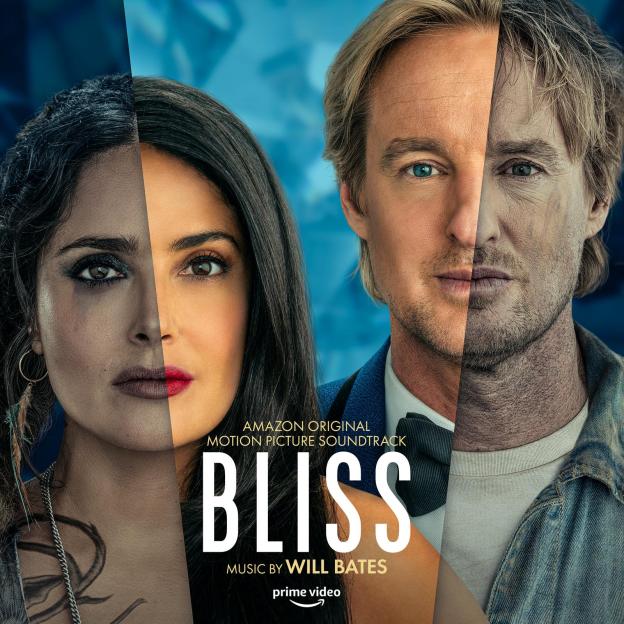
Milan Records has released the Bliss (Original Motion Picture Soundtrack) with music by composer, multi-instrumentalist, and Fall On Your Sword founder Will Bates. Bliss is a mind-bending love story following Greg (Owen Wilson) who, after recently being divorced and then fired, meets the mysterious Isabel (Salma Hayek), a woman living on the streets and convinced that the polluted, broken world around them is just a computer simulation. Doubtful at first, Greg eventually discovers there may be some truth to Isabel’s wild conspiracy.

Will Bates is an award-winning composer, multi-instrumentalist and founder of music production company Fall On Your Sword. He has composed original scores for a myriad of filmmakers including acclaimed directors Mike Cahill (Another Earth, I Origins), Alex Gibney (We Steal Secrets: The Story of Wikileaks, Going Clear: Scientology and the Prison of Belief, Zero Days), Ry Russo-Young (You Won’t Miss Me, Nobody Walks) and Fisher Stevens (Mission Blue, Bright Lights).

Of the soundtrack for Bliss, Will Bates had the following to say:

“Collaborating with Mike Cahill continues to be one of my greatest joys. He is a visionary, and he’s always pushing the boundaries of what is possible. There’s so much mutual trust when we work together. He has the ability of putting everyone he works with in this safe, magical environment that really encourages experimentation. I find myself being challenged in new ways and, despite having worked on so many projects together, it seems as if I’m always trying something new with him… The key was to find the tonal balance that the story has; this mind-bending almost absurdist reality against Greg’s heartbreaking journey. The scale of the movie let me really stretch the palette. Along with all sorts of mangled analogue synths, this was my first experience with a full orchestra, and also one that allowed me to dip into my background as a jazz saxophonist.”

Regarding “You and I,” he adds, “As we were nearing the end of the process, we had the idea of there being a song that melodically incorporated the love theme. I’ve known Skye Edwards for years, since my London days (my old band once opened for Morcheeba.) Mike and I agreed it just had to be her voice, so I wrote the song for her to sing. It was going to be just in the end credits, but when Mike heard it, he recut one of the other scenes in the movie and used it there too. As with so many projects in 2020, COVID caused a significant delay in the post-production process. But the song may not have happened without that delay.”

Listening to the soundtrack for Bliss is an experience, let me tell you. There’s this mixture of synthesized sound and orchestral sound that just pulls you in and keeps your attention once it gets going. I’ve heard music similar to this in other science-fiction soundtracks, especially with stories that blur the line between the “synthetic” and the “real,” but for the most part those soundtracks feature stories about robots. Bliss, on the other hand, involves a concept more similar to The Matrix (but kind of in reverse, since the “real” life is implied to be much better than the fake life).

There’s not much more I can say about the soundtrack for Bliss. It’s fun to listen to, but it doesn’t inspire many thoughts in me. That’s not a bad thing, some soundtracks are just like that.

BLISS (ORIGINAL MOTION PICTURE SOUNDTRACK)
TRACKLISTING –

  1. You And I
  2. This Is Real Life
  3. The Inside Of Your Head Must Be Amazing
  4. Rabbit Hole
  5. Trying To Reach You
  6. Kendo
  7. Light Bouncing Around Your Neurons
  8. You Have To See It For Yourself
  9. Great Overwhelming
  10. The Thought Visualizer
  11. Home
  12. Let’s Go For A Swim
  13. Are You Really Here
  14. It Would Be My honor
  15. The Telekinetic Warrior
  16. My Braids Dad
  17. The Scenic Route
  18. Hotel Pleiades
  19. Blues Here We Come
  20. We’re Back In
  21. Go
  22. Safe Harbor
  23. You’re Here
  24. You And I (Fall On Your Sword Remix)

Let me know what you think about Bliss (and its soundtrack) in the comments below and have a great day!

See also:

Film Soundtracks A-W

Become a Patron of the blog at patreon.com/musicgamer460

Check out the YouTube channel (and consider hitting the subscribe button)

Don’t forget to like Film Music Central on Facebook