Soundtrack News: Star Wars: Shadows of the Empire Original Video Game Soundtrack to be Released this August

As part of Star Wars Day (may the 4th be with you) Varèse Sarabande Records has announced the upcoming special release of the Original Video Game Soundtrack for Star Wars: Shadows of the Empire by GRAMMY®-nominated composer Joel McNeely. The soundtrack will be released for the first time on LP and reissued on CD on August 7, 2020, exclusively from Varèse Sarabande Records. Pre-order for LP and CD are available now

Star Wars: Shadows of the Empire was developed and published by LucasArts for Nintendo 64 on December 3, 1996, and sold one million copies in its first year. A version for Microsoft Windows followed in 1997, and sold out reissues have kept the game alive amongst the Star Wars fan base since its release over 20 years ago. In the game, which serves as backstory between The Empire Strikes Back and Return of the Jedi, the player controls the mercenary Dash Rendar in his efforts to help Luke Skywalker and rescue Princess Leia from Prince Xizor.

As part of the Shadows of the Empire multimedia project, a full soundtrack was composed by Joel McNeely and recorded with the Royal Scottish National Orchestra. Samples of the soundtrack were used in both versions of the game, with the Windows version containing many of the full tracks. The album art features the main Star Wars characters and was created by legendary illustrator Drew Struzan (Blade Runner, Indiana Jones, Back to the Future).

TRACK LISTING
Side A:
  1. Main Theme from Star Wars and Leia’s Nightmare (3:41)
  2. The Battle of Gall (7:59)
  3. Imperial City (8:02)
  4. Beggar’s Canyon Chase (2:56)
  5. The Southern Underground (1:48)
Side B:
  1. Xizor’s Theme (4:35)
  2. The Seduction of Princess Leia (3:38)
  3. Night Skies (4:17)
  4. Into the Sewers (2:55)
  5. The Destruction of Xizor’s Palace (10:44)


You can pre-order the LP and/or CD of the Star Wars: Shadows of the Empire soundtrack at the links below:

PRE-ORDER


See also:

Become a Patron of the blog at patreon.com/musicgamer460

Check out the YouTube channel (and consider hitting the subscribe button)

Don’t forget to like Film Music Central on Facebook 🙂

Star Wars: The Force Awakens “Snoke” (2015)

This particular theme in the Star Wars: The Force Awakens soundtrack means a great deal to me, because it helped spawn a theory that took four years to be proven correct. Remember how Star Wars: The Rise of Skywalker revealed that the Emperor had been alive all this time? Well, even before that reveal, I half-suspected that something like this might happen, and the “Snoke” theme in Star Wars: The Force Awakens had a great deal to do with it.

Listen carefully to Snoke’s theme below and then I’ll explain what I mean.

You hear all of that? Snoke’s theme is pretty ominous; a droning male choir, the smallest hint of a dark melody, the entire thing reeks of tension and pure evil. In fact, it sounds like a close relative of the Emperor’s theme (as heard in Star Wars: Return of the Jedi), in spirit if not in actual musical relationships. And that is what really drew my attention: this theme for Snoke sounded so much like the Emperor’s theme that, combined with the fact that Snoke was based on concept art for Palpatine, that I could only draw two possible conclusions:

  1. Snoke was Palpatine, just in a different form
  2. Snoke was Palpatine’s puppet/mouthpiece

Time would eventually prove me somewhat correct on the latter conclusion, and it’s all thanks to the music. There’s also the fact that John Williams is not the type of composer to craft a character’s theme a certain way for no good reason. If one theme resembles another, it’s not unreasonable to say that character (in this case Snoke) might be connected to another (in this case, Palpatine). I’ve said it many times, you should always pay attention to the music if you want to get hints about the true identity/true nature of a character. Four years before Palpatine was revealed to the world, John Williams created a theme hinting at the Emperor’s continued presence (there’s an even more blatant hint in The Last Jedi but I’ll discuss that another day).

Let me know what you think about “Snoke” (and whether you drew similar conclusions) in the comments below and have a great day!

See also:

Star Wars: The Force Awakens “Kylo Ren’s Theme” (2015)

Star Wars: The Force Awakens “Rey’s Theme” (2015)

Star Wars: The Force Awakens “March of the Resistance” (2015)

Star Wars: The Last Jedi “The Spark” (2017)

Star Wars: The Rise of Skywalker “Kylo Ren’s Theme (Redeemed Version)” (2019)

Film Soundtracks A-W

Become a Patron of the blog at patreon.com/musicgamer460

Check out the YouTube channel (and consider hitting the subscribe button)

Don’t forget to like Film Music Central on Facebook 🙂

My Thoughts on: Samurai Rebellion (1967)

The last film I watched from the new Criterion arrivals was Samurai Rebellion, a 1967 film directed by Masaki Kobayashi. If the name sounds familiar, that’s because he also directed Harakiri, another film that I’ve reviewed.

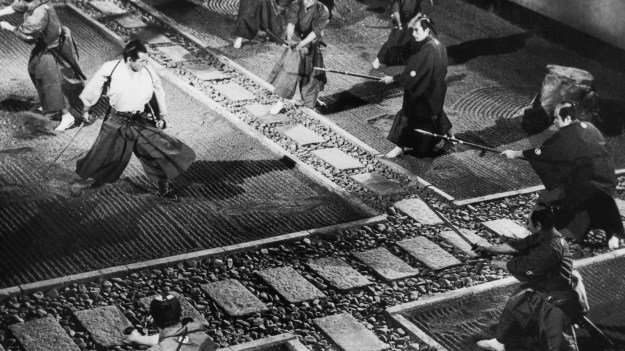
While I enjoyed all three of these Criterion films, I think I liked Samurai Rebellion the most. This may or may not have something to do with the fact that Toshiro Mifune leads the cast in this tragic tale of what happens when a samurai attempts to defy the commands of his lord. The story is set in the 18th century and follows Isaburo Sasahara (Mifune), a dedicated vassal of his lord. Out of the blue, Sasahara is commanded to wed his eldest son and heir to the clan lord’s mistress, Ichi, who has fallen into disfavor with the lord despite bearing him a son. All seems well for two years until….the clan lord demands Ichi leave her new family and come back to the castle.

589c9d8d8c64f0ffd5e4a7eaf3a3f749

Near as I can tell, the overriding message of Samurai Rebellion seems to be: is it worth it to do the right thing when doing so could get you and your entire family killed? Not only that, but is it even the “right thing” when obeying the order breaks up a happy family? For, you see, if Sasahara were to obey this order, his son would lose his wife and the mother of his own child. The fact that the Sasahara family is supposed to just obey the clan lord’s whims regardless of their own feelings is what pushes the formerly loyal-to-a-fault samurai over the edge into first resistance and then outright rebellion.

Toshiro Mifune is great in this film, as he is in pretty much everything I’ve ever seen him in. And once his characters makes the fatal decision to resist the clan, his entire performance is raised by several degrees. My second favorite performance in Samurai Rebellion is Yoko Tsukasa as Ichi. This is a woman who is trying so hard to adapt to her situation, only to find herself in a tug-of-war between the husband she loves and the clan lord she openly despises. The emotional trauma this is inflicting on Ichi is plain to see, and your heart will bleed watching her suffer in an attempt to get everyone through this struggle alive.

samurai-rebellion-group

Like Harakiri (which came five years before), the last half of Samurai Rebellion is tinged by a sense of fatalistic hopelessness. Even though Sasahara is doing the morally right thing, he knows (and accepts) that this will not only get him and his son killed, but it will disgrace the entire Sasahara family. But what really makes the story heart-wrenching is that Sasahara comes within inches of actually succeeding in his plan. In the film’s last act, the samurai decides to take his granddaughter to Edo and lay out the entire story to the authorities. And he comes so close to succeeding that it’s physically painful to watch him fail.

Again, like Harakiri (which I belatedly realized came from the same director), I was left watching the film end with the same feeling that came from the end of Harakiri: what was the point of all of this? Because in the end, nothing appears to change. Or does it? The film’s last shot shows baby Tomi being taken away by her nurse, presumably to be raised by her. There’s a subtle implication that maybe the story of what her father and grandfather did will live on with Tomi, assuming the nurse tells her when she’s older.

If you’re looking for must-see samurai films to watch, then you must include Samurai Rebellion on the list. It’s a moving film, a heart-wrenching film, and one I very much enjoyed watching.

Let me know what you think about Samurai Rebellion in the comments below and have a great day!

See also:

My thoughts on: Harakiri (1962)

Film Reviews

Become a Patron of the blog at patreon.com/musicgamer460

Check out the YouTube channel (and consider hitting the subscribe button)

Don’t forget to like Film Music Central on Facebook


Soundtrack News: Heather McIntosh’s Soundtrack for The Quarry (2020) is Out Now

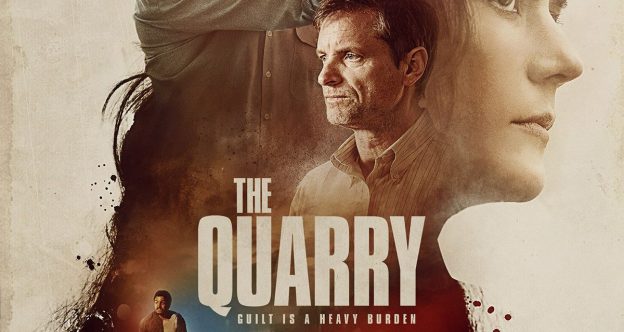
Milan Records recently released the original motion picture soundtrack for The Quarry, with the soundtrack composed by Heather McIntosh (Z for Zachariah, The Art of Self-Defense). Heather McIntosh started her musical career playing with the bands of The Elephant 6 Collective, Gnarls Barkley, and Lil Wayne. Following her touring days, she has been regularly composing music for film and television since 2011. In addition to being a frequent collaborator on Duplass Brothers productions, Heather was one of four women eligible for the Academy Awards’ Best Original Score in 2013 for Craig Zobel’s Compliance, and again in 2015 with Craig’s film, Z for Zachariah, both of which premiered at the Sundance Film Festival.

From the novel by Damon Galgut comes this searing thriller, a tale of sin and redemption set in the wilds of Texas. After murdering a traveling preacher, a fugitive drifter (Shea Whigham, Joker) travels to a small town and poses as the man he killed. Though the congregation loves the drifter’s sermons of forgiveness, the local police chief (Academy Award® nominee Michael Shannon, The Shape of Water) is suspicious of the man. Soon a gruesome discovery at a local quarry forces the killer to fight for his freedom.

Of the soundtrack, composer Heather McIntosh had this to say:

 “I tapped into a new lyricism in my writing with the score to The Quarry. It was first unlocked in the ‘Purple Flowers’ theme and then it unfolded in variations throughout the rest of the score. The open landscape of this film gave me room to stretch out the melodic line over shimmering textures of flutes, percussion and guitars in a way that felt fresh and strangely familiar. The cello has always been a vital part of my writing process, but it has been a minute since I just picked up the cello and let it speak.” 

The Quarry director Scott Teems adds:

“The Quarry is my second collaboration with Heather McIntosh, and her work continues to thrill and inspire me. With this film, I believed she’s pushed through to exciting new musical territory, building off her cello base to create a rich and haunting soundscape for a town full of lost and wounded souls. Yet as it reaches into the darkness, the score never loses its poetry, its evocative themes or its striking unity. This is powerful music that tells a story, and I’m humbled that it’s a part of my film.”

THE QUARRY (ORIGINAL MOTION PICTURE SOUNDTRACK)
TRACKLISTING –
1. The Man – Ryan Bingham

2. Theme from The Quarry

3. Samaritan

4. The Drive

5. Who Knows?

6. I’ll Have to Tell Them

7. A New Life

8. Sign Your Name

9. Purple Flowers

10. Timothy

11. Why Are You Here?

12. Photograph

13. Ten Thousand Charms

14. Muchas Flores Moradas

15. A Small Revelation

16. Why Don’t You Ask The Reverend?

17. Life and Death in Texas

18. Their Deeds Follow Them

19. His Bandage

20. Guilt’s a Heavy Burden

21. No Man of God

22. State Your Name

23. Downriver

24. Forgive Me

25. A New Start

26. A Small Revelation (Reprise)

The soundtrack for The Quarry is available now from Milan Records.

See also:

Become a Patron of the blog at patreon.com/musicgamer460

Check out the YouTube channel (and consider hitting the subscribe button)

Don’t forget to like Film Music Central on Facebook

My Thoughts on: Sword of the Beast (1965)

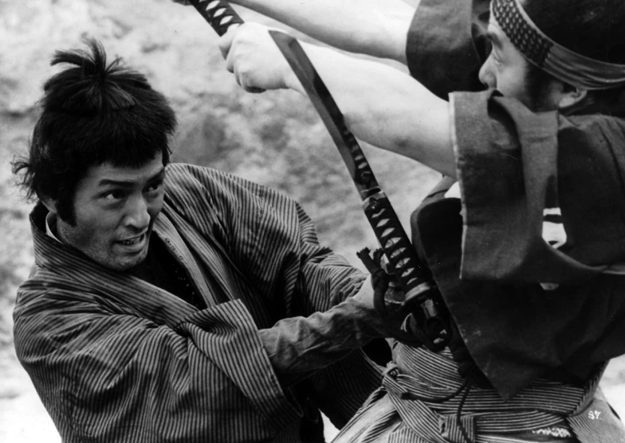
After checking out Kill! the next Criterion film I checked out was Sword of the Beast, another samurai film, this time from 1965. The film was directed by Hideo Gosha and is set in 1857 toward the end of the Tokugawa Shogunate. The story follows Gennosuke (Mikijiro Hira), a samurai on the run after assassinating a counselor in his clan. He is relentlessly pursued by Misa, the daughter of the counselor he killed, and Daizaburo, her future husband.

As with several films of this genre that I’ve watched recently, the reasons behind Gennosuke’s actions are…well, complicated. The gist though, is that like other protagonists, Gennosuke was tricked into doing what he did, expecting to be rewarded afterward. Instead, he’s double-crossed and forced to go on the run.

sword of the beast-1200-1200-675-675-crop-000000

That much of the story I can understand, as well as Gennosuke’s rightful claims that the clan he formerly served is corrupt to its core. Apart from that though, this story actually disappointed me. I was expecting and/or hoping for Gennosuke’s issues to be properly resolved in some way by the end of the story…but they’re not. Sure, by the end Misa appears to have given up her wish to see Gennosuke dead, but the story just ends with the rebel samurai walking away. It’s an ending that doesn’t satisfy me at all, as I feel like Gennosuke’s story doesn’t have any closure. After all, isn’t the clan still going to be after him for what he did?

Also, I found parts of the story to be a little jarring. Some characters are introduced that seem to have no relevance to Gennosuke’s story, and even though their connection to the story is later explained, it was still a bit awkward for me.

I did like watching Sword of the Beast for the most part, but it’s not my favorite samurai film by any stretch of the imagination. It has its moments, but I can’t get over how disappointed I was with the ending of the story.

Let me know what you think about Sword of the Beast in the comments below and have a great day!

See also:

Film Reviews

Become a Patron of the blog at patreon.com/musicgamer460

Check out the YouTube channel (and consider hitting the subscribe button)

Don’t forget to like Film Music Central on Facebook

My Thoughts on: Kill! (1968)

I was recently able to add a few long-desired films to my Criterion collection, one of which was Kill!, a 1968 film directed by Kihachi Okamoto. The film stars Tatsuya Nakadai and Etsushi Takahashi as Genta and Hanji respectively, two swordsmen who quickly find themselves neck-deep in a clan conspiracy.

It should be noted that Kill! was adapted from the same novel that Akira Kurosawa used to create Sanjuro (1962), and if you’ve seen that film you might note a few loose similarities between the two. For example, in both films the conspirators are tricked into gathering in a supposedly safe place while they’re really being set up to be eliminated. For another there’s at least one good case in each film of a supposedly sympathetic character turning out to be on the side of the villains. These are just a few examples of the similarities, though it’s almost an unfair comparison since Sanjuro adapts Toshiro Mifune’s Yojimbo character into the story and Kill! features two characters in the lead role instead.

MV5BMjIwMDY4MzExNl5BMl5BanBnXkFtZTcwODQxNjc5Ng@@._V1_SY1000_CR0,0,1405,1000_AL_

The contrast between Genta and Hanji is interesting to say the least. I’ve seen Tatsuya Nakadai in several films now but I don’t remember seeing him play a character quite like this before, one who walked away from being a samurai and all that it entails for reasons that take a big chunk of the film to unravel. And Hanji is just funny most of the time. In contrast to Genta, who used to be a samurai, Hanji wants more than anything else to become one (which if I remember correctly would be a major step up the social ladder from being a farmer), despite everything Genta says to try and turn him off from the idea. I’ll just say the conclusion of Hanji’s story arc had me howling with laughter, it was so fitting given everything that happened throughout the story.

While I mostly enjoyed watching Kill!, I will say the plot involving the conspiracy is a little hard to follow at times. It’s mostly straightforward, but there are so many people involved that if you’re not paying close attention at all times it’s easy to lose track of who is who. I’m not sure if this is because I had to follow the subtitles to keep track of the story or if the story alone was the reason.

MV5BMTM0NTcxOTU4OV5BMl5BanBnXkFtZTcwNDQxNjc5Ng@@._V1_SY1000_CR0,0,1409,1000_AL_

I also need to mention Kill! has a lot of genuinely funny moments in it. There’s a funny early scene where Genta and Hanji both are stalking a scrawny chicken because they’re just that hungry (a moment that’s repeated in hilarious fashion later on). There is also a hysterically funny scene with Hanji, his sandal, and a wooden post. I honestly can’t explain the moment any better than that without spoiling what exactly happens, but it’s one of my favorite moments in the entire film. The comedy does a good job of brightening a story that otherwise has some extremely dark moments in it (it’s a black comedy for a reason).

All in all, I’m glad I finally got to watch Kill! It filled in another gap in my knowledge of Japanese cinema and minor issues aside it was a lot of fun to watch.

Let me know what you think about Kill! in the comments below and have a great day!

See also:

Film Reviews

Become a Patron of the blog at patreon.com/musicgamer460

Check out the YouTube channel (and consider hitting the subscribe button)

Don’t forget to like Film Music Central on Facebook


Exploring the Music of ‘We’re Here’: An Interview with Herdís Stefánsdóttir

Recently I was given the opportunity to interview Herdís Stefánsdóttir, a film and television composer perhaps best known for working on The Sun is Also a Star and currently working on the upcoming HBO series We’re Here.

Herdís Stefánsdóttir graduated with an M.A. degree in film scoring from New York University in 2017. Since graduation she has scored two feature films, an HBO series and a few short films. Her scoring work includes Ry Russo -Young’s MGM/Warner Bros. feature film, The Sun Is Also A Star and the HBOseries We’re Here. Herdís was nominated for The Icelandic Music Awards for her score in The Sun Is Also A Star. Herdís interned for the Oscar nominated composer Jóhann Jóhannsson inBerlin while he was working on the film Arrival (2016) and she has scored numerous short films that have premiered at top-tier festivals around the world like Berlinale, TIFF, Sundance and Palm Springs International Film Festival.

The subject of the interview was Herdís Stefánsdóttir’s work on the upcoming HBO series We’re Here, a short series about people being transformed into drag queens and coached into stepping outside their comfort zones by famous drag queens including Bob the Drag Queen, Eureka O’Hara, and Shangela. We’re Here is currently set to premiere on April 23, 2020.

What drew you to composing for film and television?

I started experimenting with it a few years ago when I was in school. I was collaborating with dance projects, theater, and all that kind of stuff. I really enjoyed working with people and working on stories. It’s a totally different way of approaching music that I hadn’t done before. That’s how it started.

How did you get connected with We’re Here? It’s an interesting premise for a show

We’re Here [came about] from my agent sending in a portfolio, essentially a reel of my music that the creators really liked and they thought it was a good fit. And it is a good show, I quite like it.

How did you approach scoring a show like We’re Here?

Actually I’m not quite finished [with scoring], I’m actually in the middle of the scoring process. I just finished episode 3 and I’m working on episode 4. It’s definitely something that I hadn’t figured out before I started because what’s interesting is that the episodes all have the same theme with going to small towns. They’re talking to people and getting their stories. Each of the stories are so different and the characters are so different. So it kind of developed through the process of scoring. And I feel like where I am now, basically I’ve been creating a sound world for each person. Each story and each character gets their own sound. That’s how it’s been developing. And that sound is changing from episode to episode.

How is the process for scoring television different from scoring for film?

It’s very different. I’ve never worked on a project like this, that has real people and a real story, and it makes the scoring process almost indescribable because it’s so different from working on fictional material. It has to be so right, like when a person is talking you don’t want to go overboard and make it cheesy. You want it to be the right emotion without taking too much space. It’s a lot of work to get everything right. In film, there are moments where you’re just writing music for something where no one is talking and you can just write a piece of music more inspired by the film. But this [the show] is more like weaving a thread of music within all the stories and conversations.

About how long was the recording process for each episode?

For the first episode, that was the one I had the longest time to work on. That was when I was starting to figure out what I wanted to do, how do I want this to sound. That was more a process of experimenting and trying to get the right emotion and the right heart of this show.

I’ve been mostly working my myself in the studio and I record instruments, synths, different sounds, the piano, and my voice. Then I get friends to record specific instruments that I might need. And the further we are in the process the faster it’s happening. There’s definitely been more pressure for each episode as it goes on. And [the process] has been interesting because in a [traditional] narrative or fictional series you start creating a sound world with themes that are reused throughout. However, because each episode has its own identity, I always feel like I’m starting from scratch when I start a new episode. I would say it’s about three or four weeks per episode [to finish scoring].

Is the music for each episode connected to that of other episodes, or are they in their own musical “bubbles”?

They are definitely connected because there are two sides to it. There are the characters but there’s also all the moments in the show. Some scenes need cues to bring out a certain emotion so there’s definitely a thread connecting them. It’s a special element that defines each story or character. There is an overall sound that connects everything, even when I might play around and change the instrumentation for the different characters.

Did anything in particular influence the sound of the music you were making? That is to say, were you going for a particular sound?

I wasn’t at all. I was just kind of open to see where it would take me. What kind of surprised me was the different people, with their different stories, and how they called out interesting things. It was like “this person needs this in their story.” All of it has been developing as we go. I didn’t decide anything before [we started]. I just knew I wanted to avoid a typical TV score, I just wanted to create a unique voice for everyone.

What do you want viewers to take away when they watch these episodes and hear your music?

I just hope it gets into people’s hearts. I hope they feel the story. I think that’s the purpose of the music. It’s a way of helping people tell the stories.

I want to give a big thank you to Herdís Stefánsdóttir for taking the time to talk with me about her work on the upcoming HBO series We’re Here. The show will premiere on HBO April 23, 2020.

See also:

Composer Interviews

Become a Patron of the blog at patreon.com/musicgamer460

Check out the YouTube channel (and consider hitting the subscribe button)

Don’t forget to like Film Music Central on Facebook 🙂

Soundtrack Review: Tales From the Loop (2020)

Fox Music/Hollywood Records has released the digital soundtrack from the Amazon Original series, Tales from the Loop. From executive producer Matt Reeves and based on the acclaimed art of Swedish artist Simon Stålenhag, Tales from the Loop explores the town and people who live above “The Loop,” a machine built to unlock and explore the mysteries of the universe – making things possible that were previously relegated only to science fiction. In this fantastical mysterious town, poignant human tales are told that bare universal emotional experiences, while drawing on the intrigue of genre storytelling.


The album features original themes by Philip Glass and score by Paul Leonard-Morgan. Born in Baltimore, Maryland, Philip Glass is a graduate of the University of Chicago and the Juilliard School. Glass has expanded his repertoire to include music for opera, dance, theater, chamber ensemble, orchestra and film. His scores have received Academy Award nominations (Kundun, The Hours, Notes on a Scandal) and a Golden Globe (The Truman Show). Paul Leonard-Morgan’s unique cinematic style of fusing orchestra with electronica has put him in high demand as a film composer, a producer and arranger for bands, and has led him to win a BAFTA award, and receive Emmy & Ivor Novello nominations. In 2016, Leonard-Morgan began working with Academy-Award winning director Errol Morris on a string of projects including the documentary feature The B-Side, the award-winning Netflix series Wormwood, and the newly-completed motion picture on Steve Bannon, American Dharma. Other credits include The Quiet One–the story of Rolling Stones founding member Bill Wyman, the feature Last Breath, the hit series reboot Dynasty for The CW, and Designated Survivor on Netflix.

Leonard-Morgan said (on working on Tales from the Loop):

“Collaborating with Philip Glass on Tales from the Loop was an incredible experience. Philip and I had a discussion with Nathaniel Halpern (showrunner) and Mark Romanek (executive producer) about their vision for the show, the incorporation of unusual instruments, and their shared desire of wanting the soundtrack to be an integral part of the show: ‘Music which could be listened to by itself, melodies which could be hummed, a soundtrack which will stand the test of time apart from the series.’ Philip went and scored a bunch of initial ideas, as did I, and we discussed where they all might work together. Both of us playing off each other’s sounds and melodies to create a truly unique score. Over and again, we kept coming back to the original idea: to make beautiful music, which would work hand in hand with Nathaniel’s brilliant visions and beautiful cinematography. The 8 episodes are so unique—they’re like nothing we’ve ever seen, and hopefully the score stays true to this. Melodies come back throughout the show, each guiding us through the world of the loop. During recording sessions every 3 weeks, the natural sounds of the solo violin and the solo cello gave a beautiful, haunting sound to the loop, becoming an integral part of the sound.”

Glass added:

“I’ve always tried to collaborate with people from many disparate perspectives; everyone from indigenous musicians to electronic musicians have expanded my musical sensibilities. Working with Paul was no exception and the intersection of our two styles has produced a score both unexpected and familiar that accompanies the series beautifully.”

The soundtrack for Tales From the Loop is like nothing I’ve ever heard for television before, and I don’t say that lightly. Television music, in my experience, is either quite minimal or very grandiose (think Game of Thrones for the latter). But Tales from the Loop strikes a middle ground that I don’t think I’ve ever heard until now. Everything, every single track, is perfectly symphonic, like something you’d hear in a concert hall. And I can’t emphasize enough how much of a good thing this is. This is music that can be enjoyed completely separate from the show as well as while you watch each episode. It takes phenomenal skill to make music that can thrive outside of the show and with Philip  Glass and Paul Leonard-Morgan in charge of the score it’s little wonder it worked out that way.

In hindsight, it actually makes a lot of sense that the soundtrack for Tales From the Loop would feel symphonic in nature. After all, Glass is well known for his concert works, and it’s only natural that that would bleed over into his work for film and television.

If you’re able to, check out the soundtrack for Tales From the Loop. It’s peaceful, it’s relaxing, and it’s like listening to a long, quiet symphonic work in a concert hall (and that’s a good thing).

Let me know your thoughts on Tales From the Loop (and it’s soundtrack) in the comments below and have a great day!

See also:

TV Soundtracks

Become a Patron of the blog at patreon.com/musicgamer460

Check out the YouTube channel (and consider hitting the subscribe button)

Don’t forget to like Film Music Central on Facebook 🙂

Soundtrack Review: The Two Popes (2019)

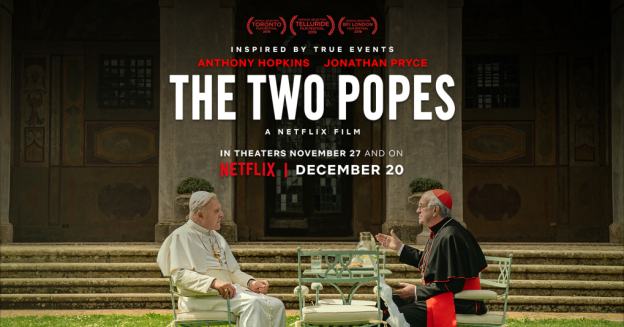
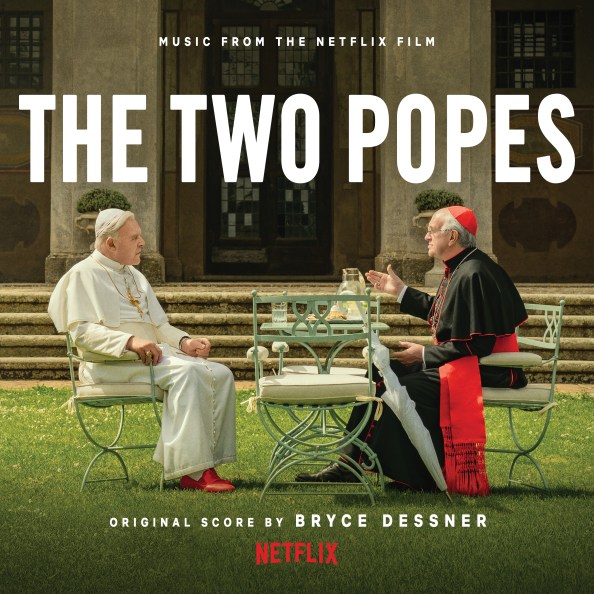
Late last year, Milan Records released the soundtrack for the Netflix original film The Two Popes. Accompanying brilliant direction by Fernando Meirelles and indomitable performances by both Anthony Hopkins and Jonathan Pryce is an entirely charming, playful, and yet robust score devised by multifaceted artist and composer Bryce Dessner whose music soulfully uncovers the individual voices for both Pope Benedict and Cardinal Bergoglio (the future Pope Francis) while still revealing each Pope’s humane vulnerabilities and finding common consonance between them in an oftentimes lonesome Vatican locale.


With an expansive body of work that extends beyond the hugely-successful band, Dessner brings his experience as both a GRAMMY Award-winning classical composer and Golden Globe-nominated film composer to the The Two Popes. Regarding his work on The Two Popes, Dessner had this to say:

“It was an absolute joy to work with such an incredible cast and team on The Two Popes. In particular I have always been a huge fan of director Fernando Mereilles and it was an honor to finally work directly on a film with him. His work is deeply musical and it was a wonderful journey to find the sound world for The Two Popes, which began with the intimate and incredible performances of Anthony Hopkins and Jonathan Pryce. This was the first film I’ve worked on a score where I got to visit the set as they were shooting in Rome for a few days and began composing in the room with the actors and crew.  The score has moments of more abstract minimal and layered orchestral music which I wrote for Benedict’s scenes, and then music inspired by Argentina folk music (in particular Mercedes Sosa and Dino Saluzzi) for which I spent a lot of time composing for the classical guitar again.”

TwoPopes_Cover_RGB300_3000px

Dessner collaborates with some of today’s most creative and respected artists, including Philip Glass, Katia and Marielle Labèque, Paul Simon, Sufjan Stevens, Johnny Greenwood, Bon Iver, Kelley O’Connor, Nico Muhly and Steve Reich, who named Dessner “a major voice of his generation.” His orchestrations can be heard on the new albums of Paul Simon and Bon Iver. Further film score credits include The Kitchen for Warner Bros. (2019) as well as The Two Popes by Oscar-nominated director Fernando Meirelles (2019).

I found the soundtrack for The Two Popes to be deeply relaxing. Dessner seemed intent on creating music that seemed to complement the mood you’d find in the Church and in two such high-ranking officials as Pope Benedict XVI and Cardinal Bergoglio. I have to confess that I was briefly confused by the tracks with classical guitar reminding me of Spain before I remembered that Bergoglio comes from Argentina (a Spanish-speaking country), in which case that style of music makes perfect sense.

Compared to other soundtracks I’ve listened to, the music for The Two Popes is pretty minimalistic, but that makes sense since the emphasis is supposed to be on the dialogue between Benedict XVI and Bergoglio. Too much music would be a distraction, and Dessner seems to have taken great care to not overdo his musical contributions to the film.

If you’re looking for a relaxing soundtrack to listen to, Bryce Dessner’s score for The Two Popes is a good choice. The soundtrack is available now from Milan Records.

THE TWO POPES (MUSIC FROM THE NETFLIX FILM)
TRACKLISTING
Walls
Cuando Tenga la Tierra – Mercedes Sosa
Dialogues
Vote Counting
Ratzinger Election
Garden Dialogues
Was It Something I Said
Shifting Gardens
Cathedral
Bergoglio’s Awakening
Siete de Abril
Dirty War
Taken Away and Tortured
They Took Esther
Another Bergoglio
Walls 2
Pope Francis
Sombras de Buenos Aires
Minguito – Dino Saluzzi
Sastanàqqàm – Tinariwen
Besame Mucho – Ray Conniff & His Orchestra

Let me know what you think about The Two Popes and its soundtrack in the comments below and have a great day!

See also:

Film Soundtracks A-W

Become a Patron of the blog at patreon.com/musicgamer460

Check out the YouTube channel (and consider hitting the subscribe button)

Don’t forget to like Film Music Central on Facebook 🙂


Soundtrack News: Anne Nikitin’s score for ‘The Trial of Ratko Mladić’ to be released April 3rd

Node Records has announced that they are releasing Anna Nikitin’s score to the documentary The Trial of Ratko Mladić on April 3rd, 2020. The Trial of Ratko Mladić is a Sandpaper Films documentary that covers the dramatic five-year trial of the man held responsible for the siege of Sarajevo and the murder of over 7,000 men and boys in Srebrenica – an epic story of justice, accountability and a country trying to escape from its bloody past. The film received the 2019 Grierson Award for Best Single International Documentary, aired on PBS FRONTLINE, and was one of Filmmaker Magazine’s Top Scary Political Docs of 2018.


Anne Nikitin is an Ivor Novello Award-nominated composer best known for her work on director Bart Layton’s BAFTA-winning film The Imposter, critically-acclaimed heist movie American Animals, BBC Drama / PBS Masterpiece’s Mrs. Wilson, and the Ursula MacFarlane-directed Untouchable: The Rise and Fall of Harvey Weinstein.

From sweeping orchestral scores to dirty guitars, mesmeric synths and delicate piano refrains, Anne is known for creating unique sound worlds spanning a wide range of genres.
Track Listing:

1. The Trial Begins
2. This Complex Land
3. Finding a Father
4. Road to War
5. Wounds Won’t Heal
6. Men and Women Separated
7. Saliha’s Song
8. Mass Grave
9. Four Football Fields
10. Srebrenica Prosecution
11. Landscape
12. Mladić Day
13. Elvira
14. Tomasica Prosecution
15. Mass Funeral
16. Crimes Against Humanity
17. The Verdict
18. Justice

The soundtrack for The Trial of Ratko Mladić will be available on April 3, 2020.

See also:

Become a Patron of the blog at patreon.com/musicgamer460

Check out the YouTube channel (and consider hitting the subscribe button)

Don’t forget to like Film Music Central on Facebook