Monthly Archives: April 2017

Cancelled Too Soon #11: Kindred: The Embraced (1996)

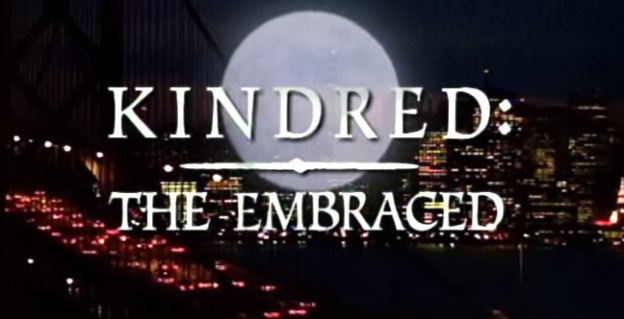
Before Vampire Diaries, even before Buffy The Vampire Slayer, there was Kindred: The Embraced.

Unlike most television shows, which might be based on books or movies, Kindred: The Embraced is loosely based on a role-playing game called Vampire: The Masquerade. The story is set in San Francisco, where a detective named Frank Kohanek discovers that the city is home to a large number of vampires, including a supposed “mobster” that he has been pursuing for quite some time. In reality, this “mobster”, Julian Luna, is actually the “Prince” of the city, ruling five groups of vampires that are collectively known as The Kindred.

Julian and Frank form a reluctant alliance due to the fact that Julian used to be with Frank’s girlfriend, who was also a vampire (and who got Julian to promise to protect him shortly before her death). Thus, the pair find themselves working together to try and prevent a war breaking out between the different groups of the Kindred.

Cash_(Kindred)

While the premise certainly held a great deal of promise, a massive flaw was that the show dealt with five separate groups of vampires, on top of any subplots with Julian and Frank, which led to a lot of characters to keep track of and a confusing plot. Also, the character of Frank was not very well received, while Julian was praised as a complex character, not quite good and not quite evil. Ultimately, the flaws outweighed any good points, and Kindred: The Embraced was cancelled after eight episodes. Ironically (in my eyes), Buffy The Vampire Slayer debuted the next year and went on to run for seven seasons. Perhaps if Kindred: The Embraced had been slightly different, it might have been the big vampire hit, and not Buffy, but I guess we will never know.

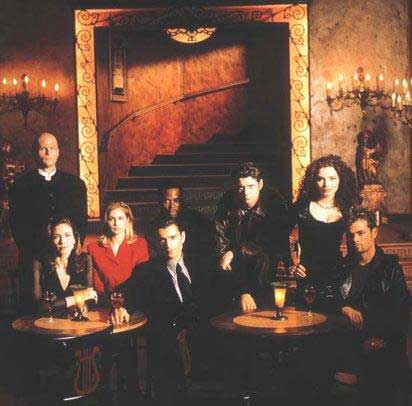
kindred-cast

Have you seen any of Kindred: The Embraced? Do you think it had potential, or was it doomed to failure from the start? Let me know in the comments below, I’d love to hear about it. If you haven’t seen the show and would like to check it out, the eight episodes are available on DVD.

For more shows that were cancelled too soon, see here

Check out the YouTube channel (and consider hitting the subscribe button)

And don’t forget to like Film Music Central on Facebook 🙂

Brian Tyler scoring Partition (2007)

Partition is a very sad story, set in 1947 during the partition of India (when Pakistan was created as a Muslim nation). It is based on the Romeo and Juliet story type, where two people fall in love even though it is forbidden. In this case, a Hindu man, Gian Singh, slowly falls for Naseem, a Muslim girl, even though all the rules of their respective religions forbid this.

partition460

With Naseem separated from her parents and Gian finding himself responsible for her, the pair end up bonding over their mutually traumatic pasts and get married, having a son named Vijay. Things become complicated when word arrives that Naseem’s family is actually in a certain village in the newly formed Pakistan. Naseem leaves to visit, promising to return in a month, but her family is so infuriated that she’s married a Sikh that they lock her in a room and forbid her from returning to India. Gian is determined to rescue his wife, so he disguises himself as a Muslim and crosses into Pakistan.

After a disastrous attempt to rescue her, Naseem’s mother recognizes that her daughter really does love Gian and she lets her out so she can catch her husband at the train station. But just as the couple is able to reunite, Naseem’s brother Akbar pushes Gian onto the train tracks and he is killed by the approaching train, to the horror of Naseem. While the police arrest Akbar for murder, Naseem and Vijay are able to escape to England and make a new life.

MV5BNGM4MGI5YTgtZjk5Yy00Y2YxLTlhN2ItNTEyNmZiZmQ2YmYyXkEyXkFqcGdeQXVyNzg3Mzk0Nw@@._V1_

What makes this film notable for me is that it features a score by Brian Tyler, who is rapidly becoming one of my favorite film composers. This behind the scenes video shows Tyler at work in the studio, annotating his score and recording with a rough cut of the film playing on a screen in front of him. He also worked with the Hollywood Studio Symphony for recording the score as well.

One big thing with the music that Tyler wanted to create is, that while there is a sense of Western music in the score, there is also a frequent callback to the sound of India as well. He wanted to create the feeling that you (the audience) have been transported through time to this very traumatic period in the history of India and Pakistan.

There is something magical about watching Brian Tyler on the podium conducting his music, I definitely need to hear more of this score now. If you’ve seen Partition, I would love to know your thoughts on the film and the score in the comments below.

Become a patron of the blog at: patreon.com/musicgamer460

Check out the YouTube channel (and consider hitting the subscribe button)

See also:

Film Composer Interviews A-H

Film Composer Interviews K-Z

See also:

Brian Tyler conducts The Mummy (2017)

Brian Tyler talks Rambo (2008)

Brian Tyler talks The Expendables (2010)

Brian Tyler conducting and scoring Now You See Me 2 (2016)

Brian Tyler talks War (2007)

Brian Tyler “Alien vs. Predator: Requiem” scoring session (2007)

Brian Tyler “Law Abiding Citizen” scoring sessions (2009)

Brian Tyler “Dragonball Evolution” scoring session (2009)

Brian Tyler talks Fast Five (2011)

Brian Tyler “Battle: Los Angeles” (2011) scoring session

Brian Tyler scoring session for Iron Man 3 (2013)

Brian Tyler “Teenage Mutant Ninja Turtles” (2014) scoring session

Brian Tyler “Power Rangers” scoring session (2017)

Don’t forget to like Film Music Central on Facebook 🙂

Disturbing Disney #11: Clayton’s Death in Tarzan (1999)

You know, it sure seems to me like a lot of “disturbing” moments in Disney films happen to coincide with a villain’s death.

Tarzan (1999) is considered to be the end of the 1st Disney Renaissance, and for this reason I think the film has become totally underrated. Which is really a shame because the animation is incredible, particularly the scenes where Tarzan is “surfing” through the trees. The (real) villain is pretty awesome too. For most of the film, the “enemy” has been presented as Kerchak, the leader of the gorilla troop that raised Tarzan, and the gorilla that should have been Tarzan’s foster father, as it is Kerchak’s mate Kaala that  took the young man in when he was a baby, but Kerchak could never bring himself to accept the human as his son. However, the actual villain of this story is the bloodthirsty and devious Clayton (Brian Blessed), who has hitherto been working as a bodyguard for the expedition of Professor Porter and Jane. But in reality, Clayton has come because he wants to capture the gorillas for the handsome price they will fetch back in England.

Clayton

Behold the villainous Clayton, even before he’s revealed he kind of looks like a villain already

At the last minute, Tarzan is able to thwart Clayton’s attempt to kidnap all of the gorillas, but Clayton is not giving up just yet. After fatally wounding Kerchak, Clayton chases Tarzan up into the trees, figuring that if he can get Tarzan out of the way, rounding the gorillas back up should be easy. But despite his injuries (Clayton shot him in the arm), Tarzan has a distinct advantage: he was raised in this jungle, he knows how to navigate the trees with his eyes closed, Clayton is like a fish out of water.

Despite this, he continues to chase Tarzan until the latter is cornered against a tree trunk. But then Tarzan uses the jungle to his advantage, ensnaring Clayton’s limbs in a tangle of jungle vines (to his mounting fury). At this point, Clayton fully snaps and begins to furiously hack at the vines holding him up, and a single shot forewarns what is about to happen: as the vines are cut away, one loop slips up to tighten around Clayton’s neck.

The first time I saw this film in theaters, I didn’t realize what was going to happen, but my parents did. To this day I remember my mom gasping at the shot and wondering what she was reacting to. I realize now that Clayton has a particularly gruesome and disturbing death scene, one that is pretty graphic if you think it through.

As I’d said, Clayton is hacking away at the vines that are holding him up, not noticing one loop remains coiled around his neck. He is so frantic to get loose to kill Tarzan that he doesn’t notice there are fewer and fewer vines holding him up. Even Tarzan sees what is about to happen and tries to warn him, but Clayton doesn’t listen…and then it’s too late. Down to two vines (the one around his neck and the one his hand is clenching), Clayton hacks the wrong vine and begins to fall screaming, the vine still looped around his neck. This moment is terribly disturbing: not only is Clayton falling to his death, but he has enough time to know it and try desperately to avert the inevitable (see, as he falls, you can see Clayton’s hands trying to remove the loop before he runs out of slack). Maybe Tarzan could have saved himself, but Clayton is no Tarzan and in no time we see the vine go taught with an audible *SNAP* and then we see the shadowy profile of Clayton hanging by his neck…DEAD.

I’ll give Disney credit for one thing: at least they kept the actual moment of death off-screen and only showed Clayton’s dead body in silhouette. Still…watching a villain die via a broken neck is pretty disturbing, and thus it is here on the list of Disturbing Disney.

But I would like to know what YOU think of Clayton’s death; does it disturb you? Do you find it gruesome? Let me know in the comments below, I would love to hear about it.

Become a Patron of the blog at patreon.com/musicgamer460

Check out the YouTube channel (and consider hitting the subscribe button)

For more Disturbing Disney, see also:

Disturbing Disney #1: The Coachman in Pinocchio (1940)

Disturbing Disney #2: The truth of Pleasure Island in Pinocchio (1940)

Disturbing Disney #3: Escaping Monstro from Pinocchio (1940)

Disturbing Disney #4: Dumbo loses his mother (1941)

Disturbing Disney #5 The death of Bambi’s Mother

Disturbing Disney #6: Faline vs. the dogs (1942)

Disturbing Disney #7: Cruella wants to do WHAT??

Disturbing Disney #8: The Whale Who Wanted to Sing at the Met (from Make Mine Music, 1946)

Disturbing Disney #9: Dr. Facilier’s Fate (The Princess and the Frog, 2009)

Disturbing Disney #10: The rat in Lady and the Tramp (1955)

Disturbing Disney #12: The Bear from The Fox and the Hound (1981)

Disturbing Disney #13: “Smoking them out” in The Fox and the Hound (1981)

Disturbing Disney #14: The Salt Trap in The Jungle Book (1994)

Disturbing Disney #15: Night on Bald Mountain from Fantasia (1940)

Disturbing Disney #16: King Triton destroys Ariel’s grotto

Disturbing Disney #17: Ratigan becomes a monster in The Great Mouse Detective

Disturbing Disney #18: The Queen’s assignment for her Huntsman

Disturbing Disney #19: Cinderella’s dress is destroyed (1950)

Disturbing Disney #20: Quasimodo is crowned ‘King of Fools’ (1996)

And don’t forget to like Film Music Central on Facebook 🙂

Hans Zimmer talks Inception (2010)

I have watched a lot of movies, but few have bent my brain more than Inception (2010), a film set in a world where it is possible to enter the subconscious and “extract” information. Cobb, a “dream thief”, is tasked by a wealthy businessman named Saito to perform “inception” on the son of a rival, which is planting an idea in the subconscious mind, and it is supposed to be an impossible task.

The stakes for Cobb are pretty high: he’s been on the run for years after being framed for the murder of his wife (she actually committed suicide believing she was still in the dream world), and if he succeeds, Saito will make the charges go away so he can return home to his two children. But…in a world where we enter dreams within dreams within dreams, how do we know any of this is even real to begin with? (That question is never really answered by the way, we’re meant to make our own conclusions).

image-w1280

The visuals in this film are like nothing you’ve ever seen before: the scene where Ariadne and Cobb visit the dream world and bend the landscape around them is spectacular beyond words. Even if you’re paying attention to which level of consciousness the characters are on, it’s very easy to get lost and wonder “what is actually real here?” This is especially true when the film gets into the question of what really happened to Cobb’s wife (and why apparitions of her keep appearing in Cobb’s mind).

inception-2

The score for this reality-bending film was composed by the legendary Hans Zimmer, who returned to collaborate again with director Christopher Nolan on this project (Inception marked their third collaboration together). This brief “making of” video shows how Nolan and Zimmer brought this score into existence. Zimmer described the music of Inception as “a very electronic, dense score, filled with nostalgia and sadness.” What I love best about the score is how it changes as the characters move deeper and deeper into the “dream within a dream.” The deeper they go, the more “unreal” the music becomes; this all reaches a head when Cobb and Ariadne are in Limbo (the bottom level) while the other members of his group are moving through three separate dream levels above them.

If you’ve seen Inception, what did you think of the story? And what did you think of the film’s soundtrack? Let me know in the comments below 🙂 And I hope you enjoy this behind the scenes look at the making of the film score for this film 🙂

You can become a patron of the blog at patreon.com/musicgamer460

Check out the YouTube channel (and consider hitting the subscribe button)

See also:

Film Composer Interviews A-H

Film Composer Interviews K-Z

Hans Zimmer talks The Road to El Dorado (2000)

Hans Zimmer talks Hannibal (2001)

Hans Zimmer talks The Dark Knight (2008)

Hans Zimmer talks Sherlock Holmes (2009) and Sherlock Holmes: A Game of Shadows (2011)

Hans Zimmer (and Richard King) talk The Dark Knight Rises (2012)

Hans Zimmer talks Man of Steel (2013)

Hans Zimmer talks Interstellar (2014)

And don’t forget to like Film Music Central on Facebook (your support means everything to me) 🙂

John Debney (and Tom Morello) talk Iron Man 2 (2010)

It’s hard to create a sequel that lives up to the awesomeness that was the original Iron Man film, but Iron Man 2 did a pretty good job. The film follows Tony Stark after he publicly reveals that he is Iron Man to the world.

See, as it turns out, the palladium in the arc reactor that’s keeping Tony alive is also slowly killing him, so he begins to live life very recklessly (as he doesn’t have much time to live), to the consternation of Pepper Potts and James Rhodes, who have no idea that Tony is slowly dying. But there are other problems: Ivan Vanko, determined to seek vengeance on Stark, builds his own arc reactor and sets out to kill him. (This is also the film that introduces Natasha Romanoff, aka Black Widow) to the MCU.

RASPUTIN

Stark is also under increasing pressure to sell the designs of his Iron Man suits to the government, but he is unwilling to do so. Everything comes to a head when Tony gets drunk at a birthday party while wearing his Mark IV armor. Rhodes dons the Mark II prototype and the two fight to a stalemate which ends with Rhodes flying off with the armor to give to the Air Force. At the same time, rival Justin Hammer has enlisted Vanko to build his own set of armored suits (which he passes off as his own work), not realizing that Vanko has sabotaged them so that they can be remotely controlled by him. It’s up to Tony to stop Vanko once and for all!

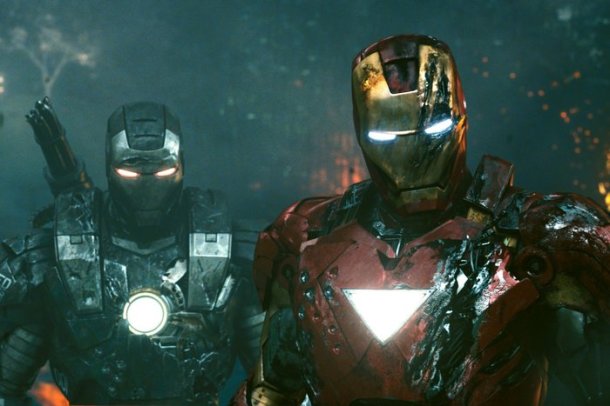
images

While the film’s score features a healthy selection of rock songs (including two from AC/DC), the orchestral score was composed by John Debney and Tom Morello. The above video featurette details how Debney collaborated with Morello to create the score for the film.

iron_man_2_poster_7_by_scorpionsoldier

Some have criticized the MCU for not having a “consistent” sound, which is to be expected since multiple composers have been employed to score these films, but I think each composer puts their own unique twist to each installment of the MCU, and Iron Man 2 is no exception. I hope you enjoy this behind the scenes look at the making of this film’s score.

Become a Patron of the blog at patreon.com/musicgamer460

Check out the YouTube channel (and consider hitting the subscribe button)

See also:

Film Composer Interviews A-H

Film Composer Interviews K-Z

John Debney scoring Predators (2010)

John Debney talks The Scorpion King (2002)

John Debney talks The Passion of the Christ (2004)

John Debney talks The Jungle Book (2016)

Don’t forget to like Film Music Central on Facebook

Disturbing Disney #10: The rat in Lady and the Tramp (1955)

Lady and the Tramp is another classic Disney film that is sadly falling by the wayside as more and more time goes on, but it has one of the more disturbing situations in the Disney canon.

Set in 1909/1910, the story follows Lady, a cocker spaniel, whose happy life with Jim Dear and his wife Darling is upended when Darling becomes pregnant and has a baby boy. With all of the attention focused on the new baby, Lady begins to feel neglected for the first time in her life. Not only that, but a brash stray named Tramp keeps nosing his way into her life as well.


Now, looking at this film, some might think that the “villain” of this film is Aunt Sarah, the mean lady with the Siamese cats, who muzzles Lady, and later locks her out of the house and keeps her tied in the yard. However, Aunt Sarah isn’t acting out of malice, she’s just being manipulated by her cats and what she believes to be right. No, the real villain of this story…is the RAT!

I can hear it now, “Rat? What rat??”

Lady-tramp-disneyscreencaps_com-7589

THAT rat!! (He’s an ugly thing isn’t he??)

The rat first appears early in the film when Lady is seen going about her morning routine (before Darling becomes pregnant and has her baby). He keeps trying to get in the house, but Lady is always there to chase him off. However, at the end of the film, when Aunt Sarah has Lady tied to the doghouse, the rat is able to slip in with ease, despite Lady barking a frantic warning (that Aunt Sarah ignores). And where is the ugly rat going? To the baby’s room of course!! Yes, that’s right, there’s a disease-ridden rat headed for the baby’s room to do only God knows what. Totally messed up right? Just wait, it gets better.

Of course Tramp comes barreling into the yard a short time later and Lady is able to tell him about the rat. Tramp goes to make the save and then we see this:

Lady-tramp-disneyscreencaps_com-7788

I wish I could get a zoom in on this rat perched on the baby’s crib, looking down at the infant like he’s going to.. *shudders* oh Disney  why do you DO these things??? It’s not that the rat actually does anything, it’s the implication of what’s going to happen that makes this moment so disturbing. (And there’s also that frightening fight between Tramp and the rat that is done mostly in shadow that is SUPER disturbing too.)

Lady-tramp-disneyscreencaps_com-7760

What do you think about the rat in Lady and the Tramp? Do you find it disturbing as well, or is it no match for what we see in Disney today? Let me know your thoughts in the comments below, I’d love to hear about it 🙂

Become a Patron of the blog at patreon.com/musicgamer460

Check out the YouTube channel (and consider hitting the subscribe button)

For more Disturbing Disney, see here

See also:

Disturbing Disney #1: The Coachman in Pinocchio (1940)

Disturbing Disney #2: The truth of Pleasure Island in Pinocchio (1940)

Disturbing Disney #3: Escaping Monstro from Pinocchio (1940)

Disturbing Disney #4: Dumbo loses his mother (1941)

Disturbing Disney #5 The death of Bambi’s Mother

Disturbing Disney #6: Faline vs. the dogs (1942)

Disturbing Disney #7: Cruella wants to do WHAT??

Disturbing Disney #8: The Whale Who Wanted to Sing at the Met (from Make Mine Music, 1946)

Disturbing Disney #9: Dr. Facilier’s Fate (The Princess and the Frog, 2009)

Disturbing Disney #11: Clayton’s Death in Tarzan (1999)

Disturbing Disney #12: The Bear from The Fox and the Hound (1981)

Disturbing Disney #13: “Smoking them out” in The Fox and the Hound (1981)

Disturbing Disney #14: The Salt Trap in The Jungle Book (1994)

Disturbing Disney #15: Night on Bald Mountain from Fantasia (1940)

Disturbing Disney #16: King Triton destroys Ariel’s grotto

Disturbing Disney #17: Ratigan becomes a monster in The Great Mouse Detective

Disturbing Disney #18: The Queen’s assignment for her Huntsman

Disturbing Disney #19: Cinderella’s dress is destroyed (1950)

Disturbing Disney #20: Quasimodo is crowned ‘King of Fools’ (1996)

Don’t forget to like Film Music Central on Facebook 🙂

Hans Zimmer talks The Road to El Dorado (2000)

While it wasn’t a big hit at the time, 17 years later there is still a soft spot in my heart for The Road to El Dorado. The story follows two Spanish con-men, Miguel (Kenneth Branagh) and Tulio (Kevin Kline) as they accidentally stow away on the ship of Hernan Cortes on his way to conquer whatever empires of the New World he may come across, and end up discovering the legendary city of gold, El Dorado, where they are mistaken for gods.

maxresdefault

(I wrote about one of the film’s songs here)

Miguel and Tulio are initially content with their plan to amass as much gold as possible and then sailing away to “ascend to the heavens” in a boat they’re having the residents of El Dorado build for them, but complications quickly begin to emerge. For one, Miguel is quickly becoming enamored of life in the hidden city. And, as he points out to Tulio, leaving to live like a “king” somewhere else would be a step-down from “god.”

For another, the high priest, Tzekel-Kan, is suspicious of the pair as they do not behave as the gods are supposed to (nor are they supposed to bleed as Miguel does after cheating to win a ball game) and is determined to expose the two as frauds. There’s also the looming threat of Hernan Cortes, who will surely destroy El Dorado and enslave the populace if he can find it.

dorado-2

And yes, I admit, the music has something to do with why I like this film as much as I do. With the orchestral score composed by Hans Zimmer, the music is a blend of Spanish sounds (heard mostly in the beginning of the film) and a “New World” sound that takes over once Miguel and Tulio discover El Dorado. I was delighted to discover a full length behind the scenes look at creating the score for this movie, with thoughts from Hans Zimmer, Elton John (who worked with Tim Rice on the songs) and also Kevin Kline and Kenneth Branagh, the voices of Miguel and Tulio.

 If you haven’t given The Road to El Dorado a try, I sincerely hope that you give the movie a chance. It has terrific animation and, as I’ve said, a wonderful musical score.

Become a Patron of the blog at patreon.com/musicgamer460

Check out the YouTube channel (and consider hitting the subscribe button)

See also:

Film Composer Interviews A-H

Film Composer Interviews K-Z

Hans Zimmer talks Hannibal (2001)

Hans Zimmer talks The Dark Knight (2008)

Hans Zimmer talks Sherlock Holmes (2009) and Sherlock Holmes: A Game of Shadows (2011)

Hans Zimmer talks Inception (2010)

Hans Zimmer (and Richard King) talk The Dark Knight Rises (2012)

Hans Zimmer talks Man of Steel (2013)

Hans Zimmer talks Interstellar (2014)

See also:

The Road to El Dorado “It’s Tough to Be a God” (2000)

Don’t forget to like Film Music Central on Facebook 🙂

My thoughts on Beauty and the Beast (2017)

After a long month of delays and “life happening”, I was FINALLY able to go see Beauty and the Beast in the theater and see what all the hype and fuss is about. The short answer is: I liked it!! The long answer…well, keep reading, because I have some thoughts about all of this.

First I will start with what I liked.

The casting: Disney nailed the casting in my opinion, especially with Belle, Maurice, Gaston and Beast. Luke Evans in particular was very believable as the egomaniacal and downright despicable Gaston, though his singing style caught me by surprise (more on that in a minute). I really liked Josh Gad as Le Fou too. And while I initially wasn’t too sure about Le Fou being the first gay character in Disney canon, once I saw it, I realized that it worked super well and it isn’t “in your face” at all! And Gaston is so oblivious to it all that it is really quite funny.

An expanded story: I absolutely loved that Disney filled in some gaps in the story with this version. Showing the Beast’s transformation (including what came immediately before) was well done, as it gave a good idea of what life in the castle was like before the Enchantress came. And speaking of, I liked that we see more of the Enchantress beyond the prologue. Of course in the animated film we don’t get to “see” the Enchantress at all, we only see her depicted in the stained glass pictures. But when “Agathe” rescued Maurice and took him to her home in the woods, I knew instantly that this had to be the Enchantress in disguise, because witches and other magical types would be living in the woods with owls and other magical things, and the only witch in this story is the Enchantress.

Beauty-Beast-2017-Sequel-Prequel-Spin-Off

But most of all, I really love that we finally got a backstory for Belle as to where she came from and why she and her father had to come to “this poor provincial town” in the first place. In this version, Maurice used to be a painter living in Paris with his wife and newborn daughter, when his wife contracted the plague, forcing Maurice to flee with his daughter so they didn’t all die.

Another added twist (that actually comes from the Broadway play) that I liked is that every time a rose petal falls, the castle crumbles a little more and the enchanted servants become ever more object-like. And I have to say that the scene where our enchanted friends momentarily become regular objects made me cry, because for a moment I thought they were going to give us an unhappy ending.

Homage to the past: As I suspected, this film pays homage to Jean Cocteau’s 1946 version of the Beauty and the Beast story, primarily with Maurice’s initial encounter with the castle, and also somewhat in the look of the castle too. For example, those lights out front that are held by stone arms? That image comes straight from the 1946 film. The rose pavilion out front with statues of the deer and hounds on top? That too is copied almost exactly from the film. In fact, the entire arrangement of Maurice being allowed to come in and help himself to food and shelter, only being attacked when he dares to take a rose, is the exact set-up seen in the 1946 film.

Beauty-and-the-Beast-Trailer-Luke-Evans-as-Gaston-and-Josh-Gad-as-LeFou

The music: Of course I’m going to be all over this music, the original Beauty and the Beast soundtrack is one of my favorite film soundtracks ever, and I was happy to hear the music I loved largely unchanged. And the new songs were all beautiful, nothing felt out of place. I do have one gripe however; when Belle goes to the West Wing, the iconic “West Wing theme” is missing. I was really disappointed as that is one of my favorite musical cues from the animated film.

Now for what I didn’t like:

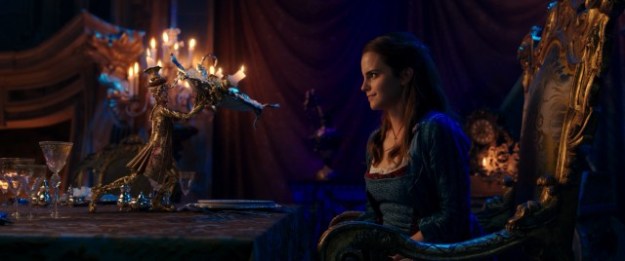
The fight between Gaston and the Beast: maybe I’m nitpicking, but the entire scene with Gaston, the Beast and Belle at the end of the film didn’t carry nearly the same emotional weight as the original did. I’m not sure why that is, but Gaston’s death didn’t feel nearly as satisfying, nor did his fatal attack on the Beast. For that last part, I think that had something to do with the fact that it was more shocking for the Beast to be stabbed in the side than to be shot in the back at a distance. Also, Gaston standing on the crumbling rampart felt something like an afterthought. Truthfully, when I saw that we were seeing more of the Enchantress, I was secretly hoping that she was going to punish Gaston by cursing HIM instead. Or, barring that, I was curious to see if Disney would use the original plan for Gaston’s death, which involved him being stalked and killed by wolves.
beautyandthebeast-2017-04

How Gaston gets Maurice locked up, and Belle’s attempted rescue: In the animated original, Maurice really does come across (a little bit) as an insane person raving about a Beast taking his daughter. But in THIS version, Gaston tries to have Maurice killed by tying him up and leaving him in the woods, thinking the wolves will get him. When Maurice makes it back to town almost a week later, he tells the townspeople exactly what happened and they are all suspicious of Gaston (and rightfully so). But simply because Gaston says it didn’t happen, the townspeople just take his word for it? I know everyone is supposed to hang on every word Gaston says, but this really is pushing it. And then there’s when Belle comes racing in, still in her ball gown, to rescue her father. You would think everyone would take one look at the sumptuous clothes she’s dressed in and realize, “Oh my gosh, I don’t understand how, but she’s telling the truth!” Nope! Belle gets thrown in the padded wagon too.

But these are really only minor nitpicks for me. While I do admit that I still like the animated film better, I can also say that this Beauty and the Beast was a well-done adaptation.

Final thoughts:

Le Fou switching sides during the fight in the castle was just epic, as was Mrs. Potts comment “You’re too good for him (Gaston)”

The transformation scene was just wonderful/amazing/spectacular. And I loved the shot where the castle is restored to its former glory.

Once again, I did enjoy Beauty and the Beast, it is a good film, if not quite the equal of the animated original.

Become a Patron of the blog at patreon.com/musicgamer460

Check out the YouTube channel (and consider hitting the subscribe button)

See also: Film/TV Reviews

Don’t forget to like Film Music Central on Facebook 🙂

Alan Silvestri talks FernGully: The Last Rainforest (1992)

FernGully: The Last Rainforest is one of my favorite animated films that doesn’t come from the Walt Disney studio. It tells the story of Crysta, a fairy who lives in the untouched rainforest of FernGully.

She is learning to use magic as she will one day be the leader of the fairies. According to their legends, fairies and humans used to be very close until an evil spirit named Hexxus drove them away, presumably to their extinction.

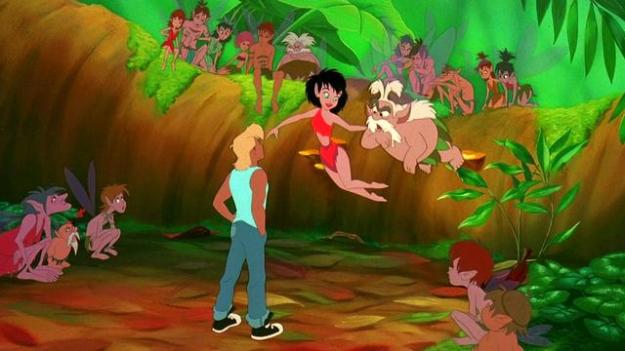
FernGully2

Of course the humans didn’t go extinct, and they’re very close to FernGully even now in the form of loggers cutting the forest down acre by acre. And when the tree containing the spirit of Hexxus is destroyed and the evil spirit is set loose, it’s up to Crysta and her new human friend Zak to stop him.

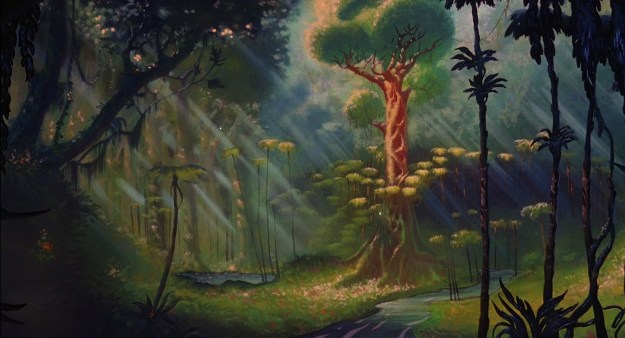
FernGully

I absolutely LOVE the music for FernGully, it was composed by Alan Silvestri (of Back to the Future fame) and it will stick with you long after the story is over. One of my favorite pieces from the score is “The Spirit of the Trees” and I hope to talk about that piece at some time in the future. But for now, I have a behind the scenes look at making the overall score that I think you will enjoy.

Become a patron of the blog at patreon.com/musicgamer460

Check out the YouTube channel (and consider hitting the subscribe button)

See also:

Film Composer Interviews A-H

Film Composer Interviews K-Z

Don’t forget to like Film Music Central on Facebook 🙂
The Two Towers “Last March of the Ents” (2002)

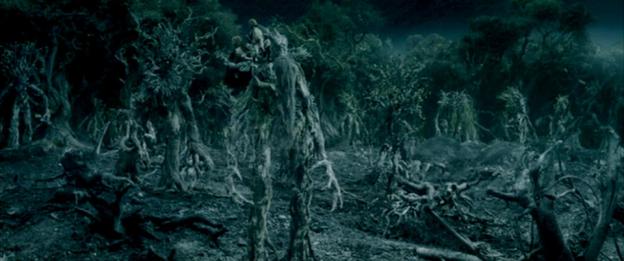
I think we can all agree that the Ents are one of the greatest things about The Two Towers. After Merry and Pippin rescue themselves from the Uruk-hai, they head into Fangorn Forest and run straight into Treebeard, de facto leader of the few Ents that remain in Middle Earth. Ents…are like trees, sort of. They resemble different varieties of trees, but they have legs, and eyes and they can talk too. Oh and they live for a really LONG time. So long in fact, that regular events in Middle Earth like war very rarely bother them. They’d just as soon let the humans, elves and other races sort it out among themselves, despite the pleas Merry keeps making to them.

But just as Treebeard is set to take Merry and Pippin to a place where they can safely head off to the Shire, Pippin has an idea: he tells Treebeard to take them south past Isengard, having a fairly good idea of what the Ent will run into on the way.

See, while the Ents have been busy deep in the forest, Saruman the wizard has been busy having the forest surrounding Isengard chopped down as fuel for the furnaces helping to produce weapons and armor for his army. So when Treebeard comes to the slopes nearest the wizard’s tower, he emerges to find that acres of forest have been chopped down and completely destroyed, trees that he had known since they were seedlings.

That does it!! Exclaiming that “a wizard should know better” Treebeard lets out a howl of pain and anger that summons all the remaining Ents to his side as he explains to the hobbits:

“There is no curse in Elvish, Entish or in all the tongues of Men, for this treachery.”

Now the Ents will go to war, as they have not done for ages. But there is no optimism here: as the females of their species disappeared centuries ago, there are no more Ent children. Whatever losses they suffer in the coming battle will only hasten the extinction of their race, hence the reason this is called “the last march of the Ents.”

The Ents Attack Isengard

I love the scene when all the Ents are striding across the ruined plain, the Ent theme sounding clear in the background. This is one of those moments that is absolutely pure Tolkien and I never get tired of it. It’s such a sad theme, sad and bittersweet, but it matches the Ents perfectly.

Become a Patron of the blog at patreon.com/musicgamer460

Check out the YouTube channel (and consider hitting the subscribe button)

For more of The Two Towers, see also:

The Two Towers “Lament for Theodred” (2002)

See also: Film Soundtracks A-W

Don’t forget to like Film Music Central on Facebook 🙂