Monthly Archives: February 2019

Michael Giacchino talks John Carter (2012)

Few Disney films have flopped harder in the last decade than John Carter, an adaptation of Edgar Rice Burrough’s Barsoom novel A Princess of Mars. The film follows the titular character, a Civil War veteran, as he finds himself flung to the dying planet of Barsoom (Mars) and the conflicts taking place therein. The film was meant to be the first of a trilogy, but when John Carter bombed at the box office (costing Disney $200 million in the process), all future sequels were cancelled.

The score for John Carter was composed by Michael Giacchino, who routinely turns in good work, including for this film. While many aspects of the film were criticized, Giacchino’s score was praised for sounding “fresh and adventurous.” In this interview (I apologize for the audio cutting in and out), Giacchino discusses a few details of how the score came together, including the director’s desire to express emotions through the music and which characters should get their own themes. I’d really hoped to find some scoring sessions from this score, and if I ever find some I’ll make sure to attach the links, because it sounds like some good music.

I hope you enjoyed this short interview about the music of John Carter. Let me know what you think about John Carter in the comments below and have a great day!

See also:

Michael Giacchino talks The Incredibles (2004)

Michael Giacchino talks Mission: Impossible 3 (2006)

Michael Giacchino talks Ratatouille (2007)

Michael Giacchino talks Up (2009)

Michael Giacchino talks Star Trek (2009)

Michael Giacchino talks Super 8 (2011)

Michael Giacchino talks Star Trek: Into Darkness (2013)

Michael Giacchino talks Jupiter Ascending (2015)

Michael Giacchino talks Jurassic World (2015)

Michael Giacchino scoring Rogue One: A Star Wars Story (2016)

Michael Giacchino talks Zootopia (2016)

Michael Giacchino talks Jurassic World: Fallen Kingdom (2018)

Film Composer Interviews A-H

Film Composer Interviews K-Z

Become a Patron of the blog at patreon.com/musicgamer460

Check out the YouTube channel (and consider hitting the subscribe button)

Don’t forget to like Film Music Central on Facebook

My Thoughts on: Slayers Great (1997)

2631l.jpg

*warning: spoilers below!

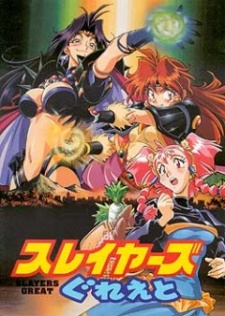
Slayers Great is the third Slayers movie and was released in 1997. Of all the Slayers films I watched this past weekend, this might just be my favorite. In this story, Lina and Naga find themselves in a town where golems (artificial creatures of clay animated by magic) are common place and the skill to make them is highly prized. As fate would have it, Lina and Naga end up on opposites sides of a conflict between two nobles who want to take control of this particular town. Each wants to secretly build an army of golems to help them rule the world, but they need to gain power first. That’s where our sorceresses come in. Each is coerced into helping a golem maker (who happen to be father and son) with a special golem that will be used in a contest to see which noble has the more powerful creation. But things quickly get complicated.

The awesome eternally bickering dynamic between Lina and Naga is back in full swing and I love watching every minute of it. As I think I’ve mentioned before, Lina and Naga will fight for the smallest of reasons (particularly if Naga points out Lina’s flat chest) and it’s fun to watch Lina when she gets angry.

Slayers-Great-images-3bb2ae1d-c843-47dd-9977-7bd407dc884.jpg

The boiling feud between the two sorceresses culminates in a hilarious golem battle where Lina and Naga find themselves each trapped in a golem based on…well, them! But here’s where it gets funny: Naga’s golem is an almost perfect (albeit giant sized) depiction of herself (skimpy outfit and all). While Lina’s golem is….well, picture a cute Chibi-Lina and you’ve just about got it. Lina’s reaction to being trapped inside a super-cute version of herself is super fun to watch (she’s FURIOUS!). Things get dialed up to eleven when the sorceresses discover they can cast magic through their golems as well and destructive mayhem ensues. Also, I should mention that seeing a giant golem version of Naga is somewhat terrifying, especially when she starts up with that laugh.

In conclusion, Slayers Great is really, really funny. Fans of the series will definitely enjoy this movie. Let me know what you think about Slayers Great in the comments below and have a great day!

See also:

My Thoughts on: Slayers Return (1996)

My Thoughts on: Slayers (season 1) (1995)

My Thoughts on: Slayers NEXT (Season 2) (1996)

My Thoughts on: Slayers TRY (season 3) (1997)

Animated Film Reviews

Become a Patron of the blog at patreon.com/musicgamer460

Check out the YouTube channel (and consider hitting the subscribe button)

Don’t forget to like Film Music Central on Facebook

My Thoughts on: Slayers Return (1996)

Slayers_Return.png

*warning: spoilers follow

Aside from running for five seasons, Slayers also spawned five animated films, the second of which is Slayers Return. Unlike the anime series, none of the movies (except for the last one) feature Gourry, Amelia, Zelgadis, or most of the characters Lina meets during the show. Instead, Lina teams up with another sorceress named Naga the Serpent (who DOES have a connection to the show but I won’t spoil how). Naga is…interesting. Like Martina in Slayers NEXT, Naga dresses in incredibly revealing outfits (she’s very confident in herself) and has a laugh that is memorable for being nightmare-inducing for Lina and other characters because it can literally come out of nowhere. That being said, I LOVE Naga and her constant bickering with Lina is a joy to watch.

Now, on to the movie. In Slayers Return, after getting into yet ANOTHER fight over food (because how dare Naga take the last piece of Lina’s steak??) the two sorceresses find themselves hired to save the village of Biaz from an evil organization. Lina only agrees because she remembers that this village is supposedly the sight of a legendary treasure (and Lina will do just about anything if treasure is involved) and Naga tags along because she suspects that Lina is after said treasure (and if so she wants her fair share). One thing I love about watching Lina and Naga is that they will argue over anything (but particularly about food and treasure), and when these two argue, inevitably things get blown up (which always makes me laugh for some reason).

fl07S.png

From this point on, most of the movie’s humor comes from subverted expectations. For example, we are led to believe that this Zein Organization that has enslaved Biaz is this huge group ensconced in some hidden fortress. But the truth is…there’s only two members in the group, their leader is a third-rate magician (and I suspect also a con artist) and they operate out of a run-down shack in the woods. What makes it even funnier is that Galev (Zein’s would be leader) maintains this “pompous evil lord” attitude even after he’s mostly exposed as a fraud. It’s almost disappointing that the supposed villain of this story is a dud, but the humor pretty much makes up for it. And it turns out the story does have a proper villain (sort of) after all.

Remember the “treasure” that Lina was hoping to collect? Well…it turns out it wasn’t so much a treasure as it was a giant golem capable of destroying everything in its path that’s incapable of being controlled. And oh yes, Naga just happens to be wearing a bracelet that acts as a homing beacon for the golem (and it can’t be taken off). The remainder of the film is devoted to an extended chase as everyone flees from the golem while trying to figure out how to stop it. The dialogue between Lina and Naga is hysterically funny, as is the comeuppance that Galev receives at the end of the film. I should mention that this is one ugly golem: it looks like a giant chicken crossed with a turtle, with extended claws coming out of its back (and it says “Yo!” all the time).

If you enjoy the Slayers anime, you will love Slayers Return. It is a little jarring at first to not have Lisa Ortiz voicing Lina, but Cynthia Martinez does a great job. The animation is on point, though I should also point out the spells are a little different than what you see in the regular anime (in particular, Lina’s incantation for Dragon Slave is noticeably different). It’s really a fun movie to watch and I hope you get the chance to check it out.

Let me know what you think about Slayers Return in the comments below and have a great day!

See also:

My Thoughts on: Slayers (season 1) (1995)

My Thoughts on: Slayers NEXT (Season 2) (1996)

My Thoughts on: Slayers TRY (season 3) (1997)

My Thoughts on: Slayers Great (1997)

Animated Film Reviews

Become a Patron of the blog at patreon.com/musicgamer460

Check out the YouTube channel (and consider hitting the subscribe button)

Don’t forget to like Film Music Central on Facebook

James Newton Howard talks Dinosaur (2000)

Dinosaur-disneyscreencaps_com-1307_-1024x538.jpg

I remember Dinosaur being a really big deal back in the year 2000. Not only was it a leap in CGI animation, it was also filmed against mostly live-action backgrounds (which I believe was a first). The film follows the story of a dinosaur named Alladar who travels with his adoptive lemur family to find a new home after the island he grew up on is destroyed by a meteor.

James Newton Howard composed the score for Dinosaur and I remember the music standing out to me right away due to the extended preview that the film had in trailers. Howard gave the score this huge, symphonic sound to highlight the live-action background and the various dinosaurs seen in the preview. I was really excited to find this video clip because “making of” clips with James Newton Howard are relatively hard to come by and he’s worked on some of my favorite childhood films.


As the interview clip explains, Howard uses the music in Dinosaur to direct emotional feelings, be it fear, wonder, or humor. And there is a full range of emotions to be found in the film, which shows just how talented this composer is. It was also emphasized that they wanted to make the music sound primal but not ethnic. That is, they didn’t want any music that could be traced back to a particular human culture (since this movie is set way before humans existed).

I really hope you enjoy this behind the scenes video with James Newton Howard. Let me know what you think about Dinosaur (and the music for Dinosaur) in the comments below and have a great day!

See also:

James Newton Howard talks Atlantis: The Lost Empire (2001)

James Newton Howard talks Signs (2002)

James Newton Howard talks The Village (2004)

James Newton Howard scoring King Kong (2005)

Film Composer Interviews A-H

Film Composer Interviews K-Z

Become a Patron of the blog at patreon.com/musicgamer460

Check out the YouTube channel (and consider hitting the subscribe button)

Don’t forget to like Film Music Central on Facebook

My Thoughts on: Alita: Battle Angel (2019)

*note: spoilers for Alita: Battle Angel can be found below

After being forced to delay my trip to the movie theater for a week (blame my sinuses), I finally got to see Alita: Battle Angel last night and all I can say is wow! This might be the best Western adaptation of a manga I’ve ever seen. For those not in the know, this film is based on Yukito Kishiro’s manga series Gunnm (better known to Western audiences as Battle Angel Alita). The film was in development for close to 20 years (it was originally announced in 2003) and while the film isn’t perfect, honestly I feel like it was worth the long wait. Alita: Battle Angel is directed by Robert Rodriguez and produced by James Cameron.

First, an overview. Alita: Battle Angel is set in the year 2563, 300 years after a devastating war known only as “the Fall.” Alita (Rosa Salazar) is salvaged from a junk pile by Dr. Ido (Christoph Waltz who for once isn’t playing a villain) and awakens with no memory of who she used to be. The story is set in Iron City, a cyberpunk metropolis located directly underneath Zalem, a floating sky city. Under Ido’s watchful (and protective) eye, Alita sets out to discover who or what she used to be. Along the way, she discovers the insane sport of Motorball (imagine roller derby, NASCAR racing, and pro wrestling combined into a single sport where you fight to the death) and falls in love with a human named Hugo (Keean Johnson) who in turn is entangled with the dangerous Vector (Mahershala Ali).

Alita-Battle-Angel_1_WEB.jpg

While this film is incredibly beautiful, it is, as I said, flawed. The biggest problem is the story makes a hundred times more sense IF you read the manga first (or at least the first two volumes). While the broad strokes of the film are largely faithful to the original story, there are a myriad of background details that you’ll miss or otherwise not understand without the manga’s explanations. To be fair though, I feel like Alita: Battle Angel tries very hard to explain as much as it can without being too exposition heavy. Another issue I noticed right away is how the story begins. The discovery of Alita and her reawakening literally takes place in the first five minutes of the film. This is more of a personal preference on my part, but I feel like the film should have started with some of the flashback material we get throughout the film playing at the beginning instead as a sort of prologue.

And speaking of the flashbacks…I loved watching them, but they almost create more questions than answers. This is largely due to the fact that Alita: Battle Angel is blatantly setting up for a sequel that we may or may not get. I’m not against sequel hooks per se (Battle Angel Alita is hardly the kind of story you can tell in one film) but to leave several story threads hanging in the hopes that a sequel will finish the job…that I have a problem with. This leads to the biggest problem in the film: Nova (Edward Norton in a non-speaking role). While the film implies that Nova is the “big villain” of the story, we learn next to nothing about him (aside from the fact that he’s apparently immortal). This is very frustrating especially if a sequel never comes.

screenshot_378.jpg

Aside from these problems, the film really blew me away at times (in a good way). The setting of Iron City and Zalem looks like it came straight out of the manga. While I do agree that Alita’s over-large “anime eyes” look a little peculiar, for me I was able to adjust to them fairly quickly. I also love the motion capture that was used to bring Alita to life, she looks very real (no sense of the uncanny valley at all). I was also pleasantly surprised to not be bothered by the romantic sub-plot between Alita and Hugo, which comes across as incredibly sweet (if somewhat rushed). I did roll my eyes a little when the film included a stereotypical kiss in the rain, but it felt like a good kind of cheesy at the same time.

If you’re on the fence about seeing this film, I highly recommend checking it out. Despite the flaws, it IS a good story and one that deserves to be continued. Let me know what you think about Alita: Battle Angel in the comments below and have a great day!

See also:

Soundtrack Review: Alita: Battle Angel (2019)

Film Reviews

Become a Patron of the blog at patreon.com/musicgamer460

Check out the YouTube channel (and consider hitting the subscribe button)

Don’t forget to like Film Music Central on Facebook

Daniel Pemberton talks Steve Jobs (2015)

Steve Jobs (2015) marked the first collaboration between director Danny Boyle and composer Daniel Pemberton (their second team-up, Yesterday, comes out in June). In this behind-the-scenes video, the composer discusses how he divided the film’s score into three distinct parts, each one corresponding to one of the three acts of the film. The first act (he explains) is full of synthesizers to match the vibe of 1984. The second act (and the one I like best) is purely orchestral. Not just orchestral, it’s more of a miniature opera (complete with singers). And the third act is squarely placed in the digital medium, referencing how just about everything in our lives has gone digital, thanks in large part to the real Steve Jobs.


I’m fascinated at how Pemberton essentially created three different scores for this film, that’s not something you come across very often (in fact I’m hard pressed to name another example). Daniel Pemberton is very quickly becoming one of my favorite film composers and I for one am excited to learn more about him. I hope you enjoyed the video! Let me know what you think about Steve Jobs (and it’s score) in the comments below and have a great day!

See also:

Daniel Pemberton talks The Man from U.N.C.L.E (2015)

Daniel Pemberton talks Gold (2016)

Daniel Pemberton talks King Arthur: Legend of the Sword (2017)

Film Composer Interviews A-H

Film Composer Interviews K-Z

Become a Patron of the blog at patreon.com/musicgamer460

Check out the YouTube channel (and consider hitting the subscribe button)

Don’t forget to like Film Music Central on Facebook

Daniel Pemberton talks King Arthur: Legend of the Sword (2017)

While it’s no secret that Guy Ritchie’s retelling of the King Arthur legend was a colossal flop at the box office, that shouldn’t stop you from learning about what went into making the film’s soundtrack. King Arthur: Legend of the Sword marked the second collaboration between Guy Ritchie and Daniel Pemberton and just like he did with The Man from U.N.C.L.E, the composer went all out in putting the music together.

Daniel Pemberton employed a variety of musical instruments both ancient and modern. As he says in the video, he sought to make the score visceral and gritty, something that felt distinctly unpolished. If the excerpts heard in this video are any indication, I think the composer succeeded in that aspect. It’s a shame the film flopped so badly, it sounds like Pemberton’s score for the film is really good (and it’s not that uncommon to find a great score hiding in a terrible film). I find myself hoping that Ritchie and Pemberton will collaborate again (hopefully on The Man from U.N.C.L.E 2), though hopefully the resulting film will do much better than this one did.

Let me know what you think of this behind the scenes look at the music for King Arthur: Legend of the Sword in the comments below and have a great day!

See also:

Daniel Pemberton talks The Man from U.N.C.L.E (2015)

Daniel Pemberton talks Gold (2016)

Daniel Pemberton talks Steve Jobs (2015)

Film Composer Interviews A-H

Film Composer Interviews K-Z

Become a Patron of the blog at patreon.com/musicgamer460

Check out the YouTube channel (and consider hitting the subscribe button)

Don’t forget to like Film Music Central on Facebook

Daniel Pemberton talks The Man from U.N.C.L.E (2015)

I’m fairly certain that The Man from U.N.C.L.E served as my introduction to the film music of Daniel Pemberton. I first watched the film about three years ago and while the story took some time to grow on me, the score immediately grabbed my attention. Pemberton (I’ve since discovered), has this talent for creating quirky and memorable scores that stick in your mind. Such is the case with the score for The Man from U.N.C.L.E.


In the making of featurette which you can access above, Daniel explains that director Guy Ritchie requested a score in which every cue feels iconic. And on that point alone I think the composer succeeded, because none of the music in this film feels “throwaway,” it all feels very necessary. You’ll also learn that Pemberton employed a lot of unique instruments to create the film’s distinctive 1960s-like sound. While there are traditional orchestral elements in certain places, the lion’s share of the music comes from non-traditional instruments, which is really cool.

I hope watching this behind-the-scenes video gives you an even deeper appreciation of Daniel Pemberton’s score for what I consider a highly underrated film. Let me know what you think of the music for The Man from U.N.C.L.E in the comments below and have a great day!

See also:

Daniel Pemberton talks Steve Jobs (2015)

Daniel Pemberton talks Gold (2016)

Daniel Pemberton talks King Arthur: Legend of the Sword (2017)

Film Composer Interviews A-H

Film Composer Interviews K-Z

Become a Patron of the blog at patreon.com/musicgamer460

Check out the YouTube channel (and consider hitting the subscribe button)

Don’t forget to like Film Music Central on Facebook
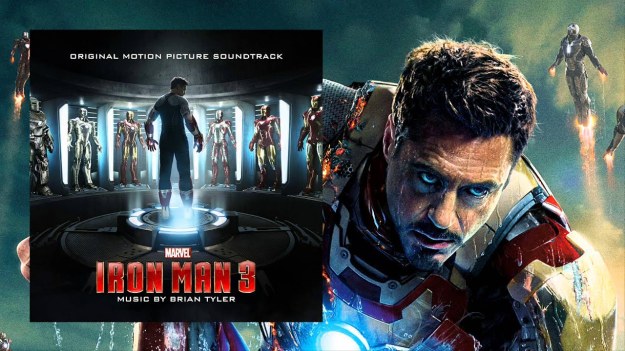
Brian Tyler scoring session for Iron Man 3 (2013)

maxresdefault

The Marvel Cinematic Universe has featured musical scores from a number of composers, but some of my favorite work comes from Brian Tyler, who to date has scored three films in the MCU: Thor: The Dark World, Avengers: Age of Ultron and Iron Man 3.

The thrilling conclusion to the Iron Man trilogy features some dark and stirring music that’s on full display in this recording (to be completely honest, I’m not sure if this is from an actual scoring session or a later re-recording for a soundtrack, but it’s pretty much the same setup as a scoring session so that’s what I’m calling it). Brian Tyler is one of those composers who also conducts and it’s always fun to watch him at work. From the moment the music starts you can tell he is completely into what he’s doing.


I love sharing these recording videos with you because I feel like it’s only once you see and hear the music being performed separate from the film that you can truly appreciate just how much work goes into putting the score together. Action scores (and often superhero scores) can get a bad rap but I really feel like the MCU has changed what a superhero film score can be in the 21st century. These scores are organic, breathing things, and I think this clip really shows that.

At any rate, I hope you enjoy watching Brian Tyler at work with Iron Man 3. Let me know what you think of the clip in the comments below and have a great day!

See also:

Brian Tyler “Alien vs. Predator: Requiem” scoring session (2007)

Brian Tyler scoring Partition (2007)

Brian Tyler talks War (2007)

Brian Tyler talks Rambo (2008)

Brian Tyler “Law Abiding Citizen” scoring sessions (2009)

Brian Tyler “Dragonball Evolution” scoring session (2009)

Brian Tyler talks The Expendables (2010) 

Brian Tyler talks Fast Five (2011)

Brian Tyler “Battle: Los Angeles” (2011) scoring session

Brian Tyler “Teenage Mutant Ninja Turtles” (2014) scoring session

Brian Tyler conducting and scoring Now You See Me 2 (2016)

Brian Tyler “Power Rangers” scoring session (2017)

Brian Tyler conducts The Mummy (2017)

Film Composer Interviews A-H

Film Composer Interviews K-Z

Become a Patron of the blog at patreon.com/musicgamer460

Check out the YouTube channel (and consider hitting the subscribe button)

Don’t forget to like Film Music Central on Facebook

Justin Hurwitz talks La La Land (2016)

While Justin Hurwitz (whose recent works include First Man) does talk about the scory of La La Land, this is less of a one-on-one interview and more of a group discussion where cast (like Ryan Gosling), crew, directors and etc. talk about the qualities of the La La Land score.

As stated in the video, the music for La La Land does call back to an earlier time in Hollywood when film music focused on melody most or all of the time. That’s not to say that today’s film scores don’t have melody, but it’s not nearly to the same extent (and many action scores don’t feature proper melody at all).


Seeing the depth of music in La La Land‘s score really drives home just how talented Justin Hurwitz is (I can see now why the film took home the Oscar for Best Original score).

I hope you enjoy this behind the scenes look at the score for La La Land. Let me know what you think of the score in the comments below and have a great day!

See also:

Film Composer Interviews A-H

Film Composer Interviews K-Z

Become a Patron of the blog at patreon.com/musicgamer460

Check out the YouTube channel (and consider hitting the subscribe button)

Don’t forget to like Film Music Central on Facebook