Category Archives: Interview

Brian Tyler scoring Partition (2007)

Partition is a very sad story, set in 1947 during the partition of India (when Pakistan was created as a Muslim nation). It is based on the Romeo and Juliet story type, where two people fall in love even though it is forbidden. In this case, a Hindu man, Gian Singh, slowly falls for Naseem, a Muslim girl, even though all the rules of their respective religions forbid this.

partition460

With Naseem separated from her parents and Gian finding himself responsible for her, the pair end up bonding over their mutually traumatic pasts and get married, having a son named Vijay. Things become complicated when word arrives that Naseem’s family is actually in a certain village in the newly formed Pakistan. Naseem leaves to visit, promising to return in a month, but her family is so infuriated that she’s married a Sikh that they lock her in a room and forbid her from returning to India. Gian is determined to rescue his wife, so he disguises himself as a Muslim and crosses into Pakistan.

After a disastrous attempt to rescue her, Naseem’s mother recognizes that her daughter really does love Gian and she lets her out so she can catch her husband at the train station. But just as the couple is able to reunite, Naseem’s brother Akbar pushes Gian onto the train tracks and he is killed by the approaching train, to the horror of Naseem. While the police arrest Akbar for murder, Naseem and Vijay are able to escape to England and make a new life.

MV5BNGM4MGI5YTgtZjk5Yy00Y2YxLTlhN2ItNTEyNmZiZmQ2YmYyXkEyXkFqcGdeQXVyNzg3Mzk0Nw@@._V1_

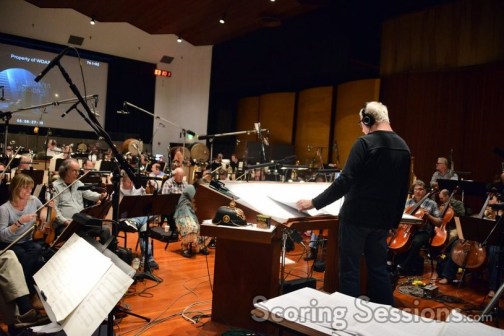
What makes this film notable for me is that it features a score by Brian Tyler, who is rapidly becoming one of my favorite film composers. This behind the scenes video shows Tyler at work in the studio, annotating his score and recording with a rough cut of the film playing on a screen in front of him. He also worked with the Hollywood Studio Symphony for recording the score as well.

One big thing with the music that Tyler wanted to create is, that while there is a sense of Western music in the score, there is also a frequent callback to the sound of India as well. He wanted to create the feeling that you (the audience) have been transported through time to this very traumatic period in the history of India and Pakistan.

There is something magical about watching Brian Tyler on the podium conducting his music, I definitely need to hear more of this score now. If you’ve seen Partition, I would love to know your thoughts on the film and the score in the comments below.

Become a patron of the blog at: patreon.com/musicgamer460

Check out the YouTube channel (and consider hitting the subscribe button)

See also:

Film Composer Interviews A-H

Film Composer Interviews K-Z

See also:

Brian Tyler conducts The Mummy (2017)

Brian Tyler talks Rambo (2008)

Brian Tyler talks The Expendables (2010)

Brian Tyler conducting and scoring Now You See Me 2 (2016)

Brian Tyler talks War (2007)

Brian Tyler “Alien vs. Predator: Requiem” scoring session (2007)

Brian Tyler “Law Abiding Citizen” scoring sessions (2009)

Brian Tyler “Dragonball Evolution” scoring session (2009)

Brian Tyler talks Fast Five (2011)

Brian Tyler “Battle: Los Angeles” (2011) scoring session

Brian Tyler scoring session for Iron Man 3 (2013)

Brian Tyler “Teenage Mutant Ninja Turtles” (2014) scoring session

Brian Tyler “Power Rangers” scoring session (2017)

Don’t forget to like Film Music Central on Facebook 🙂

Hans Zimmer talks Inception (2010)

I have watched a lot of movies, but few have bent my brain more than Inception (2010), a film set in a world where it is possible to enter the subconscious and “extract” information. Cobb, a “dream thief”, is tasked by a wealthy businessman named Saito to perform “inception” on the son of a rival, which is planting an idea in the subconscious mind, and it is supposed to be an impossible task.

The stakes for Cobb are pretty high: he’s been on the run for years after being framed for the murder of his wife (she actually committed suicide believing she was still in the dream world), and if he succeeds, Saito will make the charges go away so he can return home to his two children. But…in a world where we enter dreams within dreams within dreams, how do we know any of this is even real to begin with? (That question is never really answered by the way, we’re meant to make our own conclusions).

image-w1280

The visuals in this film are like nothing you’ve ever seen before: the scene where Ariadne and Cobb visit the dream world and bend the landscape around them is spectacular beyond words. Even if you’re paying attention to which level of consciousness the characters are on, it’s very easy to get lost and wonder “what is actually real here?” This is especially true when the film gets into the question of what really happened to Cobb’s wife (and why apparitions of her keep appearing in Cobb’s mind).

inception-2

The score for this reality-bending film was composed by the legendary Hans Zimmer, who returned to collaborate again with director Christopher Nolan on this project (Inception marked their third collaboration together). This brief “making of” video shows how Nolan and Zimmer brought this score into existence. Zimmer described the music of Inception as “a very electronic, dense score, filled with nostalgia and sadness.” What I love best about the score is how it changes as the characters move deeper and deeper into the “dream within a dream.” The deeper they go, the more “unreal” the music becomes; this all reaches a head when Cobb and Ariadne are in Limbo (the bottom level) while the other members of his group are moving through three separate dream levels above them.

If you’ve seen Inception, what did you think of the story? And what did you think of the film’s soundtrack? Let me know in the comments below 🙂 And I hope you enjoy this behind the scenes look at the making of the film score for this film 🙂

You can become a patron of the blog at patreon.com/musicgamer460

Check out the YouTube channel (and consider hitting the subscribe button)

See also:

Film Composer Interviews A-H

Film Composer Interviews K-Z

Hans Zimmer talks The Road to El Dorado (2000)

Hans Zimmer talks Hannibal (2001)

Hans Zimmer talks The Dark Knight (2008)

Hans Zimmer talks Sherlock Holmes (2009) and Sherlock Holmes: A Game of Shadows (2011)

Hans Zimmer (and Richard King) talk The Dark Knight Rises (2012)

Hans Zimmer talks Man of Steel (2013)

Hans Zimmer talks Interstellar (2014)

And don’t forget to like Film Music Central on Facebook (your support means everything to me) 🙂

Hans Zimmer talks The Road to El Dorado (2000)

While it wasn’t a big hit at the time, 17 years later there is still a soft spot in my heart for The Road to El Dorado. The story follows two Spanish con-men, Miguel (Kenneth Branagh) and Tulio (Kevin Kline) as they accidentally stow away on the ship of Hernan Cortes on his way to conquer whatever empires of the New World he may come across, and end up discovering the legendary city of gold, El Dorado, where they are mistaken for gods.

maxresdefault

(I wrote about one of the film’s songs here)

Miguel and Tulio are initially content with their plan to amass as much gold as possible and then sailing away to “ascend to the heavens” in a boat they’re having the residents of El Dorado build for them, but complications quickly begin to emerge. For one, Miguel is quickly becoming enamored of life in the hidden city. And, as he points out to Tulio, leaving to live like a “king” somewhere else would be a step-down from “god.”

For another, the high priest, Tzekel-Kan, is suspicious of the pair as they do not behave as the gods are supposed to (nor are they supposed to bleed as Miguel does after cheating to win a ball game) and is determined to expose the two as frauds. There’s also the looming threat of Hernan Cortes, who will surely destroy El Dorado and enslave the populace if he can find it.

dorado-2

And yes, I admit, the music has something to do with why I like this film as much as I do. With the orchestral score composed by Hans Zimmer, the music is a blend of Spanish sounds (heard mostly in the beginning of the film) and a “New World” sound that takes over once Miguel and Tulio discover El Dorado. I was delighted to discover a full length behind the scenes look at creating the score for this movie, with thoughts from Hans Zimmer, Elton John (who worked with Tim Rice on the songs) and also Kevin Kline and Kenneth Branagh, the voices of Miguel and Tulio.

 If you haven’t given The Road to El Dorado a try, I sincerely hope that you give the movie a chance. It has terrific animation and, as I’ve said, a wonderful musical score.

Become a Patron of the blog at patreon.com/musicgamer460

Check out the YouTube channel (and consider hitting the subscribe button)

See also:

Film Composer Interviews A-H

Film Composer Interviews K-Z

Hans Zimmer talks Hannibal (2001)

Hans Zimmer talks The Dark Knight (2008)

Hans Zimmer talks Sherlock Holmes (2009) and Sherlock Holmes: A Game of Shadows (2011)

Hans Zimmer talks Inception (2010)

Hans Zimmer (and Richard King) talk The Dark Knight Rises (2012)

Hans Zimmer talks Man of Steel (2013)

Hans Zimmer talks Interstellar (2014)

See also:

The Road to El Dorado “It’s Tough to Be a God” (2000)

Don’t forget to like Film Music Central on Facebook 🙂

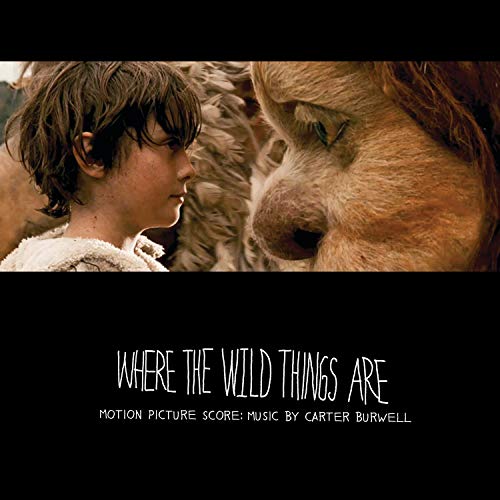
Carter Burwell talks Where the Wild Things Are (2009)

I was surprised when Where the Wild Things Are became a motion picture in 2009. As a kid, I remember having this book read to me and I enjoyed it very much, but it didn’t seem like the best story to adapt into a movie (after all, it isn’t very long). But to my surprise, the movie actually turned out to be very good. If you haven’t read the book before, the story in brief is about a young boy named Max who sails to a magical island inhabited by oversized monsters. Max makes himself their king and happily rules over them for a while until he becomes homesick and returns to where he came from. The film expands on this story quite a bit by giving names and distinct personalities to the different “wild things” on the island, but the basic elements of the story remain the same.

While Carter Burwell might not be a name as familiar as, say, John Williams, James Horner or Brian Tyler, he has done a fair share of great film scores. He composed several scores for the Twilight series (Twilight; Breaking Dawn parts 1 and 2) and collaborated six times with director Bill Condon. Burwell has certainly done some interesting work over the years.

And the composer has some interesting thoughts to share on the story’s musical score, as seen in the video above. For instance, once Max arrives on the island “where the wild things are”, the composer thought it appropriate to completely change the music from something familiar to something more exotic (like using non-traditional instrumentation).


One part involves literally banging on pots and pans to create a musical effect. The idea is that these are things you might literally find on the forest floor on the island. Using non-traditional items to create music is always exciting and I had no idea that Burwell and his fellow musicians had done this to create the music for Where the Wild Things Are.

See also:

Film Composer Interviews A-H

Film Composer Interviews K-Z

Check out the YouTube channel (and consider hitting the subscribe button)

You can become a patron of the blog at patreon.com/musicgamer460

Don’t forget to like Film Music Central on Facebook 🙂

Danny Elfman talks Fifty Shades of Grey (2015)

Let me just start by saying that I am not a fan of the Fifty Shades of Grey trilogy; not the books or the movies. I don’t like the concept behind the story (did you know this started as Twilight fanfiction?) and it just…*shudders* it doesn’t sit well with me.

That being said…my ears perked up with interest when I discovered that Danny Elfman wrote the score for Fifty Shades of Grey (and he has also scored Fifty Shades Darker). I have been a fan of Elfman’s work ever since I first heard the music for Batman (1989) and I was surprised to hear that he is working on this film trilogy. Elfman isn’t the first composer I would think of when it comes to dark romantic films, but to each his own.

I can’t recommend this film, but it was interesting to briefly hear Elfman’s thoughts on how he put the important musical themes together for this story.

Now I have to ask, for those of you who may have seen Fifty Shades of Grey, did you like it at all? Was it worth seeing? I would love to hear your comments on this film, so let me know in the comments below 🙂

Check out the YouTube channel (and consider hitting the subscribe button)

You can become a patron of the blog at patreon.com/musicgamer460

See also:

Danny Elfman talks Batman (1989)

Danny Elfman talks Batman Returns (1992)

Danny Elfman “Planet of the Apes” scoring session (2001)

Danny Elfman talks Spider-Man (2002)

Danny Elfman talks Meet the Robinsons (2007)

Danny Elfman talks Alice in Wonderland (2010)

Danny Elfman talks Alice Through the Looking Glass (2016)

Film Composer Interviews A-H

Film Composer Interviews K-Z

Don’t forget to like Film Music Central on Facebook 🙂

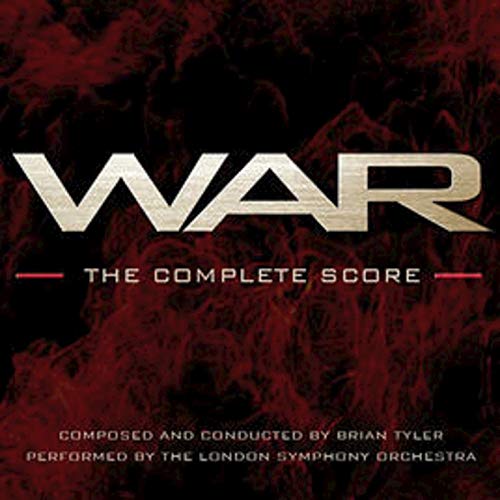
Brian Tyler talks War (2007)

War is a film that I have not seen but I’m sure I would like, given that it stars Jet Li and Jason Statham. The film is the directorial debut of Philip G. Atwell and tells the story of FBI agent John Crawford (Statham) who becomes obsessed with hunting down an assassin named Rogue (Li) after he brutally murders his partner. But, as it turns out, the story isn’t nearly as straightforward as it seems, there are some mind-blowing twists involved.

2007_war_008

Unbelievably, it comes out that the assassin Crawford has been hunting down is none other than his supposed-to-be-dead partner! It turns out that after being supposedly killed, he tracked down and murdered the real Rogue in order to work his way into the Yakuza to find out who ordered the assassin to take out his family. But there’s another twist: it comes out that Crawford is the one responsible for giving out his partner’s address to Rogue (albeit under heavy duress) because he’s been in the Yakuza’s pocket for quite some time. Talk about twists upon twists!

The film was produced under the working title of  Rogue (named for Jet Li’s character) but it was changed to avoid conflicting with an Australian horror film of the same name that was released the same year.

In the interview (which can be accessed in the link above), Tyler explains that he was approached to work on War after the premiere of The Fast and the Furious: Tokyo Drift (2006), and after watching some footage from the film-in-progress, he begged for the chance to score the film. Additional music for the film was provided by RZA, Mark Batson and Machines of Loving Grace.


OneSheet (Page 1)

A major element of the story involves the Chinese Triad going to war with the Japanese Yakuza. As a result, Tyler created a musical blend using Chinese and Japanese instruments against one another to symbolize the growing conflict between the two groups.

I have to say, looking at Brian Tyler’s work has given me a completely new appreciation for action films and their music. A lot of people write off action films as being “mindless” or somehow “less than” bigger dramatic films, but I think action films can be just as good as any other film genre if they’re done properly.

It was really exciting learning how Brian Tyler created the score for War and I hope you enjoy the interview too.

You can become a patron of the blog at patreon.com/musicgamer460

Check out the YouTube channel (and consider hitting the subscribe button)

See also:

Film Composer Interviews A-H

Film Composer Interviews K-Z

Brian Tyler “Alien vs. Predator: Requiem” scoring session (2007)

Brian Tyler scoring Partition (2007)

Brian Tyler talks Rambo (2008)

Brian Tyler “Law Abiding Citizen” scoring sessions (2009)

Brian Tyler “Dragonball Evolution” scoring session (2009)

Brian Tyler talks The Expendables (2010) 

Brian Tyler talks Fast Five (2011)

Brian Tyler “Battle: Los Angeles” (2011) scoring session

Brian Tyler scoring session for Iron Man 3 (2013)

Brian Tyler “Teenage Mutant Ninja Turtles” (2014) scoring session

Brian Tyler conducting and scoring Now You See Me 2 (2016)

Brian Tyler “Power Rangers” scoring session (2017)

Brian Tyler conducts The Mummy (2017)

Don’t forget to like Film Music Central on Facebook 🙂

Michael Giacchino talks Super 8 (2011)

Michael Giacchino talks Super 8 (2011)

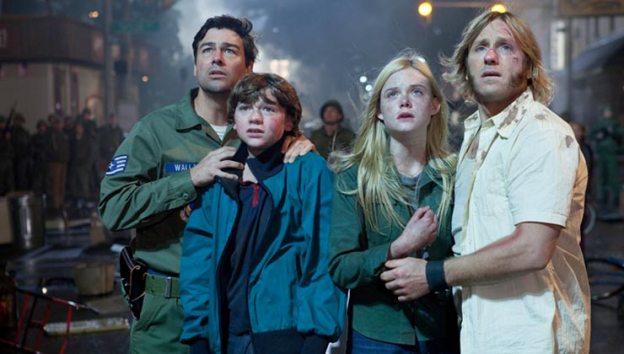
What do you get when J.J. Abrams and Steven Spielberg collaborate together on a film? In the case of Super 8, we got a science-fiction thriller film about a strange alien invading a town in Ohio while a group of kids are shooting a movie on Super 8 film. The film did well (despite some comparisons to E.T.), though I didn’t watch it myself (I was distracted by graduating from college at the time). As with all J.J. Abrams films (except for The Force Awakens), the score was composed by Michael Giacchino, who talks with us in the behind-the-scenes clip for the making of the score of Super 8.

What’s cool about this clip is that we get to hear Giacchino talking about his memories of shooting home movies on Super 8 film back in the day, and we even get to see a few clips from said films.

It’s always great to listen to Michael Giacchino discussing his work, and I hope you enjoy his talk about Super 8.

I know this is shorter than what I usually do, but I’m still recovering from a really busy weekend and I really wanted to give you something to enjoy until tomorrow 🙂

And speaking of…Disturbing Disney returns tomorrow with my first entry from Bambi (1942), a film that pioneered the “horrifying death of a parent” decades before The Lion King ripped our hearts out with the death of Mufasa.

Also, I wanted to share that Film Music Central has gained 2,000+ hits in a month for the first time ever and I wanted to say thank you to everyone who comes to visit the blog, this is a milestone I’ve been hoping to hit for a long time 🙂

See also:

Michael Giacchino talks The Incredibles (2004)

Michael Giacchino talks Mission: Impossible 3 (2006)

Michael Giacchino talks Ratatouille (2007)

Michael Giacchino talks Up (2009)

Michael Giacchino talks Star Trek (2009)

Michael Giacchino talks John Carter (2012)

Michael Giacchino talks Star Trek: Into Darkness (2013)

Michael Giacchino talks Jupiter Ascending (2015)

Michael Giacchino talks Jurassic World (2015)

Michael Giacchino scoring Rogue One: A Star Wars Story (2016)

Michael Giacchino talks Zootopia (2016)

Michael Giacchino talks Jurassic World: Fallen Kingdom (2018)

Film Composer Interviews A-H

Film Composer Interviews K-Z

You can become a patron of the blog at patreon.com/musicgamer460

Check out the YouTube channel (and consider hitting the subscribe button)

Don’t forget to like Film Music Central on Facebook 🙂

Hans Zimmer talks Hannibal (2001)

Sequels are always a risky business; no matter how successful the original, there’s always the chance that a follow-up story will fall totally flat and ruin the story forever. Thankfully, such was not the case with Hannibal (2001), the follow-up to The Silence of the Lambs (1991). Set ten years after the original story, Clarice Starling (now played by Julianne Moore) must locate Hannibal Lecter before a surviving victim (played brilliantly by Gary Oldman) tracks down the serial killer to exact his gruesome revenge. While it’s true that this film was met with mixed reviews by the critics, I found Hannibal to be a very thrilling story, especially the last third. Anthony Hopkins is such a compelling presence when he’s onscreen, and he plays the role with so many layers that you can watch the film multiple times and see a new interpretation each time.

Of course the film wouldn’t be nearly as good without its musical score, which was composed by Hans Zimmer. In this wonderful interview, both Zimmer and director Ridley Scott talk about the music and how it came together. Scott believes that the music is just as important as the dialogue and so the score is crafted accordingly. Hannibal marked the fourth time that the director and composer collaborated on the same project, and you can tell that they’ve developed a good working relationship with each other.

Zimmer describes Hannibal as a “haunting story” and that the music must be haunting as well to match it, and I believe he totally succeeded in accomplishing this. One thing about Hannibal (the character) that always fascinated me is his love of the classical, be it art, poetry or music. The score reflects this to a large degree, as Hans Zimmer wrote several choral pieces in an early classical style for certain scenes involving the titular character. It was amazing to learn about the score for this haunting film, and I hope you enjoy it as well.

You can become a patron of the blog at patreon.com/musicgamer460

Check out the YouTube channel (and consider hitting the subscribe button)

See also:

Film Composer Interviews A-H

Film Composer Interviews K-Z

Hans Zimmer talks The Road to El Dorado (2000)

Hans Zimmer talks The Dark Knight (2008)

Hans Zimmer talks Sherlock Holmes (2009) and Sherlock Holmes: A Game of Shadows (2011)

Hans Zimmer talks Inception (2010)

Hans Zimmer (and Richard King) talk The Dark Knight Rises (2012)

Hans Zimmer talks Man of Steel (2013)

Hans Zimmer talks Interstellar (2014)

Don’t forget to like Film Music Central on Facebook 🙂

Michael Giacchino talks Zootopia (2016)

Michael Giacchino talks Zootopia (2016)

While I am still profoundly irked that Zootopia beat out Kubo and the Two Strings for Best Animated Feature at the Oscars, I cannot deny that the film has a pretty good musical score. Composed by the talented Michael Giacchino, the music of Zootopia features a world-music vibe to cover the vast array of species (and ways of life) highlighted in the story.


If you haven’t seen Zootopia, the film follows bunny Judy Hopps (Ginnifer Goodwin) as she becomes the first rabbit on the Zootopia police force, in a city where (in theory) any animal can become anything they want to be, regardless of whether they are considered “hunter” or “prey” species. This notion is tested when Judy is put on a (seemingly hopeless) case that she must solve in a very short time or lose her job, and to complicate matters, she must work with Nick Wilde (Jason Bateman), a fox with a history of being a con-artist.

In this behind the scenes clip, Giacchino takes us to the recording studio and introduces five percussionists who helped create Zootopia’s unique sound.

ZOOTOPIA

While the main orchestra is best recognized in any film score, often the percussion is overlooked (or worse, lost in the sound mix), so it’s great to see not only how they used percussion instruments in the score, but also how the percussion ties everything together at key moments.

c82485eec608d966826a619a04946ce8f53b693d

My thanks to Michael Giacchino for giving us this inside look into part of the scoring process for Zootopia, which really is a great film despite my grumblings. I hope you enjoy the video and if you haven’t tried Zootopia before, please take a chance and check it out 🙂

See also:

Michael Giacchino talks The Incredibles (2004)

Michael Giacchino talks Mission: Impossible 3 (2006)

Michael Giacchino talks Ratatouille (2007)

Michael Giacchino talks Up (2009)

Michael Giacchino talks Star Trek (2009)

Michael Giacchino talks Super 8 (2011)

Michael Giacchino talks John Carter (2012)

Michael Giacchino talks Star Trek: Into Darkness (2013)

Michael Giacchino talks Jupiter Ascending (2015)

Michael Giacchino talks Jurassic World (2015)

Michael Giacchino scoring Rogue One: A Star Wars Story (2016)

Michael Giacchino talks Jurassic World: Fallen Kingdom (2018)

Film Composer Interviews A-H

Film Composer Interviews K-Z

You can become a patron of the blog at patreon.com/musicgamer460

Check out the YouTube channel (and consider hitting the subscribe button)

Don’t forget to like Film Music Central on Facebook 🙂

John Debney scoring Predators (2010)

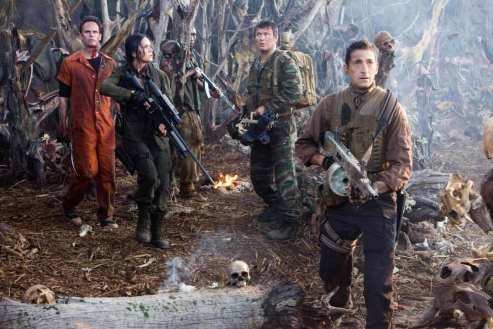
In an age where sequels are being made left and right, it surprised no one when, after a gap of 20 years, a third installment of the Predator franchise was released. Predators (unlike the previous two installments) takes place on an alien planet and follows a group of mercenaries and other “undesirables” that have been abducted and taken to this planet, which we learn serves as a game preserve for the Predator civilization. The group, including Royce (Adrien Brody) and Isabelle (Alice Braga) must evade a group of hunters while also trying to find a way off the planet to get home.


The total group consists of:

  • Royce- ex-Special Forces turned mercenary
  • Isabelle- sniper from Israeli Defense Forces
  • Cuchillo- a Mexican drug cartel enforcer
  • Nikolai- a Spetsnaz soldier
  • Mombasa- a soldier in the Revolutionary United Front
  • Stans- a death row inmate from San Quentin
  • Hanzo- a Yakuza enforcer
  • Edwin- a general practice doctor

Of the entire group, it is Edwin who sticks out, as he is the only member of the group who does not seem to be a lethal killer. Appearances are deceiving however, and it eventually comes out that Edwin is actually a psychopathic murderer (apparently very comfortable with poisons) who feels “right at home” on this alien planet filled with “monsters.”

Predators-2010

Most of the story centers around the plan of freeing a trapped Predator (who is being held prisoner by a rival clan of larger Predators) in the hopes that it will use his ship to take them back to Earth. Unfortunately, not only are Royce and Isabelle the lone human survivors (so far as we know), but the ship self-destructs, leaving the pair stranded on the alien planet for the time being.

The film was released with mixed to positive reviews, with some saying the sequel finally hit the mark set by the original film and others saying it still lacks the quiet suspense that made the first film so good.

Predators-film-images-30b80769-2fc3-4baf-a099-e7121a98bfd

The score was composed by John Debney, although it was briefly speculated that Alan Silvestri would return to the franchise (having scored Predator and Predator 2). The clip I found is from a scoring session for the film and provides a tantalizing glimpse of the recording process. The one thing that will always amaze me about film music is how many details you can hear when the dialogue and sound effects are removed from the mix. Hearing this brief excerpt of music makes me wish I’d seen this film when it was released (it’s been on my “to watch” list for the last seven years).

Have you seen Predators? Did you think it was worth seeing? Let me know in the comments below, and I hope you enjoy watching this brief excerpt from the scoring session for the film.

See also:

John Debney talks The Scorpion King (2002)

John Debney talks The Passion of the Christ (2004)

John Debney (and Tom Morello) talk Iron Man 2 (2010)

John Debney talks The Jungle Book (2016)

Film Composer Interviews A-H

Film Composer Interviews K-Z

You can become a patron of the blog at patreon.com/musicgamer460

Check out the YouTube channel (and consider hitting the subscribe button)

Don’t forget to like Film Music Central on Facebook 🙂