Tag Archives: film music

Snow White and the Seven Dwarfs “With a Smile and a Song” (1937)

Evolution of Disney : Snow White and the Seven Dwarfs Part 1

Of course for the Queen, seeing the Prince in love with Snow White is the last straw and she arranges to have the young Princess murdered out in the countryside. Fortunately for us, the Huntsman has a conscience and Snow White runs deep into the forest where she encounters a large group of forest animals (interesting how they can understand humans, isn’t it?) Now trying to cheer herself up, Snow White sings “With a Smile and a Song” to remind herself (and her new animal friends) about how being positive can help you get through tough times. As with the earlier songs, the vocal part is relatively simple.

With a smile and a song
Life is just a bright sunny day
Your cares fade away
And your heart is young

With a smile and a song
All the world seems to waken anew
Rejoicing with you
As the song is sung

There’s no use in grumbling
When raindrops come tumbling
Remember, you’re the one
Who can fill the world with sunshine

When you smile and you sing
Everything is in tune and it’s spring
And life flows along
With a smile and a song

I enjoy this song as much as the others, but something about it has always bothered me. Caselotti’s voice is so high-pitched in this song that, to my ears, some of the words come across as unintelligible. It still sounds beautiful but it would be nice to understand all of the lyrics. It’s also interesting to compare the animation of the animals in this film to their super-realistic appearance in Bambi. While it’s true that Disney wasn’t going for realism in Snow White, everything is still recognizable (deer look like deer, rabbits like rabbits, etc.)

“With a Smile and a Song” is a nice, peaceful interlude after Snow White’s terrifying run through the forest (which really needs to be covered in Disturbing Disney) and easily sets up a transition for the princess to travel to the cottage of the seven dwarfs. Let me know what you think about “With a Smile and a Song” in the comments below and have a great day!

See also:

Snow White and the Seven Dwarfs “I’m Wishing/One Song” (1937)

Snow White and the Seven Dwarfs “Whistle While You Work” (1937)

Snow White and the Seven Dwarfs “Heigh Ho” (1937)

Snow White and the Seven Dwarfs “Bluddle-Uddle-Um-Dum/The Washing Song” (1937)

Snow White and the Seven Dwarfs “The Silly Song” (1937)

Snow White and the Seven Dwarfs “Some Day My Prince Will Come” (1937)

Disney/Dreamworks/Pixar/etc. Soundtracks A-Z

Become a Patron of the blog at patreon.com/musicgamer460

Check out the YouTube channel (and consider hitting the subscribe button)

Don’t forget to like Film Music Central on Facebook

Snow White and the Seven Dwarfs “I’m Wishing/One Song” (1937)

Evolution of Disney : Snow White and the Seven Dwarfs Part 1

Snow White “I’m Wishing/One Song” (1937)

It’s hard to imagine, but there was a time when Disney did not completely rule the world of animation and children’s movies. Back in the 1930s, Disney was seen as a small studio that created funny cartoons, but little else. Of course Walt Disney had bigger plans, including an idea for making a full-length film that was completely animated (something unheard of at the time). What was once known as “Disney’s Folly” became known to history as Snow White and the Seven Dwarfs.

Released in 1937, the titular character is voiced by the singer Adriana Caselotti. She sings several songs over the course of the film, the first of which is “I’m Wishing,” sung to her bird friends as she gets water from the well in the castle courtyard. The melody is relatively simplistic, with many leaps from the tonic to the dominant (D to A) and back again. Before the melody returns for a final reprise (just before the Prince interjects), there is a lovely interlude where Caselotti shows off her vocal prowess and sings a call and response with her “echo” in the well.

Evolution of Disney : Snow White and the Seven Dwarfs Part 1

The song serves as a good introduction for the character: she’s a young (at least teenage) girl who’s clearly done her best to be happy, but still dreams of finding true love (and probably getting away from her stepmother the Queen). The music for this song (and most of the others) was composed by Frank Churchill, who’s last work would prove to be the score for Bambi in 1942.

You wanna hear a secret?
Promise not to tell?
(sung)
We are standing by a wishing well
Make a wish into the well
That’s all you have to do
And if you hear it echoing
Your wish will soon come true

I’m wishing
(I’m wishing)
For the one I love
To find me
(To find me)
Today
(Today)

I’m hoping
(I’m hoping)
And I’m dreaming of
The nice things
(The nice things)
He’ll say
(He’ll say)

I’m wishing
(I’m wishing)
For the one I love
To find me
(To find me)
Today

It’s amazing how lifelike Snow White looks (and remember this was 1937, before computers, all of this was done BY HAND). By the way, look at the Prince below, doesn’t he remind you just a little of Prince Philip from Sleeping Beauty? This charming song is immediately followed by “One Song” sung by the unnamed Prince (his role was supposed to be larger but Disney wasn’t entirely convinced that his animators could bring a male character to life convincingly so this is the first and last time we see him until the end of the movie, where he again sings “One Song”).

Evolution of Disney : Snow White and the Seven Dwarfs Part 1

Like “I’m Wishing,” “One Song” is a simple melody, well-suited for a tenor’s voice, that clearly sets out what the Prince is saying (i.e. I’ve fallen in love with you at first sight). The melody is again very simple, with a medium range of notes. Disney songs have a tendency to be very simple melodically (the idea was that this made them more appealing to children).

Now that I’ve found you
Here’s what I have to say

One Song
I have but one song
One song
Only for you

One heart
Tenderly beating
Ever entreating
Constant and true

One love
That has possessed me
One love
Thrilling me through

One song
My heart keeps singing
Of one love
Only for you

 The only question I have is, if the Prince really loves Snow White that much, why didn’t he just take her away right then and there? Where did he go after this song ends? Nevertheless, it is a sweet moment (and the look on the Queen’s face when she sees the Prince wooing her stepdaughter is priceless!) Originally, there was going to be an idea that the Prince was supposed to be coming to court the Queen, which would also explain her outrage at seeing him woo Snow White, but the idea was ultimately dropped.

What do you think of “I’m Wishing” and “One Song”? Let me know your thoughts in the comments below and have a great day! This is going to be the start of me re-formatting my earliest blog posts. When I first started, I wasn’t sure what the blog would look like, so I experimented with some different formats. Now I’m going to fix my early work to match what I do now. Hope you enjoy!

See also:

Snow White and the Seven Dwarfs “With a Smile and a Song” (1937)

Snow White and the Seven Dwarfs “Whistle While You Work” (1937)

Snow White and the Seven Dwarfs “Heigh Ho” (1937)

Snow White and the Seven Dwarfs “Bluddle-Uddle-Um-Dum/The Washing Song” (1937)

Snow White and the Seven Dwarfs “The Silly Song” (1937)

Snow White and the Seven Dwarfs “Some Day My Prince Will Come” (1937)

Disney/Dreamworks/Pixar/etc. Soundtracks A-Z

Become a Patron of the blog at patreon.com/musicgamer460

Check out the YouTube channel (and consider hitting the subscribe button)

Don’t forget to like Film Music Central on Facebook
Michael Giacchino scoring Rogue One: A Star Wars Story (2016)

Rogue One: A Star Wars Story, was a first in several ways for Star Wars. Not only was it the first anthology film, telling the story of how the Death Star plans were stolen by the Rebel Alliance, but it was also the first Star Wars film to be scored by someone other than John Williams. Instead, scoring duties went to Michael Giacchino (after Alexandre Desplat had to pull out), which had me excited but very nervous. While I’m a big fan of Giacchino’s work, the music of Star Wars has always had a special place in my heart and I was very nervous that the soundtrack wouldn’t live up to the high bar set by John Williams in the past.


I shouldn’t have worried because, as the scoring session linked above shows, quite a bit of care went into putting the score for Rogue One together. Giacchino was careful (for the most part) to interweave Williams’ famous music with his own creations, creating a sound that is definitely Star Wars, but also new. I’ve always enjoyed watching videos of scoring sessions, I have a goal that someday I’ll be able to watch one (or at least part of one) in person. I hope you enjoy this behind-the-scenes look at the scoring of Rogue One: A Star Wars Story. Let me know what you think about Rogue One in the comments below and have a great day!

See also:

Michael Giacchino talks The Incredibles (2004)

Michael Giacchino talks Mission: Impossible 3 (2006)

Michael Giacchino talks Ratatouille (2007)

Michael Giacchino talks Up (2009)

Michael Giacchino talks Star Trek (2009)

Michael Giacchino talks Super 8 (2011)

Michael Giacchino talks John Carter (2012)

Michael Giacchino talks Star Trek: Into Darkness (2013)

Michael Giacchino talks Jupiter Ascending (2015)

Michael Giacchino talks Jurassic World (2015)

Michael Giacchino talks Zootopia (2016)

Michael Giacchino talks Jurassic World: Fallen Kingdom (2018)

Film Composer Interviews A-H

Film Composer Interviews K-Z

Become a Patron of the blog at patreon.com/musicgamer460

Check out the YouTube channel (and consider hitting the subscribe button)

Don’t forget to like Film Music Central on Facebook

Michael Giacchino talks Jurassic World: Fallen Kingdom (2018)

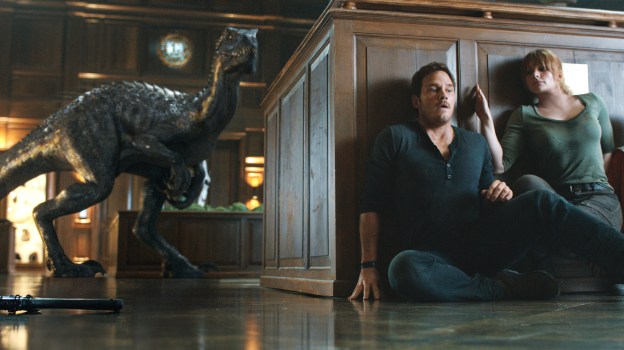
I’ve been suffering from franchise fatigue as of late, which is why I didn’t go see Jurassic World: Fallen Kingdom when it came to theaters in the summer of 2018. However, I have heard good things about Michael Giacchino’s score for this film (he’s one of my favorite film composers since he is almost incapable of composing a bad film score). In looking through the behind-the-scenes videos linked at the top of this post, I was pleasantly surprised to learn that Giacchino took inspiration from the scores that Bernard Herrmann wrote for several Ray Harryhausen films (among them Jason and the Argonauts and The 7th Voyage of Sinbad). Given that those are some of my favorite film scores, I almost feel bad that I didn’t give this film a chance.

Behind the scenes of Jurassic World: Fallen Kingdom Part 1

Behind the scenes of Jurassic World: Fallen Kingdom Part 2

Behind the scenes of Jurassic World: Fallen Kingdom Part 3

Michael Giacchino also discusses how he pushed the envelope in how little he could get away with musically. The best film composers can do a lot with minimal music and Giacchino is good at drawing you in with a series of low, minimal notes before suddenly BOOM! the music explodes and you’re literally jumping in your seat. While I’m still not 100% sure how I feel about the Jurassic World franchise as a whole, I do think they made the right choice in picking Michael Giacchino as the composer. His scores retain the sense of wonder (and extreme danger) that John Williams established with the original Jurassic Park film. I hope you enjoy watching these behind-the-scenes videos looking at the score of Jurassic World: Fallen Kingdom.

Let me know what you think about Jurassic World: Fallen Kingdom in the comments below and have a great day!

See also:

Michael Giacchino talks The Incredibles (2004)

Michael Giacchino talks Mission: Impossible 3 (2006)

Michael Giacchino talks Ratatouille (2007)

Michael Giacchino talks Up (2009)

Michael Giacchino talks Star Trek (2009)

Michael Giacchino talks Super 8 (2011)

Michael Giacchino talks John Carter (2012)

Michael Giacchino talks Star Trek: Into Darkness (2013)

Michael Giacchino talks Jupiter Ascending (2015)

Michael Giacchino talks Jurassic World (2015)

Michael Giacchino scoring Rogue One: A Star Wars Story (2016)

Michael Giacchino talks Zootopia (2016)

Film Composer Interviews A-H

Film Composer Interviews K-Z

Become a Patron of the blog at patreon.com/musicgamer460

Check out the YouTube channel (and consider hitting the subscribe button)

Don’t forget to like Film Music Central on Facebook

Michael Giacchino talks John Carter (2012)

Few Disney films have flopped harder in the last decade than John Carter, an adaptation of Edgar Rice Burrough’s Barsoom novel A Princess of Mars. The film follows the titular character, a Civil War veteran, as he finds himself flung to the dying planet of Barsoom (Mars) and the conflicts taking place therein. The film was meant to be the first of a trilogy, but when John Carter bombed at the box office (costing Disney $200 million in the process), all future sequels were cancelled.

The score for John Carter was composed by Michael Giacchino, who routinely turns in good work, including for this film. While many aspects of the film were criticized, Giacchino’s score was praised for sounding “fresh and adventurous.” In this interview (I apologize for the audio cutting in and out), Giacchino discusses a few details of how the score came together, including the director’s desire to express emotions through the music and which characters should get their own themes. I’d really hoped to find some scoring sessions from this score, and if I ever find some I’ll make sure to attach the links, because it sounds like some good music.

I hope you enjoyed this short interview about the music of John Carter. Let me know what you think about John Carter in the comments below and have a great day!

See also:

Michael Giacchino talks The Incredibles (2004)

Michael Giacchino talks Mission: Impossible 3 (2006)

Michael Giacchino talks Ratatouille (2007)

Michael Giacchino talks Up (2009)

Michael Giacchino talks Star Trek (2009)

Michael Giacchino talks Super 8 (2011)

Michael Giacchino talks Star Trek: Into Darkness (2013)

Michael Giacchino talks Jupiter Ascending (2015)

Michael Giacchino talks Jurassic World (2015)

Michael Giacchino scoring Rogue One: A Star Wars Story (2016)

Michael Giacchino talks Zootopia (2016)

Michael Giacchino talks Jurassic World: Fallen Kingdom (2018)

Film Composer Interviews A-H

Film Composer Interviews K-Z

Become a Patron of the blog at patreon.com/musicgamer460

Check out the YouTube channel (and consider hitting the subscribe button)

Don’t forget to like Film Music Central on Facebook

James Newton Howard talks Dinosaur (2000)

Dinosaur-disneyscreencaps_com-1307_-1024x538.jpg

I remember Dinosaur being a really big deal back in the year 2000. Not only was it a leap in CGI animation, it was also filmed against mostly live-action backgrounds (which I believe was a first). The film follows the story of a dinosaur named Alladar who travels with his adoptive lemur family to find a new home after the island he grew up on is destroyed by a meteor.

James Newton Howard composed the score for Dinosaur and I remember the music standing out to me right away due to the extended preview that the film had in trailers. Howard gave the score this huge, symphonic sound to highlight the live-action background and the various dinosaurs seen in the preview. I was really excited to find this video clip because “making of” clips with James Newton Howard are relatively hard to come by and he’s worked on some of my favorite childhood films.


As the interview clip explains, Howard uses the music in Dinosaur to direct emotional feelings, be it fear, wonder, or humor. And there is a full range of emotions to be found in the film, which shows just how talented this composer is. It was also emphasized that they wanted to make the music sound primal but not ethnic. That is, they didn’t want any music that could be traced back to a particular human culture (since this movie is set way before humans existed).

I really hope you enjoy this behind the scenes video with James Newton Howard. Let me know what you think about Dinosaur (and the music for Dinosaur) in the comments below and have a great day!

See also:

James Newton Howard talks Atlantis: The Lost Empire (2001)

James Newton Howard talks Signs (2002)

James Newton Howard talks The Village (2004)

James Newton Howard scoring King Kong (2005)

Film Composer Interviews A-H

Film Composer Interviews K-Z

Become a Patron of the blog at patreon.com/musicgamer460

Check out the YouTube channel (and consider hitting the subscribe button)

Don’t forget to like Film Music Central on Facebook

Daniel Pemberton talks Steve Jobs (2015)

Steve Jobs (2015) marked the first collaboration between director Danny Boyle and composer Daniel Pemberton (their second team-up, Yesterday, comes out in June). In this behind-the-scenes video, the composer discusses how he divided the film’s score into three distinct parts, each one corresponding to one of the three acts of the film. The first act (he explains) is full of synthesizers to match the vibe of 1984. The second act (and the one I like best) is purely orchestral. Not just orchestral, it’s more of a miniature opera (complete with singers). And the third act is squarely placed in the digital medium, referencing how just about everything in our lives has gone digital, thanks in large part to the real Steve Jobs.


I’m fascinated at how Pemberton essentially created three different scores for this film, that’s not something you come across very often (in fact I’m hard pressed to name another example). Daniel Pemberton is very quickly becoming one of my favorite film composers and I for one am excited to learn more about him. I hope you enjoyed the video! Let me know what you think about Steve Jobs (and it’s score) in the comments below and have a great day!

See also:

Daniel Pemberton talks The Man from U.N.C.L.E (2015)

Daniel Pemberton talks Gold (2016)

Daniel Pemberton talks King Arthur: Legend of the Sword (2017)

Film Composer Interviews A-H

Film Composer Interviews K-Z

Become a Patron of the blog at patreon.com/musicgamer460

Check out the YouTube channel (and consider hitting the subscribe button)

Don’t forget to like Film Music Central on Facebook

Daniel Pemberton talks King Arthur: Legend of the Sword (2017)

While it’s no secret that Guy Ritchie’s retelling of the King Arthur legend was a colossal flop at the box office, that shouldn’t stop you from learning about what went into making the film’s soundtrack. King Arthur: Legend of the Sword marked the second collaboration between Guy Ritchie and Daniel Pemberton and just like he did with The Man from U.N.C.L.E, the composer went all out in putting the music together.

Daniel Pemberton employed a variety of musical instruments both ancient and modern. As he says in the video, he sought to make the score visceral and gritty, something that felt distinctly unpolished. If the excerpts heard in this video are any indication, I think the composer succeeded in that aspect. It’s a shame the film flopped so badly, it sounds like Pemberton’s score for the film is really good (and it’s not that uncommon to find a great score hiding in a terrible film). I find myself hoping that Ritchie and Pemberton will collaborate again (hopefully on The Man from U.N.C.L.E 2), though hopefully the resulting film will do much better than this one did.

Let me know what you think of this behind the scenes look at the music for King Arthur: Legend of the Sword in the comments below and have a great day!

See also:

Daniel Pemberton talks The Man from U.N.C.L.E (2015)

Daniel Pemberton talks Gold (2016)

Daniel Pemberton talks Steve Jobs (2015)

Film Composer Interviews A-H

Film Composer Interviews K-Z

Become a Patron of the blog at patreon.com/musicgamer460

Check out the YouTube channel (and consider hitting the subscribe button)

Don’t forget to like Film Music Central on Facebook
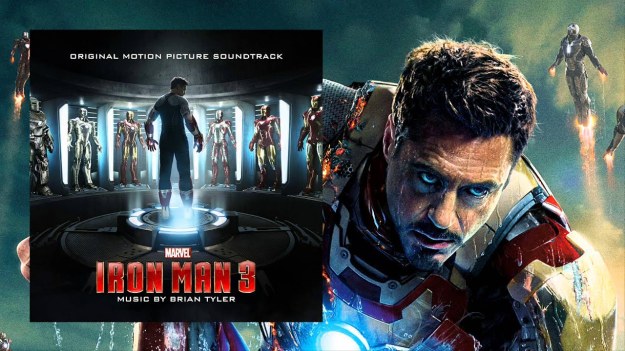
Brian Tyler scoring session for Iron Man 3 (2013)

maxresdefault

The Marvel Cinematic Universe has featured musical scores from a number of composers, but some of my favorite work comes from Brian Tyler, who to date has scored three films in the MCU: Thor: The Dark World, Avengers: Age of Ultron and Iron Man 3.

The thrilling conclusion to the Iron Man trilogy features some dark and stirring music that’s on full display in this recording (to be completely honest, I’m not sure if this is from an actual scoring session or a later re-recording for a soundtrack, but it’s pretty much the same setup as a scoring session so that’s what I’m calling it). Brian Tyler is one of those composers who also conducts and it’s always fun to watch him at work. From the moment the music starts you can tell he is completely into what he’s doing.


I love sharing these recording videos with you because I feel like it’s only once you see and hear the music being performed separate from the film that you can truly appreciate just how much work goes into putting the score together. Action scores (and often superhero scores) can get a bad rap but I really feel like the MCU has changed what a superhero film score can be in the 21st century. These scores are organic, breathing things, and I think this clip really shows that.

At any rate, I hope you enjoy watching Brian Tyler at work with Iron Man 3. Let me know what you think of the clip in the comments below and have a great day!

See also:

Brian Tyler “Alien vs. Predator: Requiem” scoring session (2007)

Brian Tyler scoring Partition (2007)

Brian Tyler talks War (2007)

Brian Tyler talks Rambo (2008)

Brian Tyler “Law Abiding Citizen” scoring sessions (2009)

Brian Tyler “Dragonball Evolution” scoring session (2009)

Brian Tyler talks The Expendables (2010) 

Brian Tyler talks Fast Five (2011)

Brian Tyler “Battle: Los Angeles” (2011) scoring session

Brian Tyler “Teenage Mutant Ninja Turtles” (2014) scoring session

Brian Tyler conducting and scoring Now You See Me 2 (2016)

Brian Tyler “Power Rangers” scoring session (2017)

Brian Tyler conducts The Mummy (2017)

Film Composer Interviews A-H

Film Composer Interviews K-Z

Become a Patron of the blog at patreon.com/musicgamer460

Check out the YouTube channel (and consider hitting the subscribe button)

Don’t forget to like Film Music Central on Facebook

Justin Hurwitz talks La La Land (2016)

While Justin Hurwitz (whose recent works include First Man) does talk about the scory of La La Land, this is less of a one-on-one interview and more of a group discussion where cast (like Ryan Gosling), crew, directors and etc. talk about the qualities of the La La Land score.

As stated in the video, the music for La La Land does call back to an earlier time in Hollywood when film music focused on melody most or all of the time. That’s not to say that today’s film scores don’t have melody, but it’s not nearly to the same extent (and many action scores don’t feature proper melody at all).


Seeing the depth of music in La La Land‘s score really drives home just how talented Justin Hurwitz is (I can see now why the film took home the Oscar for Best Original score).

I hope you enjoy this behind the scenes look at the score for La La Land. Let me know what you think of the score in the comments below and have a great day!

See also:

Film Composer Interviews A-H

Film Composer Interviews K-Z

Become a Patron of the blog at patreon.com/musicgamer460

Check out the YouTube channel (and consider hitting the subscribe button)

Don’t forget to like Film Music Central on Facebook